
You have not yet added any article to your bookmarks!
Join 10k+ people to get notified about new posts, news and tips.
Do not worry we don't spam!
Post by : Rameen Ariff
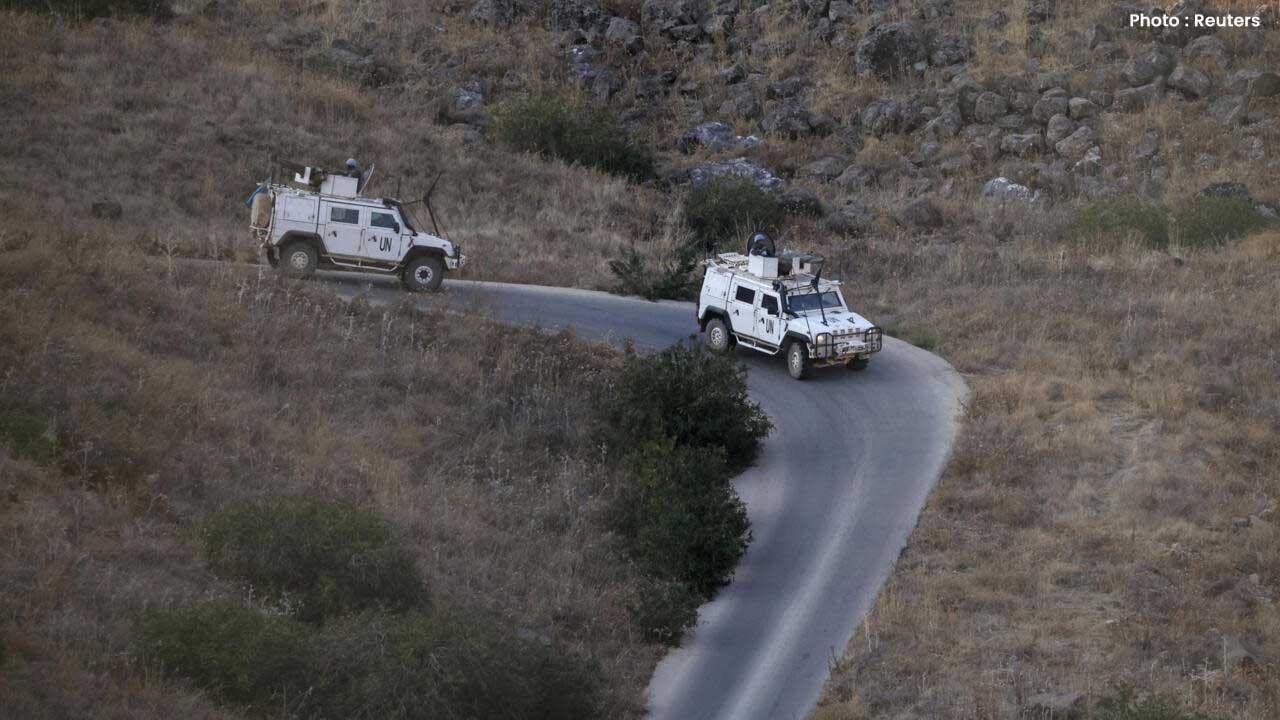
A recent investigation by the United Nations Interim Force in Lebanon (UNIFIL) indicates that a concrete wall erected by the Israeli military crosses the Blue Line — the recognized boundary separating Lebanon from Israel and the Israeli-occupied Golan Heights. This discovery has reignited concerns regarding escalating tensions along a highly sensitive area.
UN spokesperson Stéphane Dujarric disclosed on Friday that the survey, finalized last month, found that the IDF's constructed T-wall invades Lebanese territory, rendering over 4,000 square meters — close to one acre — inaccessible to local inhabitants.
A Breach With Tangible Consequences
The Blue Line, delineated by the United Nations in 2000 to verify Israel's withdrawal from southern Lebanon, is not an officially sanctioned international border but serves as an operational separation line. Any alterations, crossings, or constructions across it are viewed as violations of UN mandates.
Dujarric emphasized that the wall’s construction has critically limited Lebanon’s civilian population’s access to land they depend on, increasing local discontent in an already precarious setting.
“This concrete installation has effectively severed more than 4,000 square meters of Lebanese land from its residents,” he pointed out, urging the importance of calm and adherence to UN-mapped boundaries.
A Region in Distress
This disclosure arrives at a time of increased tension along the Lebanon-Israel border, where ongoing skirmishes between Israeli forces and Hezbollah persist. Each side has accused the other of heightening provocations, while UNIFIL has consistently called for restraint.
Though the IDF has not publicly commented on the UN's findings, Israel has historically defended such border constructions as essential for national security. Conversely, Lebanon regards these structures as infringements threatening its sovereignty and stability.
UN Urges Communication and Restraint
Dujarric reiterated the UN's call for both parties to engage via established communication channels to prevent misunderstandings from escalating into broader conflict.
“Upholding the Blue Line is critical to ensuring stability,” he articulated. “UNIFIL remains committed to collaborating with both sides to address violations and alleviate tensions.”
The Significance of the Timing
The recent findings add another layer of complexity to the already intricate geopolitical climate in the region. As tensions rise on various fronts, even minor border issues can lead to significant escalation. The UN's revelations highlight the pressing need for diplomatic dialogue — and the risks of ignoring unresolved conflicts.
As Lebanon and Israel grapple with profound internal political and security dilemmas, the onus of preventing further deterioration along their border is paramount.










PM Modi Pays Tribute to Mahatma Gandhi, Urges People to Support Khadi
PM Modi pays tribute to Mahatma Gandhi on Gandhi Jayanti and urges citizens to support Khadi and the

Amazon Seeks to Offload $8 Billion in Nvidia Chips to Investors
Amazon plans to move $8 billion in Nvidia chips to investors, using a new financing model to strengt

Samsung Raises Galaxy S26 Prices as Memory Chip Costs Rise
Samsung raises Galaxy S26 prices in South Korea as rising memory chip costs put pressure on smartpho

Lewis Hamilton Calls Singapore Grand Prix One of F1's Toughest Races
Lewis Hamilton discusses the demanding Singapore Grand Prix and brings Plus44 and Almave to Singapor

Denmark's Pandora Opens World's Largest Jewellery Factory in Vietnam
Pandora opens its largest jewellery factory in Vietnam, expanding global production, strengthening s

Gautam Gambhir Questions Batting-Friendly Pitches After India's Record ODI Chase
Gautam Gambhir questions batting-friendly ODI pitches after India’s record chase, calling for a bett

