
You have not yet added any article to your bookmarks!
Join 10k+ people to get notified about new posts, news and tips.
Do not worry we don't spam!
Post by : Saif Rahman
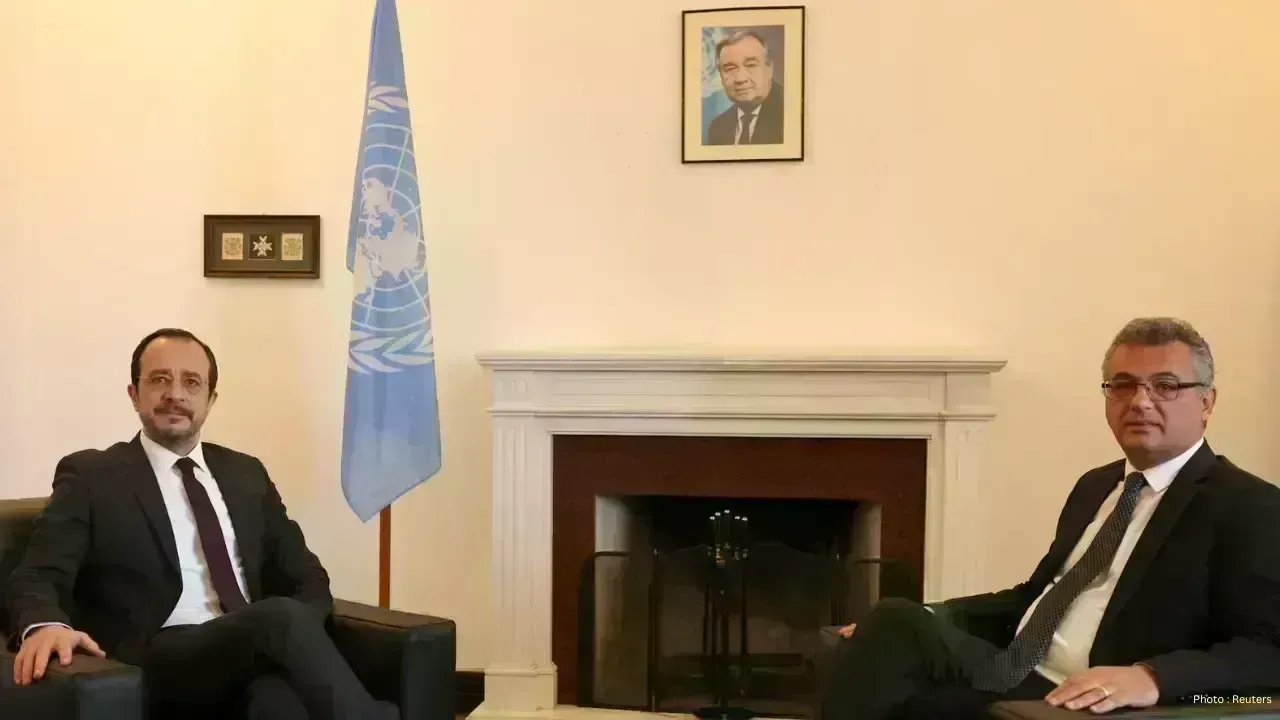
The United Nations is poised to advance its efforts for a resolution to the Cyprus issue in 2026, with reports indicating that a new peace initiative may be presented to both factions on the island. This development ignites new optimism for reunification discussions following years of conflict and interrupted negotiations.
Since the 1974 conflict and subsequent military intervention, Cyprus has remained partitioned. The southern region is recognized globally as the Republic of Cyprus, while the northern area is governed by Turkish Cypriots, only acknowledged by Turkey. The division is one of the longest-standing unresolved political conflicts worldwide.
Cypriot President Nikos Christodoulides has indicated that the United Nations is diligently working on a peace initiative that may be disclosed later this year. Ongoing diplomatic dialogues between international representatives and leaders from both communities are reported.
This prospective UN peace plan will likely concentrate on critical issues such as governance, territorial claims, political power-sharing, security protocols, and economic collaborations. Nonetheless, significant rifts persist between Greek Cypriot and Turkish Cypriot authorities.
Greek Cypriot officials advocate for a federal reunification model under a single internationally recognized entity, whereas Turkish Cypriot leaders increasingly emphasize a two-state solution, recognizing both regions independently.
These disparities have hindered previous attempts at peace for years. Numerous international mediation efforts have faltered due to a lack of consensus on unification and security provisions.
Despite these hurdles, many Cypriots remain hopeful for peace and stability. A successful resolution could enhance trade, tourism, economic development, and stimulate relations across the Eastern Mediterranean.
The Cyprus issue is significant not only for Europe but also for NATO, as tensions between Greece and Turkey can influence broader international dynamics. Many global leaders assert that resolving the Cyprus conflict could mitigate political tensions in the Mediterranean and foster enhanced regional collaboration.
The United Nations has played a pivotal role in mediating peace in Cyprus for decades. UN peacekeeping forces have remained on the island for years, striving to maintain stability between the two communities.
For everyday citizens, the ongoing division has impacted families, businesses, and daily lives across generations. Many of the island's youth have never known a united Cyprus.
Thus, the latest diplomatic initiatives are about more than mere political discussions; they represent hope for reconciliation, peace, and enduring stability after years of division and distrust.
While achieving a final consensus may still pose challenges, revitalized UN engagement has drawn international attention back to the Cyprus peace process. Many experts believe that 2026 could mark a pivotal moment in the timeline of Cyprus reunification efforts and regional tranquility in the Mediterranean.










PM Modi Pays Tribute to Mahatma Gandhi, Urges People to Support Khadi
PM Modi pays tribute to Mahatma Gandhi on Gandhi Jayanti and urges citizens to support Khadi and the

Amazon Seeks to Offload $8 Billion in Nvidia Chips to Investors
Amazon plans to move $8 billion in Nvidia chips to investors, using a new financing model to strengt

Samsung Raises Galaxy S26 Prices as Memory Chip Costs Rise
Samsung raises Galaxy S26 prices in South Korea as rising memory chip costs put pressure on smartpho

Lewis Hamilton Calls Singapore Grand Prix One of F1's Toughest Races
Lewis Hamilton discusses the demanding Singapore Grand Prix and brings Plus44 and Almave to Singapor

Denmark's Pandora Opens World's Largest Jewellery Factory in Vietnam
Pandora opens its largest jewellery factory in Vietnam, expanding global production, strengthening s

Gautam Gambhir Questions Batting-Friendly Pitches After India's Record ODI Chase
Gautam Gambhir questions batting-friendly ODI pitches after India’s record chase, calling for a bett

