
You have not yet added any article to your bookmarks!
Join 10k+ people to get notified about new posts, news and tips.
Do not worry we don't spam!
Post by : Saif Rahman
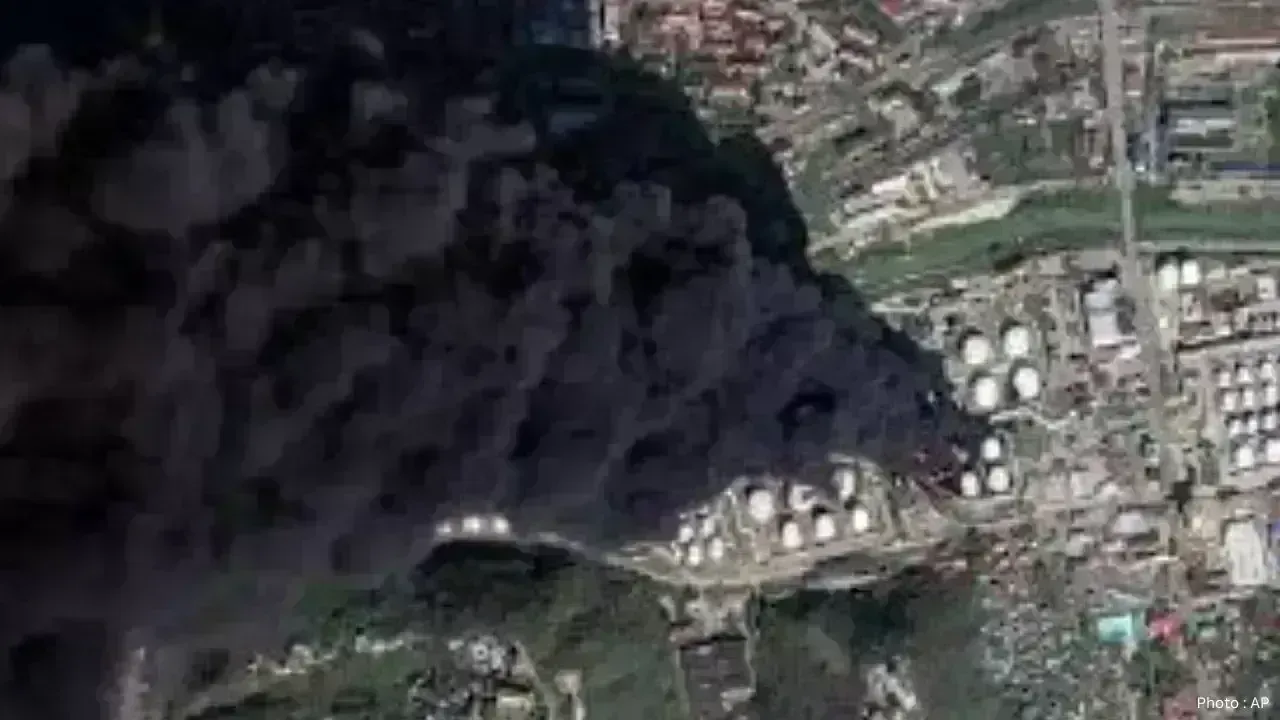
Ukraine's recent use of drones to strike Russian oil facilities has introduced new complexities to the ongoing conflict, emphasizing both ecological risks and economic instability. These attacks have broadened their scope from purely military objectives to critical energy infrastructure, indicating a significant strategic pivot.
In the past few weeks, various oil refineries and storage facilities within Russia have faced assaults from long-range drones. Such installations are crucial to the national economy, with oil exports being a primary revenue stream. By targeting these sites, Ukraine aims to undermine Russia’s financial capability and disrupt its military endeavors.
While the strikes have undeniably caused damage, the overall economic ramifications remain ambiguous. Russia continues to uphold substantial oil exports, and rising global oil prices have buffered its income, reducing the immediate financial strain Ukraine intended to inflict through these operations.
However, the environmental consequences are becoming increasingly alarming. Blazes at oil facilities have emitted thick smoke, impacting air quality in surrounding communities. Oil leaks have contaminated land and water resources, posing long-term threats to both human populations and wildlife. Recovery from such damage could take years.
Local sources indicate that ongoing strikes have exacerbated conditions in some areas. Air quality has deteriorated, and pollution levels are on the rise. Farmers and fishermen are facing challenges due to compromised soil and water quality. These realities underscore how the war's effects extend far beyond combat zones.
The escalating use of drones underscores the evolution of contemporary warfare. These machines can traverse significant distances to hit targets deep within enemy territory, compelling Russia to enhance its defense systems to cover a broader area and stretching its military resources.
In retaliation, Russia has escalated its own attacks on Ukrainian urban centers and infrastructure. This mutual aggression has heightened tensions and endangered civilian lives on both fronts.
The repercussions of these strikes are also reverberating through global energy markets. Any interruptions to oil supply or transport can significantly impact availability, leading to price fluctuations and uncertainty for nations reliant on stable energy resources.
Long-term environmental repercussions are another pressing concern. Oil spills, harmful smoke, and ecosystem degradation may have lasting effects on entire regions for years to come. Even after the conflict has concluded, these issues could continue to jeopardize public health and environmental integrity.
This evolving scenario illustrates a wider shift in war strategies. Rather than solely targeting military positions, both sides are now focusing on economic assets, which may yield short-term advantages but could pose prolonged risks for both nations and global stability.
The drone strikes on oil infrastructure highlight the increasing complexity and broader implications of this conflict. As developments unfold, their impacts will resonate not only regionally but also across global energy markets and ecological systems.








APEC Members Emphasise Safe and Responsible Use of Artificial Intelligence
APEC members discuss responsible AI use, digital innovation and data governance as China and the US

Union of European Clubs Challenge UEFA and EFC Over EU Competition Rules
UEC files an EU competition complaint against UEFA and EFC, challenging club representation, governa

Mohammed Shami Retires From Test Cricket, Eyes White-Ball Career
Mohammed Shami retires from Test cricket after 13 years, with 229 wickets. He will continue playing

Singapore Warns Users About Privacy and Security Risks of AI Agents
Singapore warns users about AI agent security risks, data privacy, online scams and unauthorised acc

Chris Lynn Completes One-Month Ban After Positive Cocaine Test
Australian cricketer Chris Lynn completes a one-month ban after a positive cocaine test during the T

Djokovic Eyes Strong Season Finish as Health Improves Ahead of Paris Masters
Novak Djokovic reports improved health and performance as he targets a strong Paris Masters finish a