
You have not yet added any article to your bookmarks!
Join 10k+ people to get notified about new posts, news and tips.
Do not worry we don't spam!
Post by : Badri Ariffin
Dubai, UAE – The Mohammed Bin Rashid Space Centre (MBRSC) is poised to celebrate a pivotal moment in global space partnerships with the upcoming launch of PHI-1, the inaugural modular satellite from the UAE, developed through the Payload Hosting Initiative (PHI). Combining payloads from Bahrain, Nepal, and Sharjah, the satellite is tailored for takeoff on 19 November 2025, utilizing a SpaceX Falcon 9 rocket from Vandenberg Space Force Base, California.
PHI-1, which is entirely designed and built in Dubai, exemplifies the UAE’s initiative to broaden access to space. It offers international collaborators a chance to trial innovative technologies and engage in substantive research, thereby nurturing scientific development and innovation. The mission aims to enhance global inclusivity in space exploration, allowing nations and institutions to test their concepts beyond Earth.
This satellite operates on a 12U CubeSat platform, weighing up to 20 kilograms, with an anticipated operational life of one year. Its modular framework supports various technology demonstrations, including secure communications and environmental monitoring in space. The AMAN payload from Bahrain will evaluate Advanced Encryption Standard protocols, alongside Nepal’s LoRa Satellite System which will investigate long-range communications in orbit, granting practical learning experiences to budding engineers.
On a local level, MBRSC contributes a New-Space Video Camera dedicated to Earth observation and technology validation, while the Sharjah Academy for Astronomy, Space Sciences & Technology (SAAST) offers a student-designed PCB payload for temperature and orientation measurement in orbit. This fusion of international and local payloads exemplifies the mission’s collaborative spirit and commitment to empowering global talent.
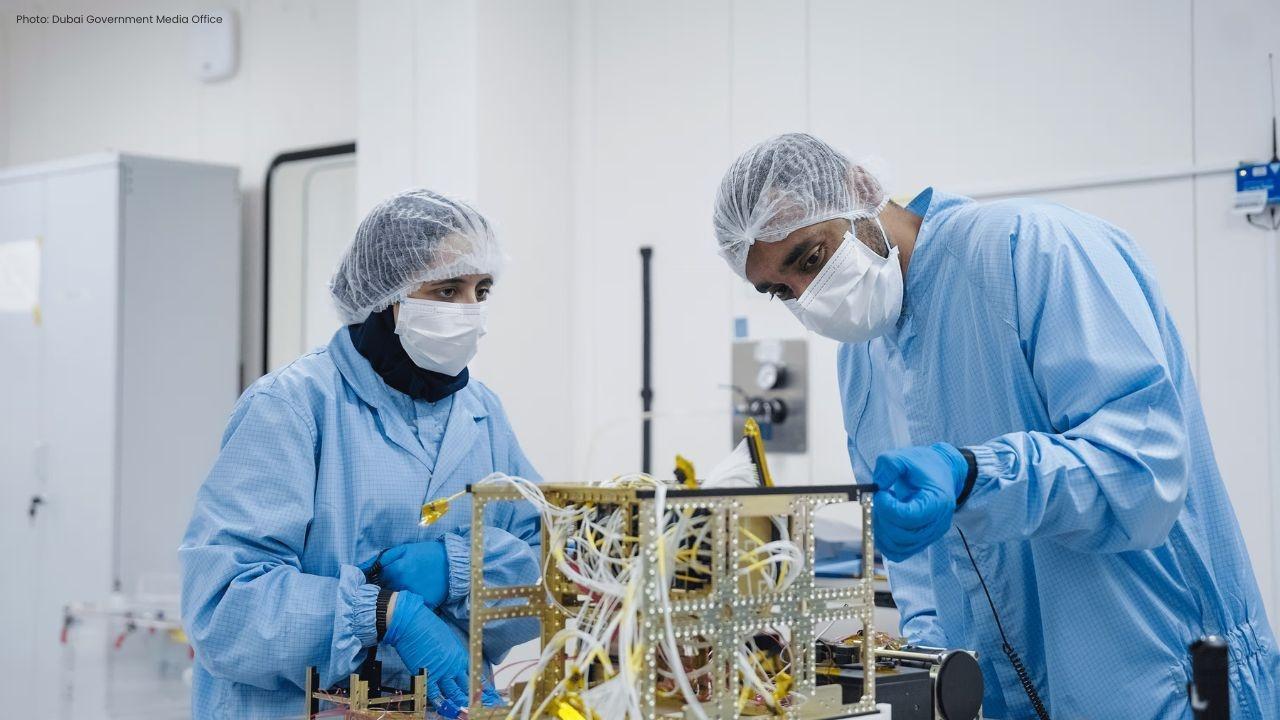
Constructed and integrated in MBRSC facilities in Dubai, PHI-1 signifies a fully indigenous endeavor in design, construction, and testing. Following its arrival in Low Earth Orbit at 500 kilometers, the satellite will relay data to MBRSC’s Ground Station and Mission Control Centre, contributing to ongoing research, education, and tech development for all involved parties.
PHI-1 underscores the UAE’s expanding influence in cultivating a more inclusive space ecosystem, driving innovation-led economies, and boosting human capacity in the realms of science and technology. With this landmark mission, the country fortifies its pledge to sustainable progress, fostering international collaborations, and opening doors for the next generation of engineers and researchers around the globe.










PM Modi Pays Tribute to Mahatma Gandhi, Urges People to Support Khadi
PM Modi pays tribute to Mahatma Gandhi on Gandhi Jayanti and urges citizens to support Khadi and the

Amazon Seeks to Offload $8 Billion in Nvidia Chips to Investors
Amazon plans to move $8 billion in Nvidia chips to investors, using a new financing model to strengt

Samsung Raises Galaxy S26 Prices as Memory Chip Costs Rise
Samsung raises Galaxy S26 prices in South Korea as rising memory chip costs put pressure on smartpho

Lewis Hamilton Calls Singapore Grand Prix One of F1's Toughest Races
Lewis Hamilton discusses the demanding Singapore Grand Prix and brings Plus44 and Almave to Singapor

Denmark's Pandora Opens World's Largest Jewellery Factory in Vietnam
Pandora opens its largest jewellery factory in Vietnam, expanding global production, strengthening s

Gautam Gambhir Questions Batting-Friendly Pitches After India's Record ODI Chase
Gautam Gambhir questions batting-friendly ODI pitches after India’s record chase, calling for a bett

