
You have not yet added any article to your bookmarks!
Join 10k+ people to get notified about new posts, news and tips.
Do not worry we don't spam!
Post by : Rohit Dhiman
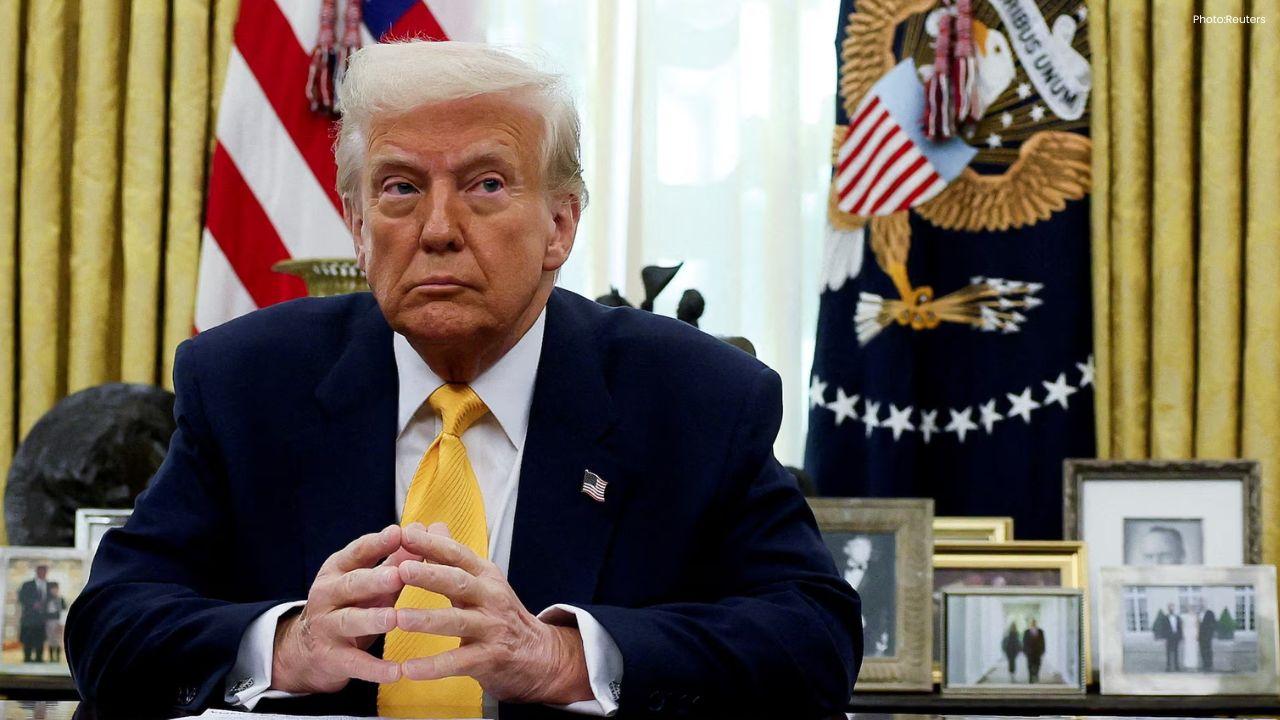
Washington: US President Donald Trump has signed legislation giving his administration new tools to increase economic pressure on Moscow over the war in Ukraine. The measure was approved by Congress after months of delay and covers a wide range of Russian economic and military interests. The new law targets Russia's energy and defence sectors and includes measures aimed at people and organisations linked to the country's leadership. It also addresses shipping networks that have been used to move Russian oil while attempting to avoid existing restrictions. One of the most significant provisions gives the US president authority to impose additional tariffs of up to 100 per cent on major countries that continue buying Russian oil and natural gas.
Trump signed the legislation on Friday, September 18, after lawmakers in Washington completed the congressional process earlier in the week. The measure is formally known as the Lindsey O. Graham Sanctioning Russia and Iran Act of 2026. It was named after the late South Carolina Republican senator Lindsey Graham, who had been a prominent supporter of stronger economic measures against Moscow. The House of Representatives approved the package by 262 votes to 159 on September 16. The Senate had already passed the legislation by an 86-11 vote in August, clearing the way for the bill to reach Trump's desk. The legislation represents a significant expansion of the tools available to the US administration as Washington continues to seek ways to pressure Moscow while diplomatic efforts surrounding the Ukraine conflict remain uncertain.
A major focus of the legislation is Russia's energy sector. Oil and gas exports remain an important source of revenue for Moscow, making energy trade a central element of Western sanctions policy. The law gives Trump additional authority to target countries that continue to purchase Russian oil and gas. The measure allows tariffs of as much as 100 per cent on imports from major buyers of Russian energy. The provision could potentially affect Russia Sanctions policies involving some of the world's largest economies. China and India are particularly important because both remain major buyers of Russian crude. However, the law gives the president discretion over whether and how the tariff authority is used. This distinction is important because the signing of the legislation itself does not mean that a 100 per cent tariff has immediately been imposed on Indian or Chinese goods.
India and China are closely watching the implementation of the new law because of their continued purchases of Russian energy. India has maintained that it will continue to protect its energy security and source crude through diversified supplies based on market conditions. New Delhi had already warned that potential US tariff action over Russian oil purchases could affect bilateral economic relations. For India, the issue is particularly significant because Russia has become an important source of crude oil for the country's refiners. Any major change in the cost or availability of Russian crude could influence refinery economics, international trade flows and domestic energy markets. China is also a major purchaser of Russian oil and could face similar pressure if Washington decides to use the tariff authority provided under the legislation. The potential impact therefore extends beyond the direct US-Russia relationship and could affect wider global energy and trade markets.
Another major target of the new legislation is Russia's so-called shadow fleet. The term generally refers to networks of ageing oil tankers and related shipping arrangements that have been used to transport Russian crude and petroleum products while attempting to circumvent Western restrictions. The new law seeks to increase pressure on these networks and on companies or foreign actors that assist Russia in avoiding sanctions. The strategy is designed to make it more difficult for Russian energy exports to move through international markets without facing the financial and logistical restrictions imposed by Western governments. By targeting shipping networks as well as the energy trade itself, Washington is attempting to put pressure on multiple parts of the supply chain.
The legislation goes beyond energy exports. It also targets Russia's defence industry, senior officials and organisations connected to Moscow's military activities. Companies and foreign actors that provide support to Russia's military can also come under the broader sanctions framework. The approach reflects Washington's effort to reduce the financial and industrial resources available to Moscow during the continuing Ukraine conflict. The legislation also extends certain sanctions related to Iran, linking the new measures to a broader US strategy focused on countries and networks Washington considers significant to its national security interests.
Read Also: Google Gemini AI Accessed Three Companies During Security Test
The tariff provision is one of the most consequential parts of the legislation because it extends the possible economic impact beyond Russia itself. Instead of limiting sanctions to Russian companies and individuals, the law creates a mechanism through which countries purchasing substantial quantities of Russian oil and gas could face higher costs for their exports to the United States. The provision could therefore affect companies and industries in countries that have major commercial relationships with the US. The legislation gives Trump substantial discretion in deciding how the authority is used. The law does not mean every major Russian energy buyer will automatically face a 100 per cent tariff. That distinction is particularly important for businesses and governments assessing the potential impact on international trade.
The legislation comes as Washington continues to pursue a combination of economic pressure and diplomatic efforts over the Ukraine war. Supporters of tougher sanctions argue that restricting Russia's access to energy revenue, financial networks and military supply chains could increase pressure on Moscow. Ukrainian President Volodymyr Zelenskyy had welcomed congressional approval of the legislation before Trump's signature, describing the measure as an important tool for increasing pressure on Russia. Russia, meanwhile, has warned that additional US sanctions could complicate efforts aimed at reaching a negotiated settlement to the conflict. Kremlin spokesman Dmitry Peskov had said before the signing that new sanctions would make the diplomatic process more difficult.
The legislation also raises questions about the balance between congressional authority and presidential control over trade policy. The tariff provisions give Trump considerable flexibility in determining how the new powers are used. Reuters reported that the law represents a major delegation of tariff authority to the executive branch, with provisions allowing the president to apply or waive certain measures under specified circumstances. That gives the White House room to adjust its approach depending on developments in the Russia-Ukraine conflict, energy markets and US foreign policy. For businesses, however, the possibility of sudden tariff changes can create uncertainty around supply chains, pricing and long-term trade agreements.
The new legislation could also influence global oil markets if major buyers alter their purchasing patterns because of the threat of US trade penalties. If large importers reduce their purchases of Russian crude, Russia could be forced to seek alternative buyers or offer deeper price discounts. At the same time, countries reducing Russian imports may need to increase purchases from other producers. Such changes could affect shipping routes, refinery supply arrangements and crude price differentials. The ultimate impact will depend on whether the Trump administration actually activates the tariff powers and how countries respond to any measures that are introduced.
For India, the immediate concern remains maintaining reliable and affordable energy supplies. New Delhi has said it will continue sourcing crude through diversified channels while responding to changing market conditions. India has also raised concerns about the possible consequences of additional US tariffs for bilateral relations and global energy stability. The situation creates a complicated policy environment for Indian refiners. Russian crude can be an important component of their supply mix, while the United States remains a major market for Indian exports. Any significant change in tariff policy could therefore have consequences for both energy procurement and trade.
The signing comes shortly before Trump is scheduled to meet Chinese President Xi Jinping in Washington. The timing is notable because China is one of the world's biggest purchasers of Russian energy and is also engaged with Washington on several other major economic issues. US-China discussions currently involve tariffs, energy, technology, rare earths and other areas of trade. The new Russia sanctions law adds another issue that could feature in the broader relationship between the two countries.
The next major question is how the Trump administration implements the powers granted by the legislation. The law provides authority for tariffs of up to 100 per cent on major buyers of Russian oil and gas, but the actual use of that authority will depend on decisions by the administration. India, China and other countries affected by the legislation will also have to assess their energy sourcing strategies and potential trade exposure. For Donald Trump, the new law provides another mechanism for combining sanctions and trade policy in an effort to increase pressure on Moscow. For Russia, the measures could increase pressure on energy revenues and shipping networks. For global markets, the consequences will depend heavily on how aggressively the new powers are used.










PM Modi Pays Tribute to Mahatma Gandhi, Urges People to Support Khadi
PM Modi pays tribute to Mahatma Gandhi on Gandhi Jayanti and urges citizens to support Khadi and the

Amazon Seeks to Offload $8 Billion in Nvidia Chips to Investors
Amazon plans to move $8 billion in Nvidia chips to investors, using a new financing model to strengt

Samsung Raises Galaxy S26 Prices as Memory Chip Costs Rise
Samsung raises Galaxy S26 prices in South Korea as rising memory chip costs put pressure on smartpho

Lewis Hamilton Calls Singapore Grand Prix One of F1's Toughest Races
Lewis Hamilton discusses the demanding Singapore Grand Prix and brings Plus44 and Almave to Singapor

Denmark's Pandora Opens World's Largest Jewellery Factory in Vietnam
Pandora opens its largest jewellery factory in Vietnam, expanding global production, strengthening s

Gautam Gambhir Questions Batting-Friendly Pitches After India's Record ODI Chase
Gautam Gambhir questions batting-friendly ODI pitches after India’s record chase, calling for a bett

