
You have not yet added any article to your bookmarks!
Join 10k+ people to get notified about new posts, news and tips.
Do not worry we don't spam!
Post by : Saif Rahman
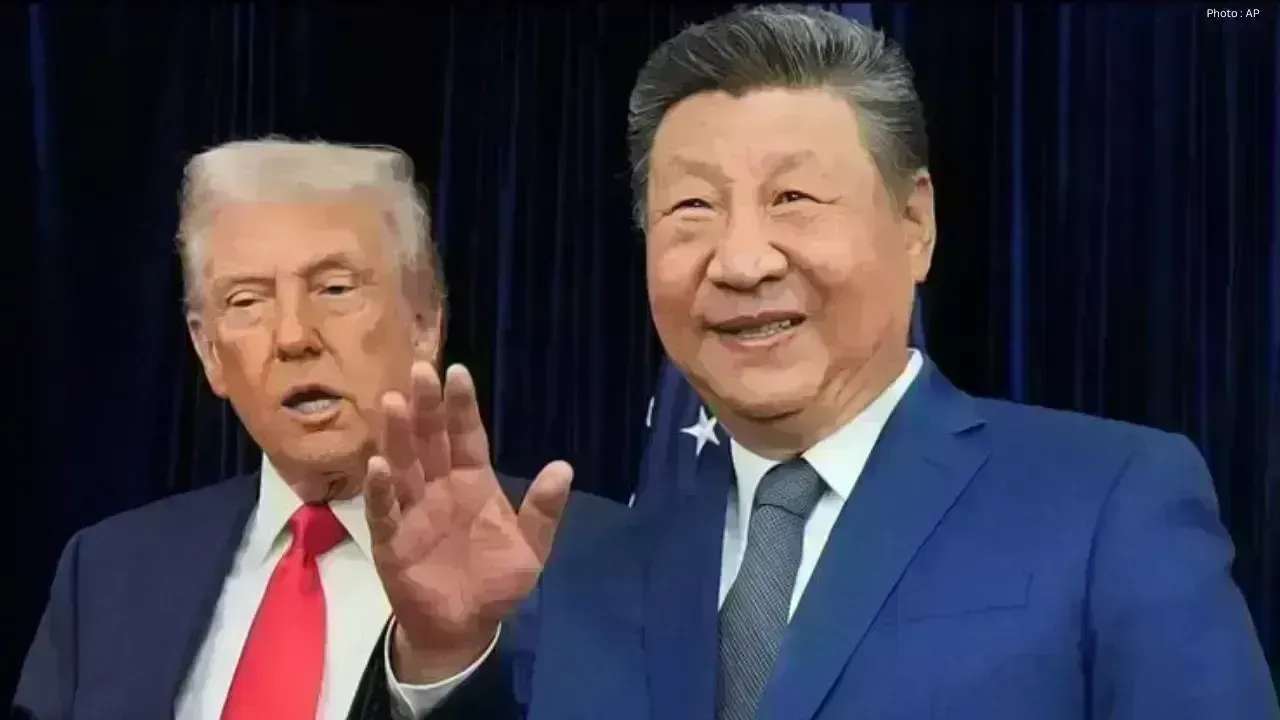
A prominent summit involving U.S. President Donald Trump and Chinese President Xi Jinping is set to take place in Beijing, capturing global interest. The discussions come amidst heightened tensions surrounding trade, Taiwan, technology, and the escalating conflict associated with Iran.
Despite both nations expressing a desire for stable relations, several critical issues remain in limbo. Analysts suggest this summit may prioritize preventing further escalations over resolving existing disagreements. The agenda is anticipated to concentrate on economic collaboration, security threats, and geopolitical stability.
Trade relations continue to be a pressing concern; the two nations have endured numerous tariff disputes in recent years. Although a temporary trade truce was established last year, significant challenges persist. The U.S. is urging China to increase its purchases of American products like soybeans, beef, and airplanes, while China seeks relief from restrictions on technology exports.
The economic landscape between these two powerhouses has shifted dramatically. American businesses are increasingly minimizing their reliance on Chinese manufacturing, while China is heavily investing in its own technology sectors to decrease dependence on Western goods. This has intensified competition in fields such as artificial intelligence and electric vehicles.
Another potential flashpoint in the summit discussions is Taiwan. China sees Taiwan as part of its territory and strongly opposes American military support for the island. Meanwhile, the U.S. continues to sell arms to Taiwan and backs its self-defense capabilities. Beijing has repeatedly cautioned Washington to adhere to the "One China" principle, warning against actions that might foster Taiwanese independence.
The intensity of military activity around Taiwan has escalated in recent years, with Chinese military operations increasing near the island, raising fears of possible confrontations. Concurrently, the U.S. and its allies are bolstering military cooperation in the Indo-Pacific, which China interprets as a challenge to its regional influence.
Compounding the discussions is the ongoing Iranian crisis. The U.S. hopes that China can leverage its relationship with Iran to help reduce escalating tensions in the Middle East. Given China's significant economic ties with Iran and oil imports, Washington believes Beijing could play a vital role in stabilizing the region.
This Iran issue is also consequential for China, which relies heavily on oil shipments through the Strait of Hormuz. Disruptions in this area pose threats to China's energy security and economic growth. Thus, Beijing has considerable motivation to support initiatives aimed at averting broader conflicts.
The summit is anticipated to attract prominent American business figures, with reports indicating that leaders from companies like Apple, Tesla, and Boeing may participate in the U.S. delegation. Their involvement underscores the considerable economic implications of U.S.-China relations, even amidst political frictions.
The results of this summit hold significant weight for businesses worldwide. A stable U.S.-China relationship can bolster global markets, streamline trade, and encourage investments. Conversely, ongoing disputes risk creating uncertainty for industries and financial markets around the globe.
Experts caution that significant breakthroughs are unlikely, given the profound differences between the two nations and their long-term strategic rivalry. Nevertheless, both administrations recognize that outright conflict could seriously harm the global economy and amplify international instability.
This summit also mirrors the evolving global power structure. China has gained economic and technological strength in recent years, while the U.S. strives to maintain its dominant global role. The rivalry is not only confined to trade but extends to military prowess, diplomacy, technology, and international alliances.
For everyday citizens globally, this summit may seem far removed, but its ramifications are extensive. The decisions taken by Washington and Beijing will impact fuel prices, job opportunities, technology access, and global peace. The interplay between these two nations is central to almost every significant global challenge today.










PM Modi Pays Tribute to Mahatma Gandhi, Urges People to Support Khadi
PM Modi pays tribute to Mahatma Gandhi on Gandhi Jayanti and urges citizens to support Khadi and the

Amazon Seeks to Offload $8 Billion in Nvidia Chips to Investors
Amazon plans to move $8 billion in Nvidia chips to investors, using a new financing model to strengt

Samsung Raises Galaxy S26 Prices as Memory Chip Costs Rise
Samsung raises Galaxy S26 prices in South Korea as rising memory chip costs put pressure on smartpho

Lewis Hamilton Calls Singapore Grand Prix One of F1's Toughest Races
Lewis Hamilton discusses the demanding Singapore Grand Prix and brings Plus44 and Almave to Singapor

Denmark's Pandora Opens World's Largest Jewellery Factory in Vietnam
Pandora opens its largest jewellery factory in Vietnam, expanding global production, strengthening s

Gautam Gambhir Questions Batting-Friendly Pitches After India's Record ODI Chase
Gautam Gambhir questions batting-friendly ODI pitches after India’s record chase, calling for a bett

