
You have not yet added any article to your bookmarks!
Join 10k+ people to get notified about new posts, news and tips.
Do not worry we don't spam!
Post by : Shweta
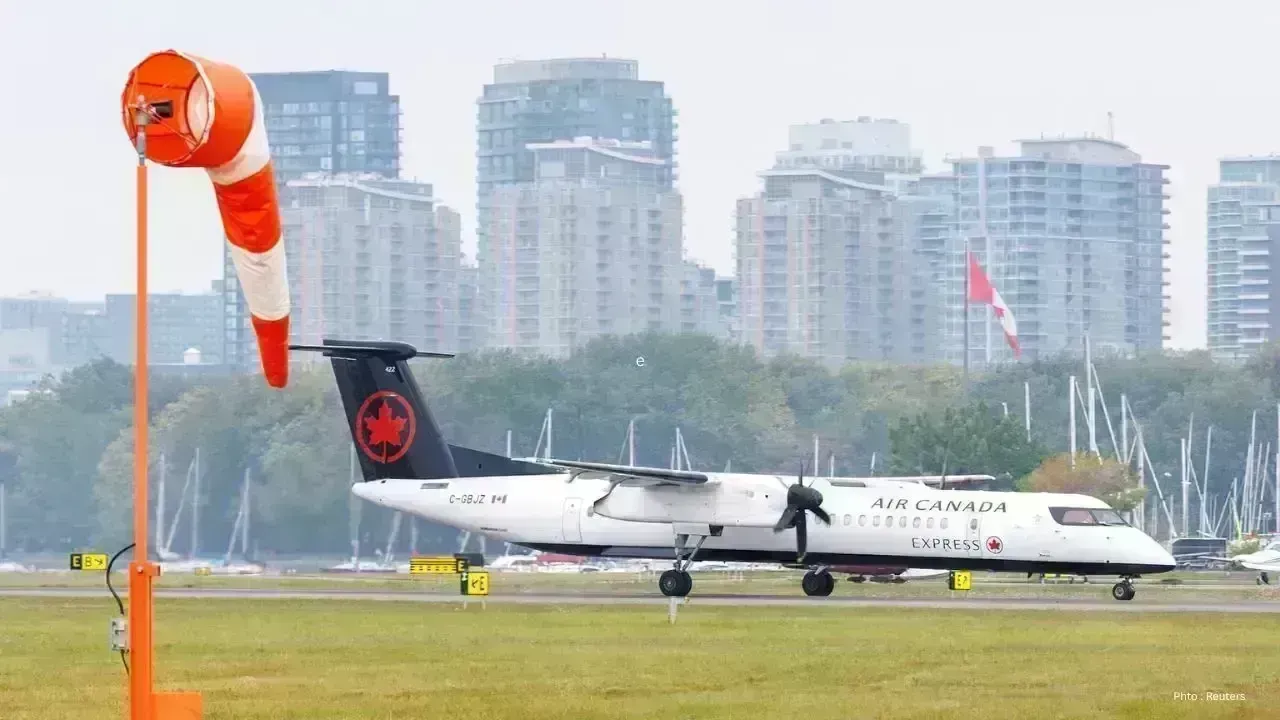
The proposed expansion of Billy Bishop Airport in Toronto could have significant repercussions on the development of a major new waterfront community in the city’s eastern harbour. Urban planners and officials believe that changes at the airport might necessitate adjustments to structures, housing density, and infrastructural strategies for the future neighbourhood on Ookwemin Minising Island, formerly known as Villiers Island.
This burgeoning community aims to accommodate approximately 21,000 residents as part of Toronto’s long-term strategy for waterfront revitalization. Designed after extensive flood protection initiatives near the Don River, the area will feature residential towers, parks, walkable streets, affordable housing, and communal spaces. City officials have recently approved revised designs that incorporate more affordable units, thereby increasing the project’s density.
However, the uncertainty surrounding Billy Bishop's expansion has raised concerns among city planners and developers. The provincial government, under Premier Doug Ford, has announced intentions to enhance and enlarge the airport, which could potentially allow for the operation of larger aircraft. Supporters of the expansion argue it will bolster regional transport, foster tourism, generate jobs, and alleviate pressure on Toronto Pearson International Airport.
Urban planners suggest the airport's expansion could significantly influence the positioning and design of buildings within the island community. The established flight paths will dictate the maximum building heights and positioning across the waterfront. Should the airport adapt to larger aircraft or different runway setups, it may compel the city to modify aspects of the neighbourhood plan to comply with aviation safety norms.
Toronto’s chief planner, Jason Thorne, noted that current development initiatives are based on the existing operations of turboprop aircraft at Billy Bishop. Any modifications to flight trajectories or runway configurations could greatly impact where taller residential towers are permissible. Officials acknowledged the uncertainty surrounding airport expansion plans means the ultimate effect on the waterfront community is still unclear.
The Ontario government has been a staunch advocate for airport modernization in recent times. Announcements emphasize that the airport currently serves around two million passengers but could scale up to handle ten million under future expansion strategies. Authorities believe that such developments would bolster economic activity, enhance airline competitiveness, and improve connectivity across Ontario and North America.
Critics, however, warn that airport expansion presents serious challenges for Toronto’s waterfront development ambitions. Local community groups, councillors, and residents are voicing concerns about increased aircraft noise, air pollution, traffic issues, and limited housing prospects near the waterfront. Planners worry that stringent aviation regulations could hinder the creation of homes and affordable housing in the area.
Reports indicate that the airport's expansion could involve extending runways further into Lake Ontario, which would necessitate major infrastructural changes around the waterfront. This situation heightens the debate about how Toronto can find a balance between transportation development and residential growth, alongside environmental considerations.
This scenario has escalated into one of Toronto’s most significant urban planning discussions. Advocates for the airport expansion argue that enhancing Billy Bishop will boost the city economy and simplify travel, while detractors believe prioritizing housing development and public waterfront areas is essential. Many residents are also calling for comprehensive public consultation before major airport changes proceed.
Despite this ongoing uncertainty, city officials remain committed to the waterfront project, which is slated to become one of Toronto’s largest new residential districts over the next decade. Yet, planners concede that the ultimate layout of the neighbourhood may hinge on the province's decisions regarding the airport expansion in the near future.










PM Modi Pays Tribute to Mahatma Gandhi, Urges People to Support Khadi
PM Modi pays tribute to Mahatma Gandhi on Gandhi Jayanti and urges citizens to support Khadi and the

Amazon Seeks to Offload $8 Billion in Nvidia Chips to Investors
Amazon plans to move $8 billion in Nvidia chips to investors, using a new financing model to strengt

Samsung Raises Galaxy S26 Prices as Memory Chip Costs Rise
Samsung raises Galaxy S26 prices in South Korea as rising memory chip costs put pressure on smartpho

Lewis Hamilton Calls Singapore Grand Prix One of F1's Toughest Races
Lewis Hamilton discusses the demanding Singapore Grand Prix and brings Plus44 and Almave to Singapor

Denmark's Pandora Opens World's Largest Jewellery Factory in Vietnam
Pandora opens its largest jewellery factory in Vietnam, expanding global production, strengthening s

Gautam Gambhir Questions Batting-Friendly Pitches After India's Record ODI Chase
Gautam Gambhir questions batting-friendly ODI pitches after India’s record chase, calling for a bett

