
You have not yet added any article to your bookmarks!
Join 10k+ people to get notified about new posts, news and tips.
Do not worry we don't spam!
Post by : Anis Farhan
Photo: Reuters
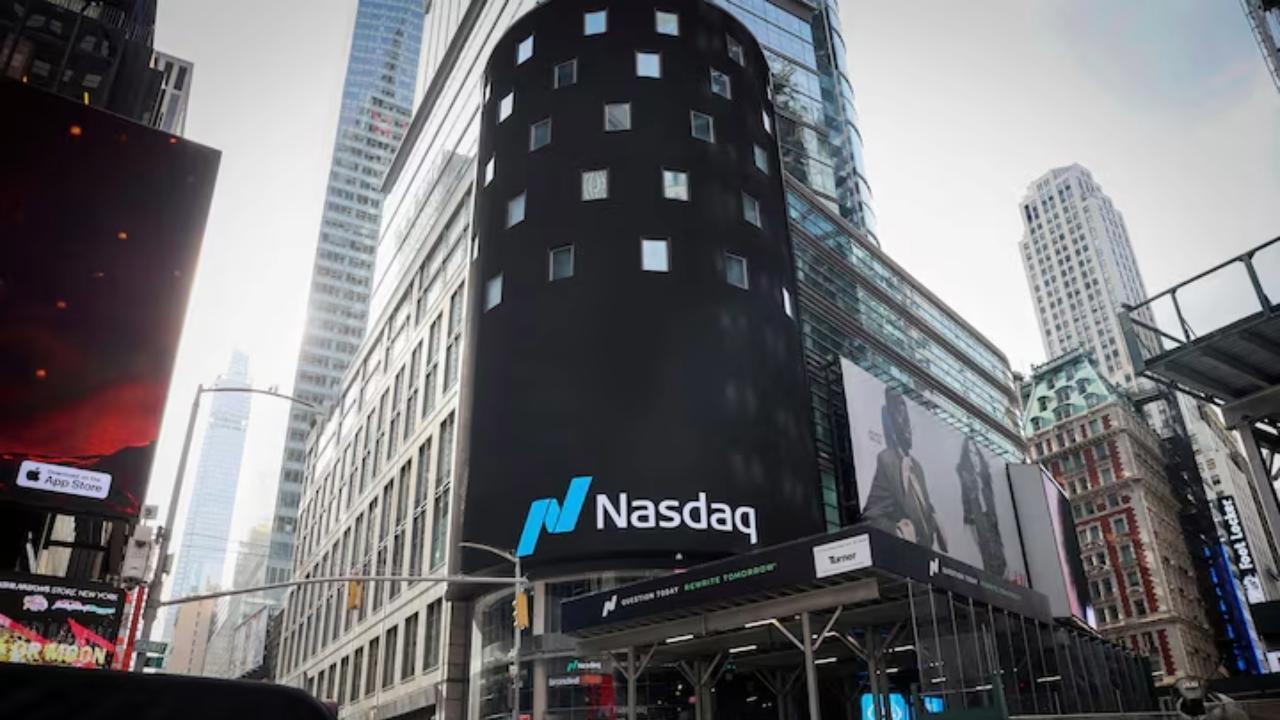
The Nasdaq-100 — the world’s most closely watched tech index — has surged to historic highs in mid-2025, outperforming other major global benchmarks. With a year-to-date gain of over 21%, the tech-heavy index has been buoyed by explosive momentum in artificial intelligence, semiconductors, and cloud infrastructure.
But behind the headlines lies a deeper story: investor confidence, geopolitical hedging, and post-inflation policy optimism are converging to create one of the strongest bull phases the tech sector has seen since the early 2010s.
Is this growth sustainable, or are we in another euphoric phase waiting to cool off?
The single most significant driver of the Nasdaq’s performance is the widespread deployment and monetization of generative AI technologies. Since late 2023, tech giants like NVIDIA, Microsoft, Alphabet, and Meta have doubled down on AI investments — not just in product development but in infrastructure, acquisitions, and open-source innovation.
NVIDIA, in particular, has become the bellwether of this rally. Its dominance in AI-optimized chips and data center architecture has made it the second most valuable public company by market cap, surpassing even Apple at one point in June 2025.
AI isn't just a buzzword anymore — it's delivering real, recurring revenue. Whether in search, cloud services, productivity tools, or content generation, the tech sector has found a commercial pathway to making AI mainstream.
In parallel, semiconductors have become the new oil. The global race to secure chip manufacturing supremacy — intensified by U.S.-China tensions — has created a massive capital influx into the sector.
Companies like AMD, Broadcom, and ASML are witnessing record order books. U.S. chipmaking firms have not only benefited from robust domestic demand but also from geopolitical tailwinds. With restrictions on Chinese tech tightening, Western and Southeast Asian countries are increasing reliance on U.S.-designed chips and manufacturing equipment.
The CHIPS and Science Act, reauthorized with additional funding in 2024, is beginning to yield results — not just in fabrication capacity, but in market sentiment. As chip shortages fade and supply chains stabilize, investors are betting big on long-term profitability in this space.
Another key force behind the Nasdaq’s rise is the rapid reversal of investor sentiment. Just a year ago, tech stocks were under pressure from rate hikes, cost-cutting layoffs, and regulatory scrutiny. In 2025, the script has flipped.
With inflation trending downward and the Federal Reserve signaling rate cuts as early as Q3, capital is flowing back into growth-oriented assets. Risk appetite has returned — and nowhere is this more evident than in tech.
Retail and institutional investors alike are rebalancing portfolios toward technology. Even traditional asset managers, previously cautious after the 2022-2023 volatility, are now issuing bullish forecasts for the sector into 2026.
Cloud computing — often considered a mature sector — has seen a revival in enterprise adoption, thanks to AI-driven workloads. Enterprises are shifting more of their operations to hybrid and public cloud setups, requiring advanced orchestration tools, storage solutions, and compute flexibility.
Companies like Snowflake, Oracle, and Microsoft Azure have reported above-expected quarterly growth, driven by demand for AI model hosting and real-time analytics. This, in turn, has brought smaller SaaS and DevOps providers back into investor focus, giving a more distributed lift to the broader Nasdaq ecosystem.
With all-time highs come natural concerns about overvaluation. The Nasdaq’s price-to-earnings ratio now sits above its 10-year average, prompting questions about whether we are in an unsustainable “AI bubble.”
But analysts argue this cycle is fundamentally different from the 2021 rally or the dot-com era. Key differences include:
Strong cash flows from leading tech firms
Clear use cases for AI in enterprise and consumer markets
Global policy support, including subsidies for infrastructure and R&D
Diversified revenue streams compared to past cycles
Still, some froth is visible in unproven AI startups with sky-high valuations. Investors are being advised to stay selective and focus on fundamentals over hype.
The Nasdaq rally is not just a U.S. phenomenon — it has ripple effects globally. European and Asian tech firms have seen correlated gains, especially those tied to U.S. supply chains or AI partnerships.
In Southeast Asia, for instance, Singapore-based AI and chip design firms have seen upticks in cross-border investment. Similarly, Indian IT services firms are launching AI co-pilots and devtools that cater to U.S. markets, riding the Nasdaq wave from afar.
As the index climbs, correlation risk also increases — meaning a tech pullback could have a global impact. But for now, the Nasdaq rally is serving as a bellwether of global tech optimism.
This article is intended for editorial and informational purposes only. It does not constitute financial or investment advice. Readers should conduct their own analysis or consult a licensed advisor before making investment decisions. Stock market conditions are subject to change.










PM Modi Pays Tribute to Mahatma Gandhi, Urges People to Support Khadi
PM Modi pays tribute to Mahatma Gandhi on Gandhi Jayanti and urges citizens to support Khadi and the

Amazon Seeks to Offload $8 Billion in Nvidia Chips to Investors
Amazon plans to move $8 billion in Nvidia chips to investors, using a new financing model to strengt

Samsung Raises Galaxy S26 Prices as Memory Chip Costs Rise
Samsung raises Galaxy S26 prices in South Korea as rising memory chip costs put pressure on smartpho

Lewis Hamilton Calls Singapore Grand Prix One of F1's Toughest Races
Lewis Hamilton discusses the demanding Singapore Grand Prix and brings Plus44 and Almave to Singapor

Denmark's Pandora Opens World's Largest Jewellery Factory in Vietnam
Pandora opens its largest jewellery factory in Vietnam, expanding global production, strengthening s

Gautam Gambhir Questions Batting-Friendly Pitches After India's Record ODI Chase
Gautam Gambhir questions batting-friendly ODI pitches after India’s record chase, calling for a bett

