You have not yet added any article to your bookmarks!
Join 10k+ people to get notified about new posts, news and tips.
Do not worry we don't spam!
Post by : Anis Farhan
The term “Cold War” carries heavy historical weight. It evokes memories of divided worlds, ideological standoffs, proxy conflicts, and constant nuclear anxiety. Yet in recent years, the phrase has returned to mainstream conversation—this time with a qualifier: the “New Cold War.” While history never repeats itself exactly, the comparison reflects a growing sense that global politics has entered another prolonged phase of rivalry and tension.
What makes today’s situation distinctive is its subtlety. There are no clear front lines, no visible walls dividing the world into neat halves. Instead, competition unfolds through economic pressure, technological dominance, influence over global institutions, and control of narratives. This new era is quieter on the surface but deeply consequential beneath it.
One of the defining features of today’s global environment is prolonged tension without open large-scale war between major powers. Disagreements simmer across trade, security, technology, and influence, but direct confrontation is carefully avoided.
This mirrors a key characteristic of the earlier Cold War: rivalry constrained by mutual awareness of catastrophic consequences. The absence of outright war does not signal peace; it signals restraint shaped by risk.
Unlike short-term crises, today’s tensions feel structural. They are embedded in long-term strategies rather than reactive responses. Nations are planning for decades of competition, not quick resolution, reinforcing the idea that the world has entered a new cold phase rather than a temporary standoff.
The earlier Cold War was driven by a stark ideological contrast. Today’s tensions lack such clarity. The competition is less about exporting a single worldview and more about securing influence, stability, and advantage.
Countries often cooperate economically while competing strategically, creating a complex web of interdependence that did not exist in the past.
Unlike the previous era, today’s rivals are deeply economically intertwined. Trade, investment, and supply chains bind competitors together, making complete separation impractical.
This interdependence acts as both a stabiliser and a weapon. Economic ties discourage outright conflict, but they also create vulnerabilities that can be exploited through restrictions and pressure.
Technology has emerged as one of the most critical arenas of competition. Leadership in advanced technologies shapes economic power, military capability, and global influence.
The battle is not just about invention, but about setting standards that others must follow. Whoever defines the rules of emerging technologies gains long-term leverage.
Cyber operations have become a central feature of modern rivalry. Disruption, espionage, and influence campaigns occur continuously, often without public acknowledgment.
This invisible battlefield allows countries to compete aggressively while maintaining plausible deniability, reinforcing the cold nature of the conflict.
Economic measures have replaced many traditional military tools. Sanctions, export controls, and trade barriers are now primary instruments of statecraft.
These actions aim to weaken rivals economically, limit access to critical resources, and shape behaviour without firing a shot.
Control over key supply chains has become a source of power. By influencing access to essential goods or components, countries can exert pressure far beyond their borders.
This has led to efforts to diversify suppliers and reduce dependence, accelerating global economic fragmentation.
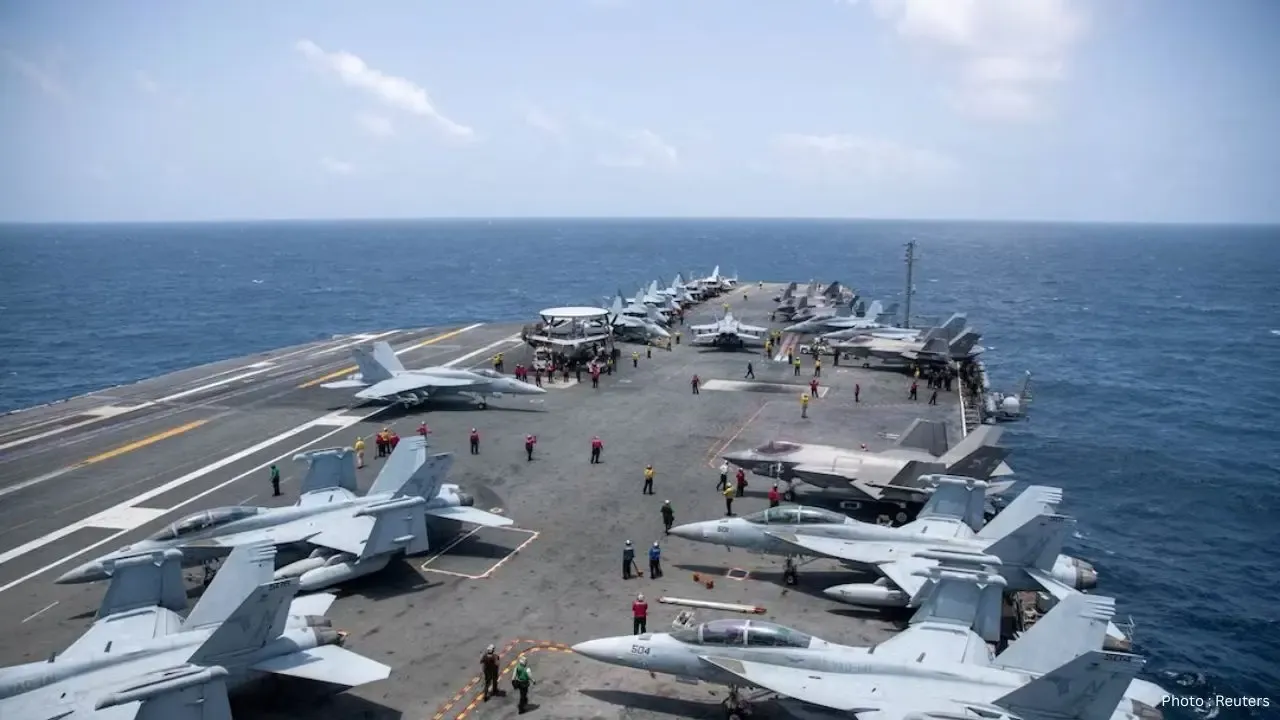
Military activity remains central to today’s tensions, but it is carefully calibrated. Exercises, deployments, and strategic signalling are used to demonstrate capability without triggering escalation.
These actions serve as reminders of power and resolve, reinforcing deterrence while avoiding direct confrontation.
Rather than fighting directly, rival powers often support opposing sides in regional conflicts. These proxy engagements allow competition to play out without direct clashes between major players.
Such conflicts prolong instability while keeping primary rivals one step removed from the battlefield.
Control over information has become a strategic objective. Governments invest heavily in shaping narratives at home and abroad, recognising that perception influences power.
Competing interpretations of events circulate globally, blurring truth and complicating diplomacy.
Beyond news, influence extends to culture, education, and online discourse. Soft power tools are used to build sympathy, legitimacy, and long-term alignment.
This struggle for hearts and minds is quieter than traditional propaganda, but equally persistent.
International institutions were designed for cooperation, but prolonged rivalry has weakened consensus. Disagreements among powerful members limit effectiveness.
As a result, institutions struggle to respond decisively to crises, reinforcing the perception of a fragmented global order.
In response, countries are creating alternative frameworks and partnerships. These parallel systems reflect distrust in existing structures and a desire for greater control.
This trend deepens division and reduces shared governance.
Smaller nations often find themselves navigating pressure from multiple sides. Aligning too closely with one camp risks retaliation from another.
As a result, many pursue strategic autonomy—cooperating selectively while avoiding permanent alignment.
Ironically, rivalry among major powers can increase the influence of smaller states. Their cooperation becomes valuable, giving them greater negotiating power.
The global economy is not collapsing, but it is changing shape. Countries are reassessing exposure to geopolitical risk and prioritising trusted partnerships.
This leads to selective integration rather than universal openness.
Economic fragmentation increases costs, reduces efficiency, and slows growth. Yet many governments accept these trade-offs in exchange for greater security and resilience.
Unlike the rigid standoff of the past, today’s tensions involve constant low-level friction. Cyber incidents, economic measures, and diplomatic disputes occur regularly.
This continuous pressure creates fatigue and uncertainty, making the global environment feel persistently unstable.
The absence of clear boundaries between peace and war complicates response. When competition is constant, escalation risks rise unintentionally.
Global tensions affect prices, jobs, and growth. Trade disruptions and supply chain shifts raise costs that ultimately reach consumers.
Economic uncertainty also dampens investment and confidence.
Restrictions and competition influence which technologies are available and how they are governed. Consumers experience these effects through platforms, devices, and services.
Avoiding disaster depends on maintaining balance. Clear communication, mutual understanding of red lines, and restraint remain essential.
History shows that rivalry can coexist with stability when managed carefully.
Engagement does not imply trust, but it reduces miscalculation. Even during periods of tension, communication channels play a critical role.
The earlier Cold War offers lessons about restraint, crisis management, and the dangers of escalation. However, applying those lessons requires adaptation.
Today’s interconnected world demands new approaches to old problems.
Framing current tensions solely through historical analogies can oversimplify reality. The present is more complex, more interconnected, and more fluid.
Most signs suggest that global tensions will persist rather than resolve quickly. Competition is becoming a permanent feature of international relations.
Preparing for endurance, not resolution, is shaping policy choices.
Countries, institutions, and societies must adapt to a world where rivalry is constant. Flexibility, resilience, and strategic clarity matter more than dominance.
Today’s global tensions resemble a Cold War in structure but not in form. There are no clear blocs, no single ideology, and no fixed battle lines. Instead, competition plays out across economics, technology, information, and influence—constantly and quietly.
Calling it a “New Cold War” captures the endurance of rivalry, but not its complexity. This era is defined by overlap as much as opposition, cooperation as much as conflict. Understanding this reality is essential, because the greatest risk lies not in confrontation, but in misjudging a world where peace and competition exist side by side.
Disclaimer:
This article is intended for informational and analytical purposes only. It does not constitute political, diplomatic, or strategic advice. Global geopolitical conditions may change over time.






George Russell Wins Dutch GP Sprint, Boosts Mercedes Morale
George Russell wins the Dutch GP Sprint from pole as Mercedes teammate Kimi Antonelli extends his F1

Australia 50/3 After Bangladesh Bowled Out for 64 in Second Test
Australia reached 50/3 after Bangladesh were bowled out for 64 in the second Test, with Mitchell Sta

Jordan Burroughs Returns to Wrestling with 2028 Olympic Dream
Jordan Burroughs returns to wrestling with Real American Freestyle as the Olympic champion eyes a po

Lamborghini Catches Fire on Singapore's ECP, Causing Heavy Traffic
A Lamborghini caught fire on Singapore's ECP, causing heavy traffic and bus delays. No injuries were

Bangkok Airport Duty-Free Area Flooded by Pipe Burst
A burst water pipe flooded the duty-free shopping area at Bangkok's Suvarnabhumi Airport on July 16,
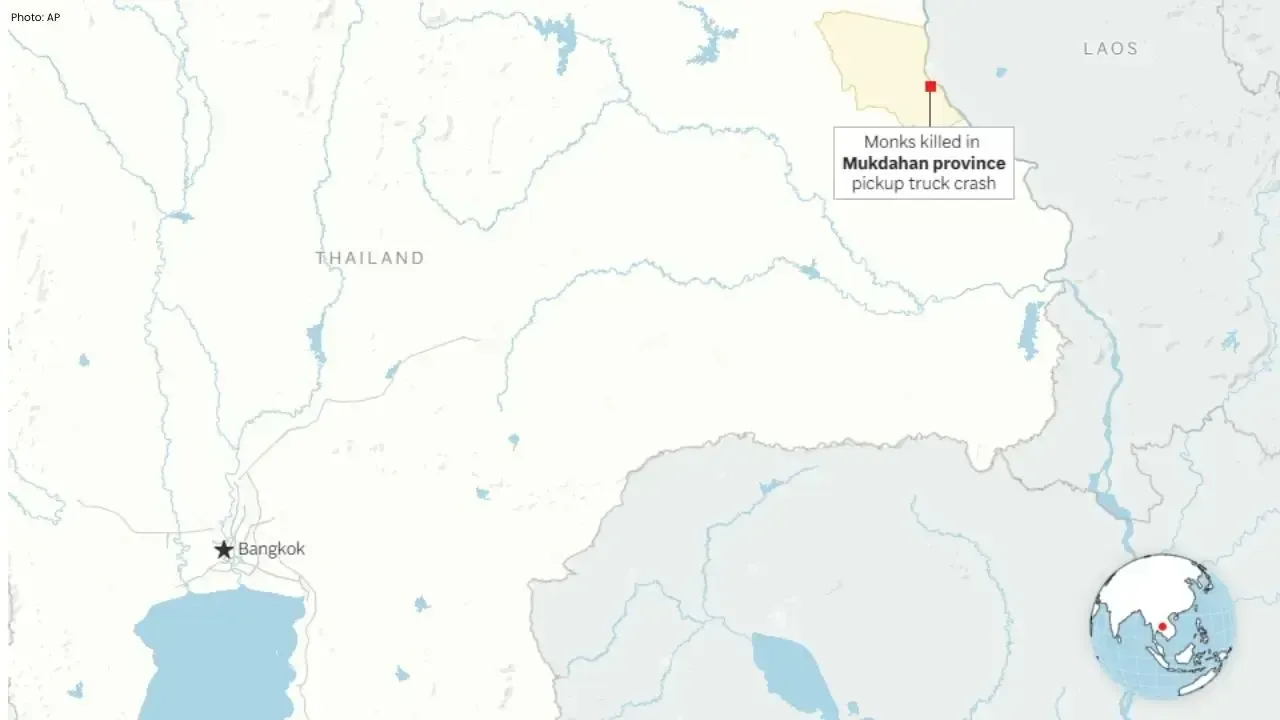
Nine Monks Killed in Thailand Pickup Truck Tragedy
An 11-year-old boy driving a pickup truck crashed into monks during a pilgrimage in northeastern Tha