
You have not yet added any article to your bookmarks!
Join 10k+ people to get notified about new posts, news and tips.
Do not worry we don't spam!
Post by : Saif Rahman
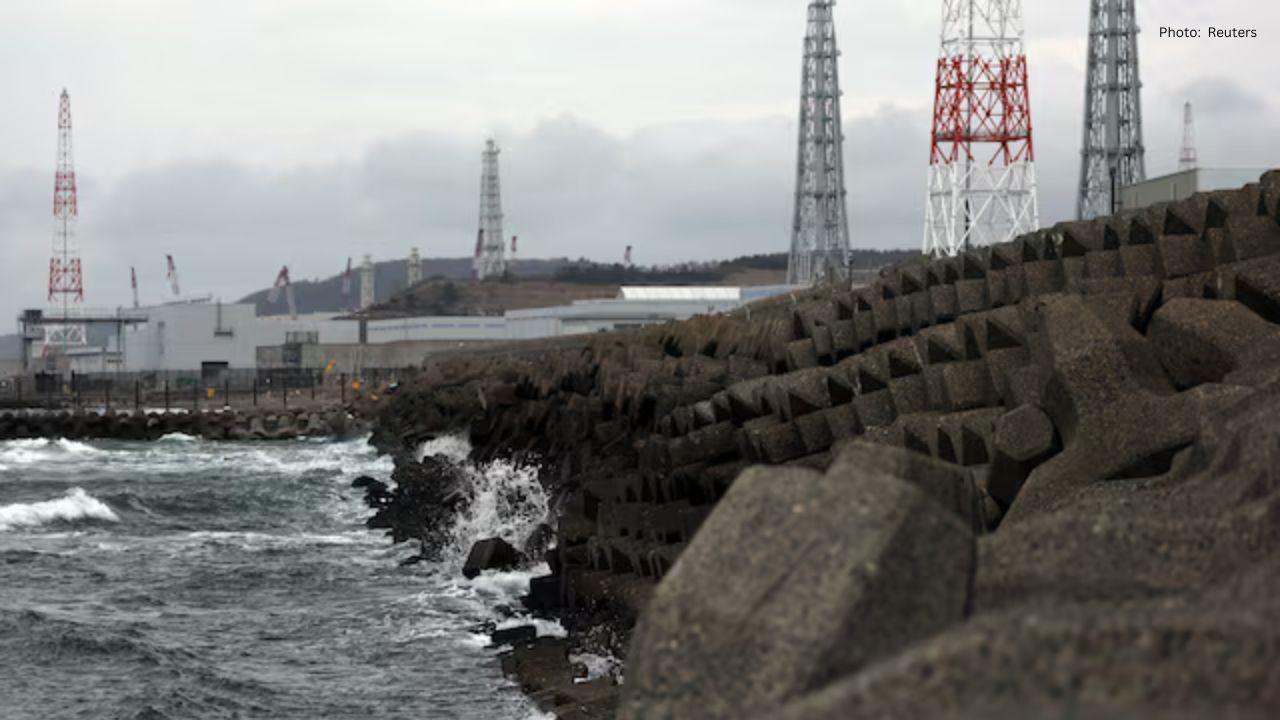
Japan is set to partially resume operations at its largest nuclear facility, a significant development in the nation’s energy landscape more than ten years after the Fukushima disaster. The Tokyo Electric Power Company (TEPCO) has announced plans to bring one unit of the Kashiwazaki-Kariwa nuclear power plant back online on January 20.
Situated in Niigata prefecture, about 220 kilometers from Tokyo, the Kashiwazaki-Kariwa plant boasts a total capacity of 8.2 gigawatts, enough to power millions of households. The upcoming restart will reactivate one reactor unit with a capacity of 1.36 gigawatts, with another unit planned for a reboot around 2030.
This initiative received approval from the Niigata prefectural assembly earlier this week, marking a pivotal endorsement for the partial restart. This will be the first time TEPCO has revived a nuclear reactor since the 2011 Fukushima Daiichi nuclear incident, where a devastating earthquake and tsunami resulted in a meltdown and led to the widespread shutdown of Japan's nuclear facilities.
TEPCO President Tomoaki Kobayakawa emphasized the company's heightened responsibility following the Fukushima event, asserting that safety will be paramount and that insights from the past will influence their approach to restarting operations. The company has committed to a careful strategy anchored in strict safety protocols.
Following the 2011 incident, Japan deactivated all 54 of its nuclear reactors. Of the 33 reactors still assessed as operable, only 14 have been restarted to date. As a result, Japan has had to rely heavily on imported fossil fuels, escalating costs and carbon emissions.
In response, the government has been shifting its focus to reintegrate nuclear energy into its power supply framework. In November, Japan put forward a public lending initiative to bolster nuclear energy and indicated intentions to double its share in the electricity portfolio. The upcoming restart at Kashiwazaki-Kariwa is anticipated to be a crucial milestone in achieving this vision.
TEPCO has also indicated that it may permanently retire some of the plant’s remaining reactors based on forthcoming safety assessments and projected energy demand. Public sentiment in Japan regarding nuclear energy is still mixed, with considerable trepidation about safety issues persisting among many citizens.
This planned restart signifies a measured yet distinct transition in Japan’s energy approach. As the nation strives for reliable power sources and endeavors to lessen its dependency on fossil fuel imports, the Kashiwazaki-Kariwa plant could become instrumental in reshaping Japan’s energy future.









PSG Coach Luis Enrique Urges Players to Step Outside Comfort Zone
PSG coach Luis Enrique says players must leave their comfort zone and keep improving as the club tar

China’s Tiangong Sets New 400m Record at Robot Olympics
China’s Tiangong robot sets a new 400m record at the Robot Olympics, beating a South African robot i

George Russell Wins Dutch GP Sprint, Boosts Mercedes Morale
George Russell wins the Dutch GP Sprint from pole as Mercedes teammate Kimi Antonelli extends his F1

Australia 50/3 After Bangladesh Bowled Out for 64 in Second Test
Australia reached 50/3 after Bangladesh were bowled out for 64 in the second Test, with Mitchell Sta

Jordan Burroughs Returns to Wrestling with 2028 Olympic Dream
Jordan Burroughs returns to wrestling with Real American Freestyle as the Olympic champion eyes a po

Lamborghini Catches Fire on Singapore's ECP, Causing Heavy Traffic
A Lamborghini caught fire on Singapore's ECP, causing heavy traffic and bus delays. No injuries were

