You have not yet added any article to your bookmarks!
Join 10k+ people to get notified about new posts, news and tips.
Do not worry we don't spam!
Post by : Saif Rahman
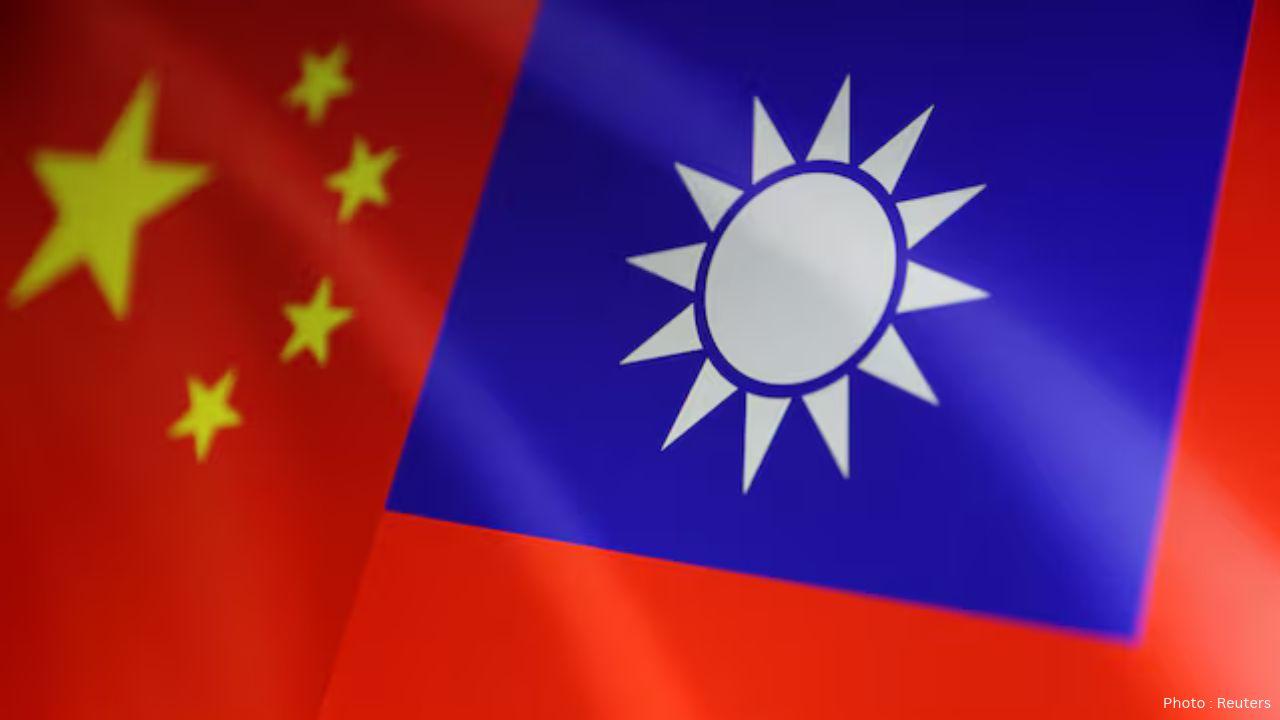
Taiwan has criticised China’s latest commemoration of the island’s return to Chinese rule after World War Two, accusing Beijing of using historical events to influence public opinion and increase pressure on the self-governed island. The dispute intensified after China released high-resolution satellite images of Taipei and published a military poster marking the anniversary.
Taiwan’s Defence Minister Wellington Koo described Beijing’s actions as “cognitive warfare,” arguing that China was using historical narratives to support its political claims over Taiwan. The disagreement highlights the continuing tensions between Beijing and Taipei over the island’s history, political status and future.
China marked the anniversary of Japan’s transfer of Taiwan to the Republic of China government in 1945 by releasing detailed satellite images of Taipei. The images included prominent locations such as Taipei railway station and the National Palace Museum.
The museum houses a large collection of Chinese historical artefacts that were brought to Taiwan in 1949, when the Republic of China government relocated to the island after losing the Chinese civil war to communist forces.
China’s Eastern Theatre Command also released a military propaganda poster featuring a map of Taiwan alongside images of fighter jets and warships. The poster carried the message “Remember the history of the restoration,” reinforcing Beijing’s interpretation of the historical anniversary.
The release of the images and military-themed material drew criticism from Taiwan’s leadership, which views such messaging as part of China’s broader pressure campaign.
Speaking to reporters in Taipei, Defence Minister Wellington Koo argued that the People’s Republic of China was established in 1949 and should not claim direct political authority based on events that took place before its establishment.
Japan took control of Taiwan from China’s Qing Dynasty in 1895 and governed the island until the end of World War Two. In 1945, Japan transferred Taiwan to the Republic of China government.
Beijing and Taipei commemorate the historical event, but they interpret its political significance differently. China uses the anniversary to support its position that Taiwan belongs under Chinese sovereignty, while Taiwan’s government rejects Beijing’s claims to rule the island.
Koo said China’s use of historical events was intended to shape public perceptions and reinforce its claims over Taiwan.
Taiwan also marked a different event from its military history: the unsuccessful attempt by the People’s Liberation Army to invade Kinmen in late October 1949.
Kinmen is a group of islands located close to China’s southeastern coast but remains under Taiwan’s administration. The attempted invasion took place during the period following the Chinese civil war, when communist forces had established control over mainland China and the Republic of China government had retreated to Taiwan.
Koo said the anniversary of the Kinmen battle was more relevant to Taiwan’s security concerns. He argued that the event served as a reminder of the continuing risk of military action against the island.
Taiwan’s government has repeatedly warned that Beijing has not ruled out using force to bring Taiwan under its control.
Read more: Taiwan's Appeal for Increased Chip Investments in Arizona to Fortify U.S. Relations
China considers Taiwan part of its territory and has maintained that unification is a national objective. Beijing has also refused to rule out military force if it believes such action is necessary.
Taiwan, meanwhile, is governed by a democratically elected administration that rejects Beijing’s sovereignty claims. The island maintains its own political institutions, military and administration.
The two sides remain divided over the interpretation of their shared history, particularly events surrounding the end of Japanese rule and the establishment of the People’s Republic of China.
The latest disagreement demonstrates how historical anniversaries remain closely connected to the political dispute between China and Taiwan. Beijing’s commemorations combine historical messaging with military imagery, while Taiwan’s leadership views such actions as an attempt to strengthen China’s claims over the island.
The dispute comes amid continued concerns about China’s military activities around Taiwan and the possibility of further escalation across the Taiwan Strait.
For Taiwan, the central issue remains protecting its existing political system and security. For Beijing, the island remains a key part of its territorial claims. These opposing positions continue to complicate relations and leave the future of cross-strait ties uncertain.







APEC Members Emphasise Safe and Responsible Use of Artificial Intelligence
APEC members discuss responsible AI use, digital innovation and data governance as China and the US

Union of European Clubs Challenge UEFA and EFC Over EU Competition Rules
UEC files an EU competition complaint against UEFA and EFC, challenging club representation, governa

Mohammed Shami Retires From Test Cricket, Eyes White-Ball Career
Mohammed Shami retires from Test cricket after 13 years, with 229 wickets. He will continue playing

Singapore Warns Users About Privacy and Security Risks of AI Agents
Singapore warns users about AI agent security risks, data privacy, online scams and unauthorised acc

Chris Lynn Completes One-Month Ban After Positive Cocaine Test
Australian cricketer Chris Lynn completes a one-month ban after a positive cocaine test during the T
Djokovic Eyes Strong Season Finish as Health Improves Ahead of Paris Masters
Novak Djokovic reports improved health and performance as he targets a strong Paris Masters finish a