
You have not yet added any article to your bookmarks!
Join 10k+ people to get notified about new posts, news and tips.
Do not worry we don't spam!
Post by : Shakul
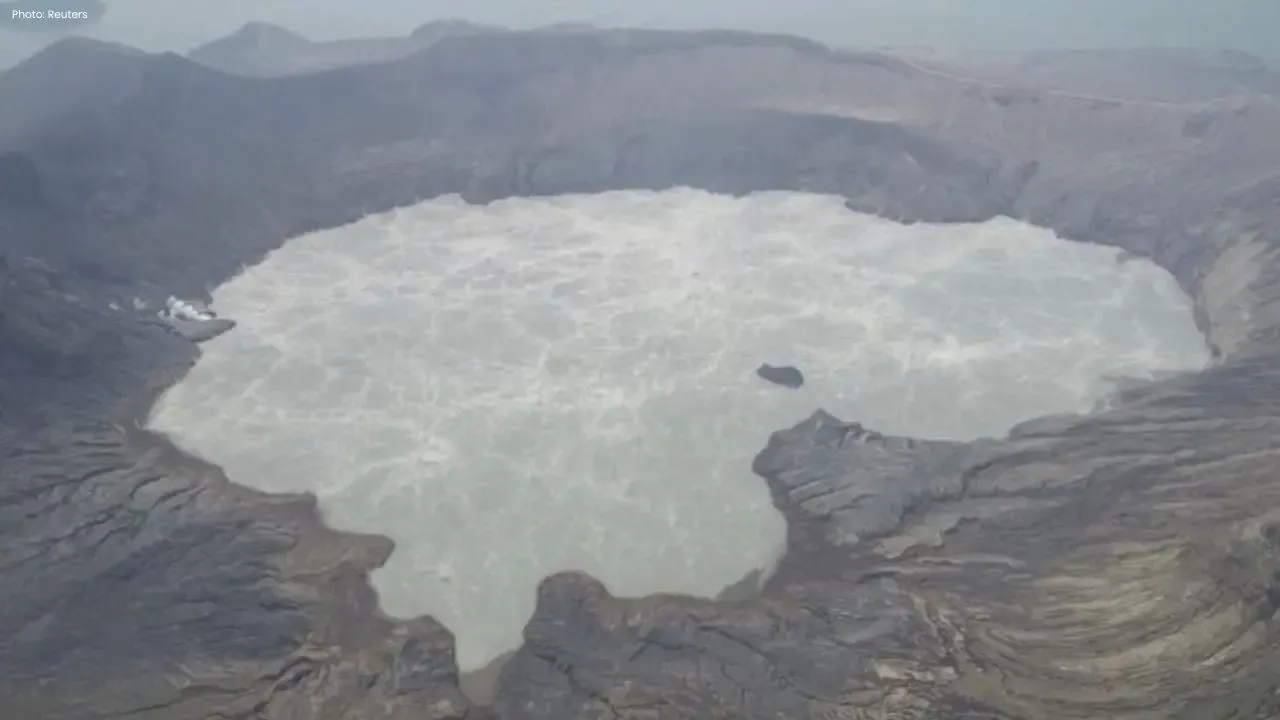
Taal Volcano in the Philippines produced a dramatic phreatomagmatic eruption, sending a massive ash and steam column about 450 metres (1,476 feet) into the sky. The eruption lasted around four minutes and created a spectacular volcanic plume visible from surrounding areas.
Rare Waves Form Inside Crater Lake
The eruption also generated unusual tsunami-like waves across Taal's Main Crater Lake. According to the Philippine Institute of Volcanology and Seismology (PHIVOLCS), the waves remained inside the crater lake and did not cause significant damage to nearby communities.
Read Also: Lewotobi Volcano Erupts Again Sends Ash 18km Into the Sky
What Caused the Tsunami-Like Waves?
The waves were created when rising magma came into contact with water, producing a powerful steam-driven explosion known as a phreatomagmatic eruption. Experts said such eruptions release enormous energy within a short period, causing both towering ash clouds and water displacement inside volcanic lakes.
Why did tsunami-like waves form after the Taal eruption?
PHIVOLCS explained that the eruption caused magma to interact violently with water inside the crater lake. This sudden release of energy generated waves across the lake, although they remained confined within the volcano's crater and posed no wider tsunami threat.
Alert Level Remains Unchanged
Authorities have kept Alert Level 1 in place, indicating low-level volcanic unrest. However, PHIVOLCS warned that sudden steam-driven eruptions, ash emissions and dangerous volcanic gases remain possible inside Taal Volcano Island, which continues to be designated as a Permanent Danger Zone.
Public Still Barred From Volcano Island
Officials reminded the public that access to Taal Volcano Island remains prohibited because hazardous conditions can develop without warning. Emergency agencies continue monitoring volcanic activity while advising residents and visitors to follow official safety instructions.
Philippines Continues Monitoring Active Volcano
Taal Volcano remains one of the Philippines' most active volcanoes. Although the latest eruption was classified as minor, scientists continue monitoring seismic activity, volcanic gas emissions and ground deformation to detect any signs of increased volcanic unrest.
Highlights Volcano's Power
Videos of the eruption quickly spread online, showing the towering ash plume followed by concentric waves moving across the crater lake. Scientists said the event demonstrates how even relatively small volcanic eruptions can produce powerful geological phenomena while remaining limited in overall impact.










APEC Members Emphasise Safe and Responsible Use of Artificial Intelligence
APEC members discuss responsible AI use, digital innovation and data governance as China and the US

Union of European Clubs Challenge UEFA and EFC Over EU Competition Rules
UEC files an EU competition complaint against UEFA and EFC, challenging club representation, governa

Mohammed Shami Retires From Test Cricket, Eyes White-Ball Career
Mohammed Shami retires from Test cricket after 13 years, with 229 wickets. He will continue playing

Singapore Warns Users About Privacy and Security Risks of AI Agents
Singapore warns users about AI agent security risks, data privacy, online scams and unauthorised acc

Chris Lynn Completes One-Month Ban After Positive Cocaine Test
Australian cricketer Chris Lynn completes a one-month ban after a positive cocaine test during the T

Djokovic Eyes Strong Season Finish as Health Improves Ahead of Paris Masters
Novak Djokovic reports improved health and performance as he targets a strong Paris Masters finish a