
You have not yet added any article to your bookmarks!
Join 10k+ people to get notified about new posts, news and tips.
Do not worry we don't spam!
Post by : Rameen Ariff
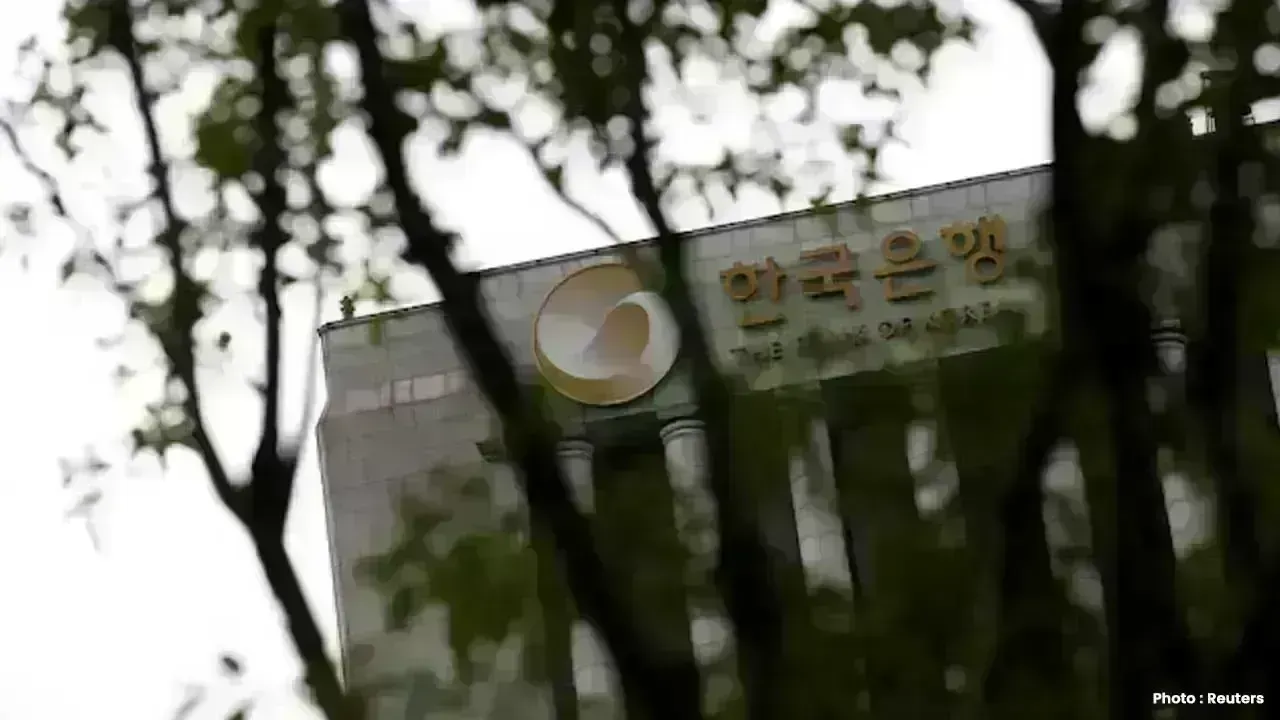
South Korea’s central bank has kept interest rates unchanged for the fourth consecutive meeting, signaling that it may be approaching the end of its current rate cut cycle. The Bank of Korea (BOK) announced on Thursday that the benchmark interest rate will remain at 2.50%, in line with market expectations.
The BOK also updated its economic outlook, raising growth and inflation forecasts for 2025 to 1.0% and 2.1% respectively. In a notable change, the central bank removed language from its previous statement that suggested a continued “rate cut stance” and instead said, “the Board will decide whether and when to implement any further Base Rate cuts.” This shift indicates a more cautious approach amid a weakening Korean won.
Governor Rhee Chang-yong highlighted concerns over the falling currency, noting that the won’s decline could contribute to rising prices. “Businesses focused on domestic demand could face challenges, although the overall impact on the economy is still unclear,” he said.
The South Korean economy is navigating complex risks. While domestic consumption is picking up, the weakening currency limits the central bank’s ability to stimulate growth without stoking inflation. Analysts now expect the next potential rate cut to occur in the first quarter of 2026 rather than later this year. Some policymakers remain cautious about easing further, citing rising housing prices in Seoul and financial stability concerns.
Ahn Jae-kyun, an economist at Korea Investment Securities, said, “It’s difficult to rule out further easing completely, but the likelihood of additional rate cuts is low. Rates are expected to stay on hold for now.” He also noted that it is too early to consider rate hikes due to the possibility of an economic downturn in the second quarter of next year.
The Korean won has fallen sharply this quarter, dropping nearly 4% against the US dollar, making it the second-worst performing currency in Asia after the Japanese yen. The government has engaged with major financial players, including the National Pension Service and exporters, to explore measures to stabilise the dollar-won market, though no specific actions have been announced.
Looking ahead, the BOK expects South Korea’s economy to grow 1.8% in 2026, with headline inflation remaining at 2.1%, highlighting the delicate balance the central bank must maintain between supporting growth and controlling inflation.










PM Modi Pays Tribute to Mahatma Gandhi, Urges People to Support Khadi
PM Modi pays tribute to Mahatma Gandhi on Gandhi Jayanti and urges citizens to support Khadi and the

Amazon Seeks to Offload $8 Billion in Nvidia Chips to Investors
Amazon plans to move $8 billion in Nvidia chips to investors, using a new financing model to strengt

Samsung Raises Galaxy S26 Prices as Memory Chip Costs Rise
Samsung raises Galaxy S26 prices in South Korea as rising memory chip costs put pressure on smartpho

Lewis Hamilton Calls Singapore Grand Prix One of F1's Toughest Races
Lewis Hamilton discusses the demanding Singapore Grand Prix and brings Plus44 and Almave to Singapor

Denmark's Pandora Opens World's Largest Jewellery Factory in Vietnam
Pandora opens its largest jewellery factory in Vietnam, expanding global production, strengthening s

Gautam Gambhir Questions Batting-Friendly Pitches After India's Record ODI Chase
Gautam Gambhir questions batting-friendly ODI pitches after India’s record chase, calling for a bett

