You have not yet added any article to your bookmarks!
Join 10k+ people to get notified about new posts, news and tips.
Do not worry we don't spam!
Post by : Rameen Ariff
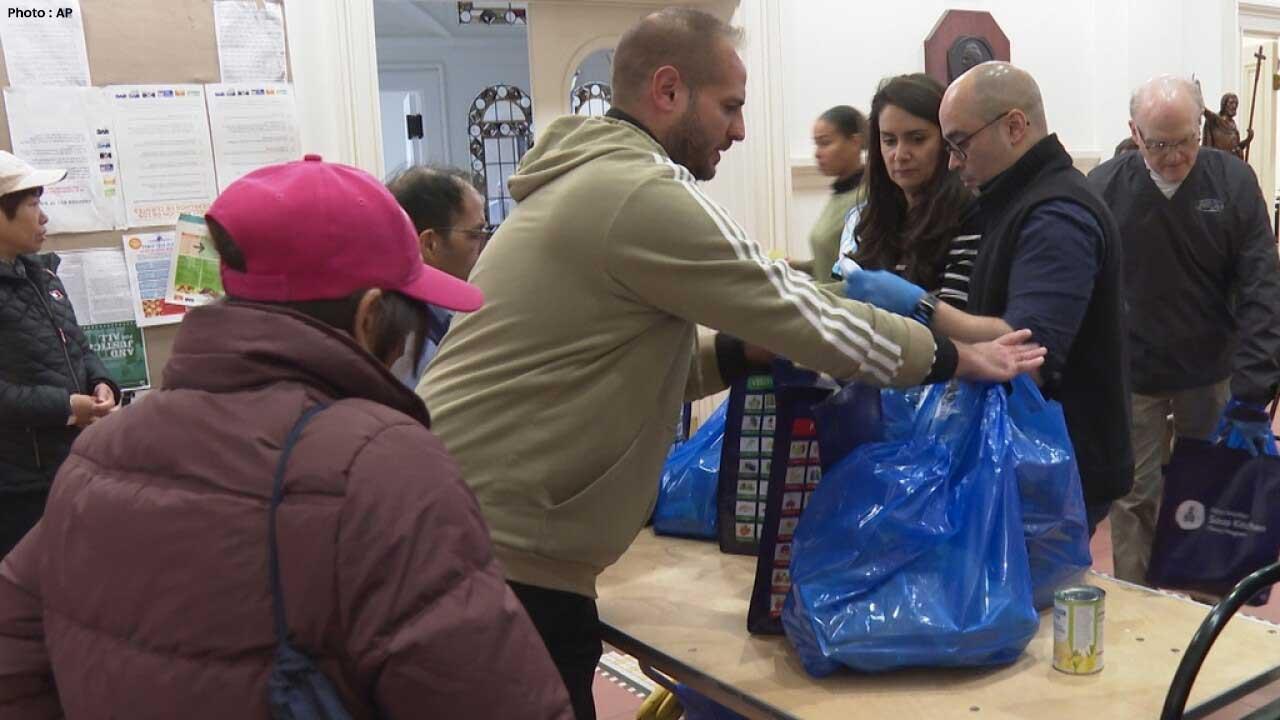
WASHINGTON, D.C. – As the U.S. grapples with a government funding crisis, millions of families dependent on the Supplemental Nutrition Assistance Program (SNAP) face an uncertain future. With the halt of federal food aid, experts warn that the disruption will disproportionately hurt Black Americans, exposing deep-rooted racial and economic inequalities across the nation.
Currently, one in eight Americans relies on SNAP, the country’s largest food assistance program. But for many Black households, it serves as a critical lifeline amid widening income gaps and persistent job insecurity. Black Americans represent 12.6% of the U.S. population but account for more than 25% of SNAP recipients, highlighting how structural inequities continue to drive disproportionate need.
At New York’s Holy Apostles Soup Kitchen, long lines have become a daily sight. Among those waiting is 63-year-old Willy Hilaire, a homeless grandfather caring for two grandchildren. Dependent on SNAP for basic meals, Hilaire fears that the program’s suspension could leave his family hungry.
“Whatever I have, I’ll give to them,” he said. “But when there’s nothing left, what can I do?”
Two federal judges ordered the continuation of SNAP funding through contingency reserves, but officials admitted that payments could not be restored immediately. Even a temporary disruption could have lasting consequences for low-income families who already struggle to meet basic needs like rent, fuel, and healthcare.
While non-Hispanic white Americans make up 58% of the population, they constitute only 35% of SNAP beneficiaries. Meanwhile, Black Americans remain overrepresented due to systemic barriers such as employment discrimination, unequal access to education, and limited generational wealth.
The National Urban League reported that the racial income gap has remained unchanged for over two decades. On average, Black Americans earn only 64% of the income of their white counterparts. Simultaneously, Black unemployment rose to 7.5% in 2025, the highest since 2021, while Black homeownership dropped to a four-year low.
Marc Morial, president of a leading civil rights organization, explained, “After centuries of slavery and segregation, economic parity remains elusive. Discrimination persists in hiring, housing, and wages, leaving many Black families dependent on programs like SNAP just to survive.”
The SNAP halt is also shaking Native American communities, where food assistance programs are tied to federal trust and treaty obligations. A Brookings Institution report revealed that nearly two-thirds of tribal welfare programs rely on discretionary federal funding, leaving them vulnerable during government shutdowns.
Mary Greene-Trottier, president of the Food Distribution Program on Indian Reservations (FDPIR), said, “This is the weaponization of food again. History is repeating itself — when food becomes a tool of control instead of support.”
Tribal nations, including Cherokee Nation, Spirit Lake Nation, and Standing Rock Sioux Tribe, have already declared states of emergency as the food crisis looms.
Contrary to stereotypes, a majority of adult SNAP recipients work full-time or part-time. Yet, with low-wage jobs offering no benefits or job security, many still depend on government assistance to survive. The average benefit — about $187 a month — is often not enough to cover rising food prices.
In New York, Asian American workers also face similar struggles. The Asian American Federation reports that over 91% of SNAP users in NYC’s Asian community are employed, but limited English fluency and gentrification are pushing many families into poverty.
For pastors, activists, and community leaders across the U.S., the looming SNAP halt is not just a policy issue — it’s a humanitarian crisis. In Phoenix, Pastor Cleo Lewis has organized food drives to help local families survive the shutdown’s fallout.
“We usually focus on spiritual needs,” he said. “But now, we’re dealing with hunger. People are choosing between food, rent, and medicine.”
As the government scrambles to restore aid, one truth remains clear: the end of federal food assistance threatens to deepen America’s racial and economic divides. For millions of Black Americans, the SNAP halt isn’t just about food — it’s about survival, dignity, and the promise of equality that still feels out of reach.









Rabada Misses First Australia Test as South Africa Pick Two Spinners
Kagiso Rabada misses the opener as South Africa vs Australia begins, with Anrich Nortje returning an

Starc Compares Australia's Tough Year to McIlroy's Major Sweep
Mitchell Starc says Australia winning three away Test series and the World Cup would match Rory McIl

France’s Sesterce Plans $11 Billion AI Data Centre in Finland
Sesterce plans a $11 billion AI data centre in Finland, with major expansion, green energy plans and

Danaher to Launch AI-Powered Autonomous Research Lab in 2027
Danaher plans an AI research lab for 2027, combining robotics and automation to speed up drug discov

Musk Welcomes German Support for Tesla Driver Assistance Tech as EU Approval Push Continues
Elon Musk welcomes Germany's backing for Tesla FSD as the company seeks EU approval amid speed, safe

Microsoft and Nvidia CEOs to Unveil AI Laptop at San Francisco Event
Microsoft and Nvidia showcase a new AI laptop with RTX Spark chips as they push powerful local AI co