
You have not yet added any article to your bookmarks!
Join 10k+ people to get notified about new posts, news and tips.
Do not worry we don't spam!
Post by : Saif Rahman
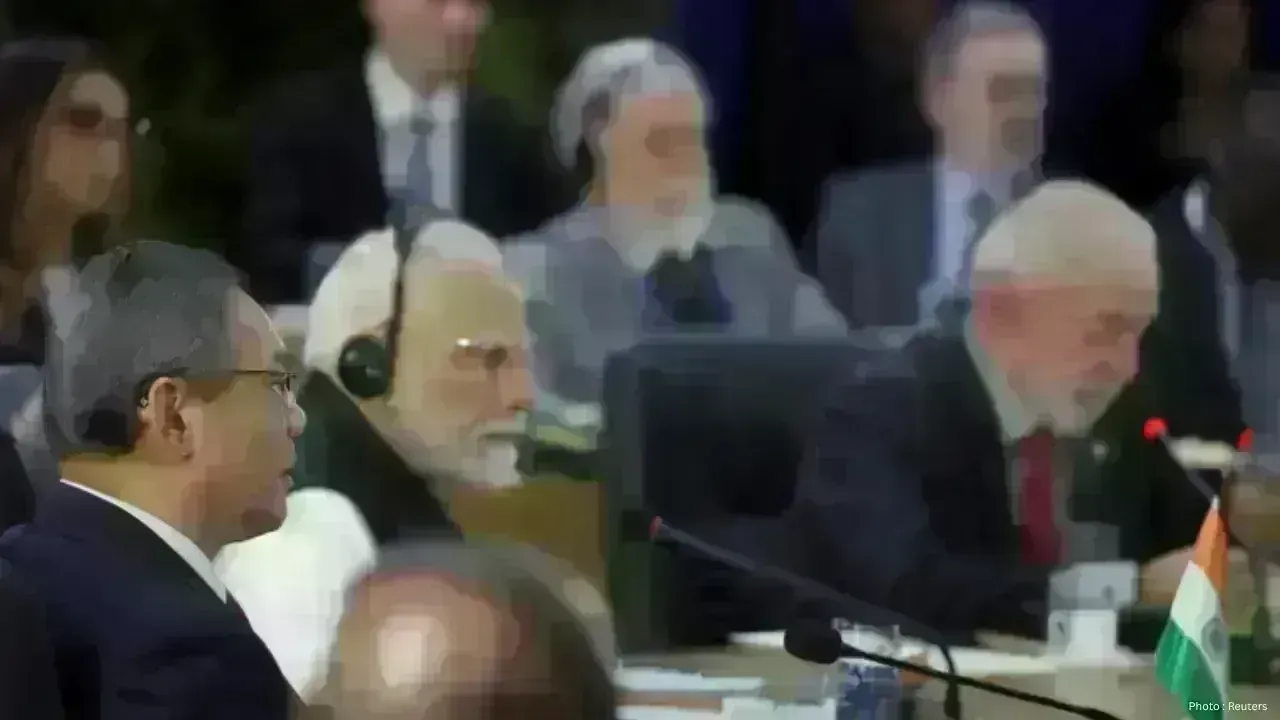
India is currently hosting a pivotal meeting of foreign ministers from BRICS against the backdrop of escalating tensions due to the Iran conflict. Observers worldwide are keenly monitoring the discussions in New Delhi, where the focus will be on regional stability, energy issues, and the evolving role of BRICS in international relations.
The BRICS alliance, consisting of Brazil, Russia, India, China, and South Africa, has recently expanded to include new members from the Middle East, Africa, and Asia. This growth has heightened the group's global influence and rendered its meetings critical in times of crisis.
This annual foreign ministers’ gathering arrives at a particularly challenging moment, as the Iran situation raises fears of regional chaos, soaring oil prices, and interruptions to global trade. Many nations are concerned that a broader conflict in the West Asia could jeopardize fuel supply chains, maritime routes, and overall economic stability.
India's hosting role is particularly vital since New Delhi shares diplomatic ties with a wide array of countries involved in the crisis. India's strategic relationships span Iran, Gulf nations, Russia, Israel, and Western powers, positioning it as a unique player capable of fostering dialogue amid rising tensions.
Energy security is a chief concern for the diplomats during their discussions. The situation in Iran has intensified worries regarding the safety of major oil shipping channels, particularly through the Strait of Hormuz, which carries a significant portion of the world's oil supply, making its stability crucial for global markets.
Many BRICS nations rely heavily on imported energy, meaning that rising oil costs and potential supply interruptions could lead to inflationary pressures on both developing and developed economies. Therefore, energy matters are expected to be at the forefront of the talks.
The meeting also uncovers some divisions within BRICS. Certain member states have taken more definitive stances regarding the Iran conflict, while others pursue a balanced diplomatic approach. These differences highlight the challenges of maintaining unity in a large coalition during global crises.
Nonetheless, BRICS continues to position itself as a representative voice for developing nations and emerging economies. Numerous countries view the group as a counter-narrative platform for discussing global issues without leaning toward traditional Western powers.
Through this meeting in New Delhi, India has also sought to enhance collaboration within BRICS on topics such as trade, technology, climate change, and international reform, solidifying its image as a key diplomatic player globally.
The presence of senior foreign ministers from important countries amplifies the stakes of these discussions, which will encompass matters not only related to the Iran conflict but also economic cooperation, regional security, and future challenges.
In this pressing global climate, effective diplomacy has become more crucial than ever. Ongoing wars, sanctions, trade disputes, and economic unpredictability are impacting countries worldwide. Thus, international coalitions like BRICS face the challenge of demonstrating their capability to navigate these issues through dialogue.
This meeting is also a significant chance for India to reinforce its leadership among developing nations. In recent years, India has positioned itself as a bridge between major powers and emerging economies.
Experts opine that BRICS's future success may hinge on how effectively it addresses international crises while juggling the varied interests of its members. As the organization expands, the challenges of sustaining unity become both more pronounced and critical.
The New Delhi event mirrors a shifting geopolitical landscape where new alliances are increasingly influential. Countries are seeking enhanced cooperation on energy security, trade stability, and regional peace amidst growing global uncertainty.
Thus, the BRICS foreign ministers’ meeting transcends a mere diplomatic exercise; it serves as a vital platform for dialogues concerning conflict, economic stability, energy security, and the trajectory of global governance.
#world news #Global News #World Update #Global Updates #Middle East










PM Modi Pays Tribute to Mahatma Gandhi, Urges People to Support Khadi
PM Modi pays tribute to Mahatma Gandhi on Gandhi Jayanti and urges citizens to support Khadi and the

Amazon Seeks to Offload $8 Billion in Nvidia Chips to Investors
Amazon plans to move $8 billion in Nvidia chips to investors, using a new financing model to strengt

Samsung Raises Galaxy S26 Prices as Memory Chip Costs Rise
Samsung raises Galaxy S26 prices in South Korea as rising memory chip costs put pressure on smartpho

Lewis Hamilton Calls Singapore Grand Prix One of F1's Toughest Races
Lewis Hamilton discusses the demanding Singapore Grand Prix and brings Plus44 and Almave to Singapor

Denmark's Pandora Opens World's Largest Jewellery Factory in Vietnam
Pandora opens its largest jewellery factory in Vietnam, expanding global production, strengthening s

Gautam Gambhir Questions Batting-Friendly Pitches After India's Record ODI Chase
Gautam Gambhir questions batting-friendly ODI pitches after India’s record chase, calling for a bett

