
You have not yet added any article to your bookmarks!
Join 10k+ people to get notified about new posts, news and tips.
Do not worry we don't spam!
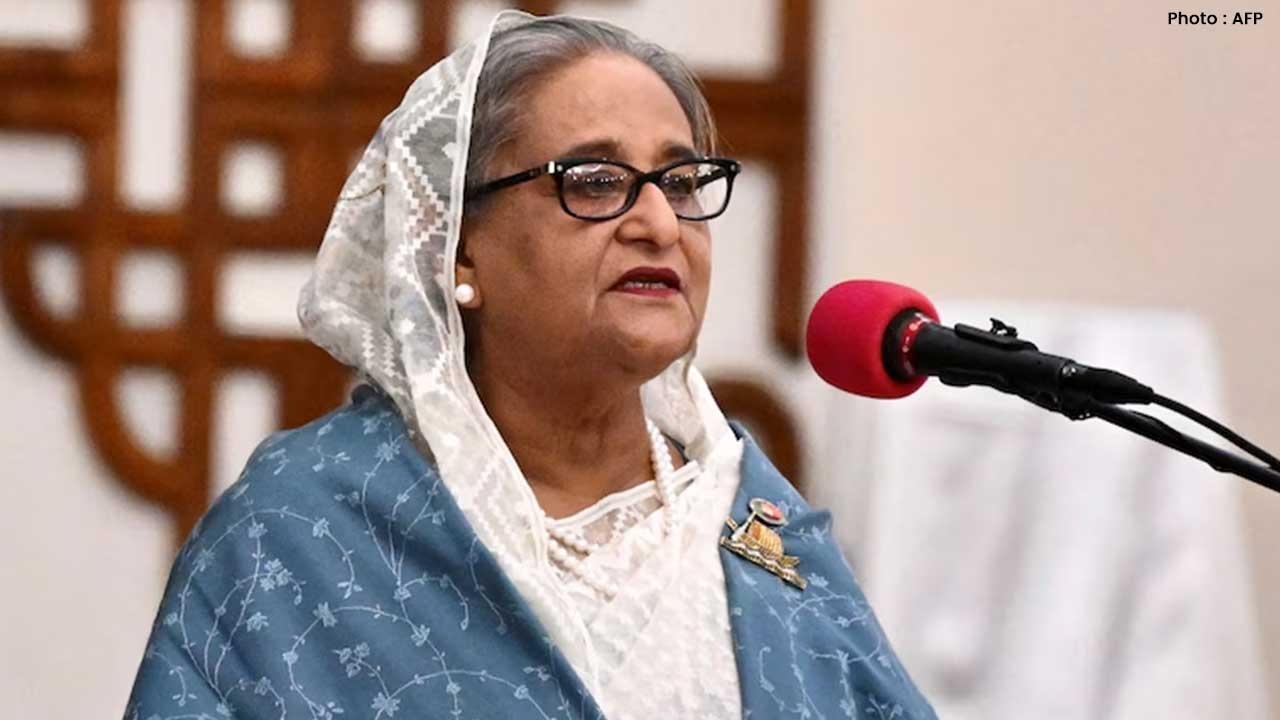
Post by : Rameen Ariff
On the eve of a potentially pivotal court verdict, former Prime Minister Sheikh Hasina has issued a powerful audio statement from Delhi, where she staunchly denies all accusations of crimes against humanity. In her words targeted at supporters, the 78-year-old leader expressed no fear regarding the impending judgment, asserting, “Let them issue a verdict. I don’t care. Allah gave me life, Allah will take it,” signifying a new chapter in Bangladesh’s political saga.
A close ally of India for over a decade, Hasina fled to Delhi last year following nationwide protests that led to the downfall of her government. What started as a student-led initiative spiraled into widespread chaos, resulting in her resignation just hours before demonstrators entered the capital. An interim government under Nobel laureate Muhammad Yunus took control, accusing her of significant human rights infractions. Though summoned to Dhaka, she opted not to attend, asserting that the charges were politically driven to sideline her party.
In her message, Hasina accused the interim government of plotting to dismantle the Awami League, claiming, “The interim government wants to finish off the Awami League. But Awami League did not come from the pocket of any usurper of power. It rose from the grassroots.” Her tone displayed both frustration and determination, as she thanked her supporters for their unwavering loyalty and courage amidst the political tumult.
She expressed faith in the Bangladeshi populace to render true justice, disputing the tribunal’s credibility. Hasina referred to Yunus disdainfully, labeling him as “corrupt, militant, and a murderer,” and hinted at a forthcoming transformation under genuine leadership. Her assertions painted her as a political martyr, suffering for her decades of service.
Rejecting all allegations regarding human rights violations during her tenure, she reminded critics of her government’s role in providing refuge to over a million Rohingya refugees. “I gave refuge to 10 lakh Rohingya and they accuse me of violating human rights?” she challenged, questioning the interim authorities' ethical stance.
Hasina also launched a pointed critique of the current regime, accusing it of constitutional violations by forcibly ousting elected officials. She condemned the amnesty given to individuals charged with heinous crimes against police officers, journalists, and her party workers, questioning the morality behind such decisions: “What kind of humanity is this?”
Despite her political exile, Hasina vowed to remain steadfast in serving Bangladesh. She expressed confidence in restoring public trust, stating, “I am alive, I will stay alive, I will work for the welfare of people again. Everything will be accounted for, and I believe I will give it back, inshallah.” This message aimed to reassure her supporters, who are facing challenges under the new regime, promising that political tides would eventually turn.
Expressing sorrow over the violence at Gonobhaban, the prime minister’s official residence, she remarked that such actions signify a breakdown in law and order. “Gonobhaban is not my property. It is government property. They are calling it a revolution, but hooligans and terrorists cannot bring a revolution,” she contended, disputing the idea that her removal reflected the people's will.
Hasina further criticized the deteriorating state of Bangladesh’s economy under the interim government, noting increasing unemployment and closure of industries, attributing these issues to an inept administration. She urged her supporters to remain resilient, pledging that the nation would one day recover from turmoil.
As the verdict date approaches, both supporters and opponents acknowledge that its outcome could greatly influence Bangladesh’s political trajectory for years. The decision holds significant implications not just for Hasina’s future but also concerning the interim government’s legitimacy and the Awami League's stability, alongside regional geopolitical balances.
In closing, Hasina called for unity and resilience among her supporters: “Everyone, please stay well. Jai Bangla, Jai Bangla, Bangladesh,” she concluded, ending her message with the battle cry that has characterized her lengthy political journey.










PM Modi Pays Tribute to Mahatma Gandhi, Urges People to Support Khadi
PM Modi pays tribute to Mahatma Gandhi on Gandhi Jayanti and urges citizens to support Khadi and the

Amazon Seeks to Offload $8 Billion in Nvidia Chips to Investors
Amazon plans to move $8 billion in Nvidia chips to investors, using a new financing model to strengt

Samsung Raises Galaxy S26 Prices as Memory Chip Costs Rise
Samsung raises Galaxy S26 prices in South Korea as rising memory chip costs put pressure on smartpho

Lewis Hamilton Calls Singapore Grand Prix One of F1's Toughest Races
Lewis Hamilton discusses the demanding Singapore Grand Prix and brings Plus44 and Almave to Singapor

Denmark's Pandora Opens World's Largest Jewellery Factory in Vietnam
Pandora opens its largest jewellery factory in Vietnam, expanding global production, strengthening s

Gautam Gambhir Questions Batting-Friendly Pitches After India's Record ODI Chase
Gautam Gambhir questions batting-friendly ODI pitches after India’s record chase, calling for a bett

