You have not yet added any article to your bookmarks!
Join 10k+ people to get notified about new posts, news and tips.
Do not worry we don't spam!
Post by : Saif Rahman
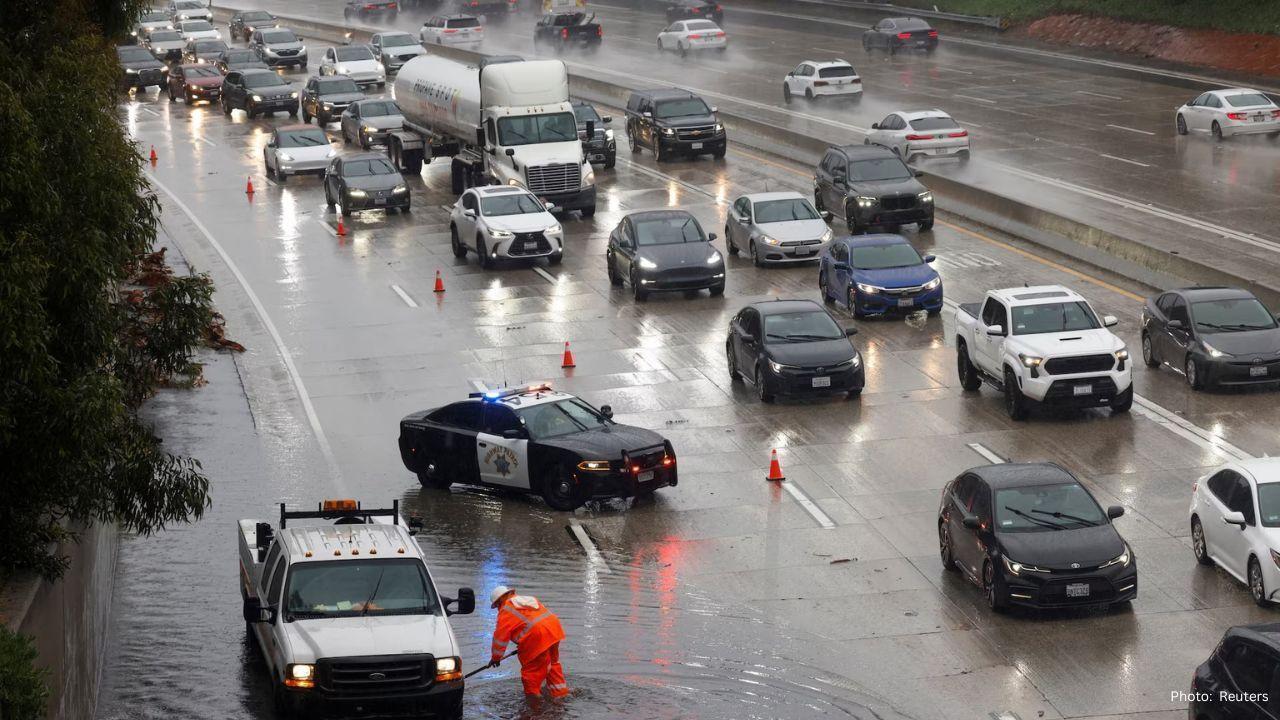
On Christmas Eve, Southern California experienced severe rainfall that triggered flash floods, rapid mudflows, and numerous travel advisories. Emergency officials advised residents to avoid roadways and urged those in flood-prone zones to evacuate or stay indoors as conditions deteriorated.
Wrightwood, a quaint mountain village east of Los Angeles, was significantly impacted. Rescue teams dedicated hours to responding to distress calls and assisting drivers stranded in rapidly rising waters. Fire authorities in San Bernardino County reported that many individuals were rescued without any fatalities or major injuries noted by Wednesday evening.
Local authorities shared footage depicting torrents of mud rushing through cabin areas. These mudflows presented particular hazards in regions recently affected by wildfires, where the terrain is more susceptible to erosion during heavy rainfall.
An “atmospheric river” event—an expansive band of moisture from the Pacific—was the catalyst for this storm. Rainfall rates soared to over an inch per hour in several locations. Meteorologists cautioned that such intense downpours could swiftly overwhelm drainage systems, resulting in sudden flooding incidents.
Flash flood alerts were issued by the U.S. National Weather Service across large sections of Los Angeles County. Officials repeatedly warned against non-essential travel in flood-affected areas, with roads rendered hazardous due to standing water, mudslides, fallen branches, and debris.
In Los Angeles, evacuation mandates were placed on approximately 130 residences situated in zones vulnerable to mudslides, particularly around Pacific Palisades. In Wrightwood, officials initially advised evacuation but later directed residents to shelter in place as factors grew too perilous for safe movement. Key routes, including Angeles Crest Highway, were shut down due to flooding and landslides.
In addition to the rain, strong winds toppled trees and power lines across various areas. Higher elevations, such as the Sierra Nevada range, faced heavy snowfall as a result of the storm, compounding the weather-related concerns.
By Wednesday morning, certain foothill regions reported between 4 to 8 inches of rainfall. Forecasts predicted that mountain areas might receive upwards of a foot of rain by week’s end, and an unusual tornado warning was briefly issued for parts of east-central Los Angeles County due to intense thunderstorms.
While the rain subsided later on Wednesday, meteorologists indicated that another storm front was anticipated on Thursday. The likelihood of flooding and mudslides remained elevated, prompting officials to advise residents to stay vigilant and adhere to guidance provided by authorities.
This storm serves as a stark reminder of how rapidly weather can turn hazardous, particularly during busy travel seasons. Officials emphasized the importance of heeding warnings and avoiding risky behaviors for public safety.









PSG Coach Luis Enrique Urges Players to Step Outside Comfort Zone
PSG coach Luis Enrique says players must leave their comfort zone and keep improving as the club tar

China’s Tiangong Sets New 400m Record at Robot Olympics
China’s Tiangong robot sets a new 400m record at the Robot Olympics, beating a South African robot i

George Russell Wins Dutch GP Sprint, Boosts Mercedes Morale
George Russell wins the Dutch GP Sprint from pole as Mercedes teammate Kimi Antonelli extends his F1

Australia 50/3 After Bangladesh Bowled Out for 64 in Second Test
Australia reached 50/3 after Bangladesh were bowled out for 64 in the second Test, with Mitchell Sta

Jordan Burroughs Returns to Wrestling with 2028 Olympic Dream
Jordan Burroughs returns to wrestling with Real American Freestyle as the Olympic champion eyes a po

Lamborghini Catches Fire on Singapore's ECP, Causing Heavy Traffic
A Lamborghini caught fire on Singapore's ECP, causing heavy traffic and bus delays. No injuries were