
You have not yet added any article to your bookmarks!
Join 10k+ people to get notified about new posts, news and tips.
Do not worry we don't spam!
Post by : Shakul
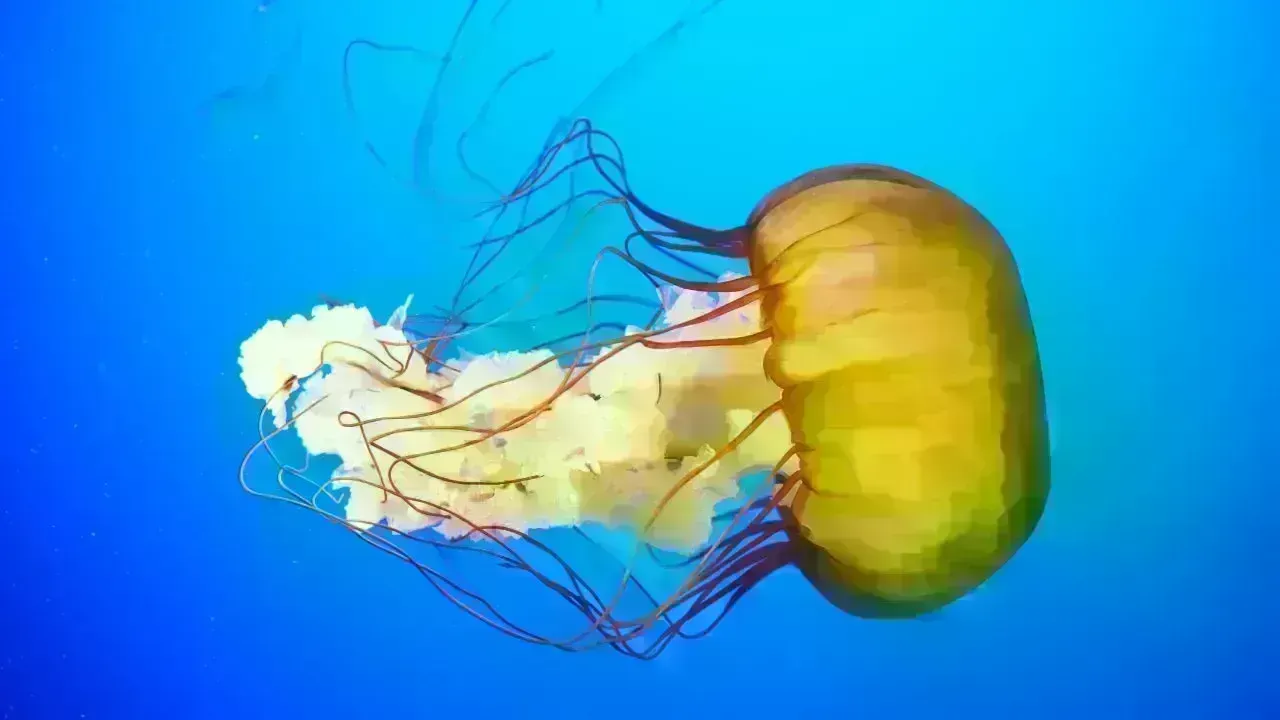
Scientists have identified a new species of highly venomous box jellyfish in the waters near Sentosa, Singapore, marking a significant discovery in marine biodiversity. The newly found species has been confirmed as part of the dangerous Chironex genus, which is known for some of the most toxic marine creatures in the world.
The discovery was made by a joint research team from Tohoku University in Japan and the National University of Singapore’s Lee Kong Chian Natural History Museum and Tropical Marine Science Institute. The species has been officially named Chironex blakangmati, a reference to Sentosa’s historical Malay name, Pulau Blakang Mati.
Researchers confirmed that this is only the fourth known species within the Chironex genus. Members of this group are infamous for their powerful venom, which can cause severe injury or even death in humans within minutes if stung. Scientists emphasized that although sightings are currently rare, the presence of this species in local waters highlights the need for continued monitoring.
The identification process involved advanced genetic analysis, which helped distinguish the new species from the similar Chironex yamaguchii. Researchers discovered clear anatomical differences, including the absence of pointed canals on the perradial lappets, confirming it as a distinct species within the jellyfish family.
During the same research, scientists also recorded the presence of another species, Chironex indrasaksajiae, in Singapore waters for the first time. This species is typically found in Thai marine regions, and its unexpected appearance in Singapore suggests a wider distribution of box jellyfish species across Southeast Asia than previously understood.
Marine experts have advised the public to remain cautious while swimming in coastal waters, especially around Sentosa. Authorities recommend wearing protective swimwear, using visible flotation devices, and avoiding direct contact with jellyfish. In case of a sting, immediate medical attention is strongly advised, along with the use of vinegar to help neutralize venom effects.
Researchers say the discovery not only expands scientific understanding of marine life in the region but also highlights the importance of ongoing ocean monitoring to ensure public safety and better understand shifting marine ecosystems.










APEC Members Emphasise Safe and Responsible Use of Artificial Intelligence
APEC members discuss responsible AI use, digital innovation and data governance as China and the US

Union of European Clubs Challenge UEFA and EFC Over EU Competition Rules
UEC files an EU competition complaint against UEFA and EFC, challenging club representation, governa

Mohammed Shami Retires From Test Cricket, Eyes White-Ball Career
Mohammed Shami retires from Test cricket after 13 years, with 229 wickets. He will continue playing

Singapore Warns Users About Privacy and Security Risks of AI Agents
Singapore warns users about AI agent security risks, data privacy, online scams and unauthorised acc

Chris Lynn Completes One-Month Ban After Positive Cocaine Test
Australian cricketer Chris Lynn completes a one-month ban after a positive cocaine test during the T

Djokovic Eyes Strong Season Finish as Health Improves Ahead of Paris Masters
Novak Djokovic reports improved health and performance as he targets a strong Paris Masters finish a