You have not yet added any article to your bookmarks!
Join 10k+ people to get notified about new posts, news and tips.
Do not worry we don't spam!
Post by : Rohit Dhiman
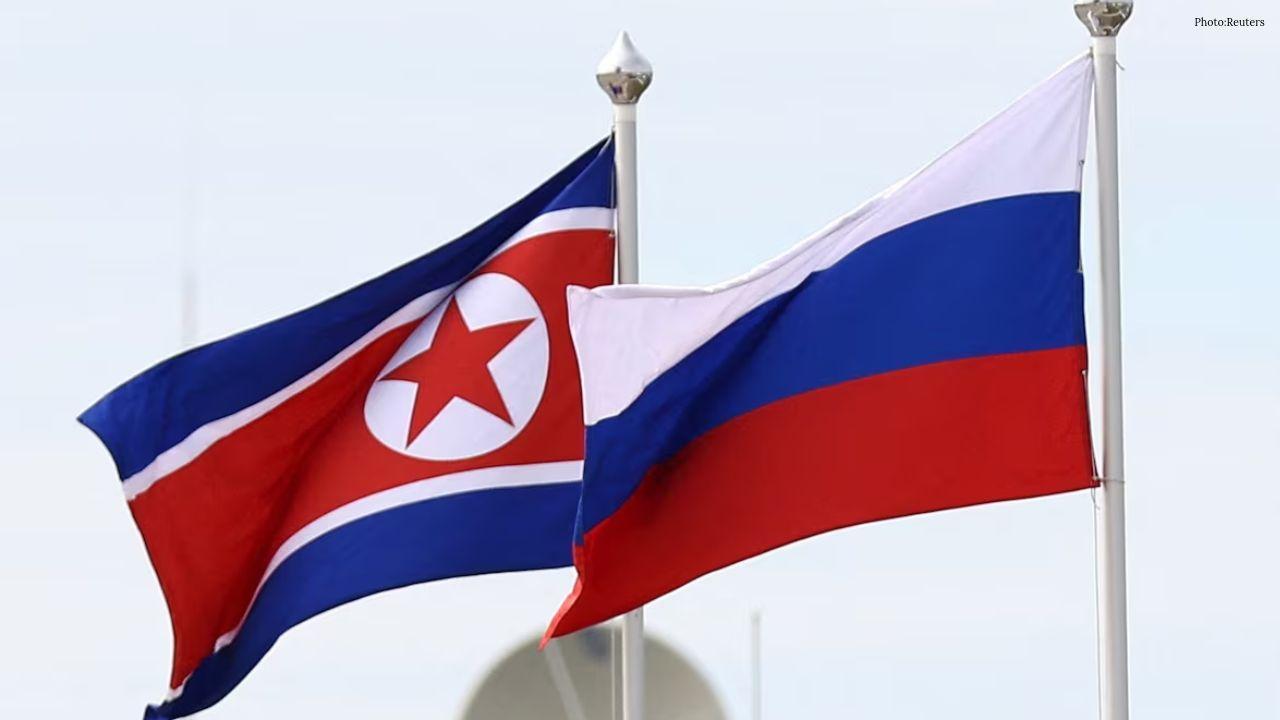
Russia and North Korea are facing renewed scrutiny over their growing economic and military relationship following a report alleging that a network of brokers has been sending North Korean workers to Russian factories under exploitative conditions. The investigation by Hague-based human rights organisation Global Rights Compliance (GRC) claims that the arrangement allows North Korea to generate revenue from overseas labour while supplying workers to Russian industrial facilities, including sites producing goods used in the country's war effort in Ukraine. The report raises concerns about alleged forced labour, restrictions on workers' freedom and possible violations of United Nations sanctions. According to the investigators, workers are recruited through a network involving Russian intermediaries and North Korean officials, with much of the money earned through their employment allegedly going to the North Korean state rather than reaching the workers themselves. The findings come amid a significant expansion of relations between Moscow and Pyongyang. The two countries have strengthened military and political cooperation in recent years, particularly following a summit between their leaders in 2023 and the signing of a partnership treaty in 2024 that included a mutual defence commitment.
According to Global Rights Compliance, the reported operation involves intermediaries who arrange for North Korean nationals to enter Russia and subsequently place them with employers seeking workers for industrial and manufacturing activities. The organisation alleges that North Korean officials play a role in the arrangements, including through the country's diplomatic presence in Moscow. Investigators said officials from the North Korean embassy had been identified as inspecting work sites connected with prospective employment. The report describes a system in which workers are allegedly recruited and assigned to Russian businesses through brokers. These intermediaries are said to receive payments for arranging employment, creating a financial incentive for the network to continue supplying labour. One of the central allegations concerns the use of student visas. GRC said some North Korean nationals enter Russia under the stated purpose of enrolling at educational institutions before being contracted to employers. This arrangement is significant because United Nations Security Council measures prohibit member states from employing North Korean workers overseas under the relevant sanctions framework. The report alleges that the visa arrangements are used to circumvent those restrictions.
One of the most serious aspects of the investigation concerns the conditions in which North Korean workers are allegedly employed. GRC said investigators posed as prospective employers to examine how the recruitment system operated. During this process, they found that workers were being offered for employment at production facilities, including a factory manufacturing military rations. The report alleges that workers face coercion and threats intended to prevent them from leaving their jobs. Such pressure reportedly extends beyond the workers themselves, with threats of punishment against their families in North Korea also described as a means of enforcing compliance. According to the report, advertisements used to attract potential employers described workers as unlikely to leave their assigned positions. One advertisement reportedly assured employers that the workers would not run away. The organisation also cited advertisements indicating that some workers were expected to work 12-hour days and receive only two days off each month. If substantiated, these conditions would raise serious concerns about freedom of movement, labour rights and the ability of workers to refuse employment or leave an abusive workplace.
The financial arrangements described in the report are central to concerns about the purpose of the alleged labour network. GRC claims that North Korea receives a substantial portion of the wages earned by its nationals working in Russia, leaving workers with little control over the money generated through their employment. Dyland Carter, a lead investigator at Global Rights Compliance, said the workers were expensive to recruit but that little, if any, of the money paid for their labour appeared to reach them. He alleged that the revenue instead benefited the North Korean state. The organisation's legal adviser, Elise Lauriot Prevost, said the investigation revealed what she described as a convergence between the military ambitions of Russia and North Korea. She linked the alleged overseas labour system to North Korea's efforts to generate funds and Russia's demand for workers to sustain its wartime economy. The financial implications extend beyond the wages of individual employees. If a state-controlled arrangement channels workers' earnings to government institutions, overseas employment can become a source of revenue for the state rather than a means of improving the workers' personal financial circumstances.
The investigation also draws attention to the industrial role of North Korean workers in Russia. According to GRC, investigators identified employment arrangements connected with Russian production facilities, including a factory manufacturing military rations. The organisation alleges that some of the goods produced at facilities employing North Korean workers are used by Russia in its war against Ukraine. This claim adds a geopolitical dimension to the labour allegations. The report suggests that overseas workers could be contributing to industrial activity that supports Russia's wartime requirements while their employment also generates revenue for North Korea. Factories producing food supplies, industrial materials and other essential goods can play a role in maintaining a country's wider production system. However, the involvement of workers in a particular facility does not by itself establish that every product manufactured there is intended for military use. The scope of the facilities identified, the proportion of workers assigned to them and the precise relationship between their output and Russian military operations would require further evidence.
The alleged labour arrangements emerge against the backdrop of increasingly close ties between Moscow and Pyongyang. Relations between the two countries have expanded significantly since their leaders committed to renewed cooperation at a summit in 2023. The partnership gained further importance with a treaty signed in 2024 that included a mutual defence commitment. The relationship has attracted international attention because of reports concerning North Korean military assistance to Russia during the war in Ukraine, alongside broader cooperation in security and defence. South Korea's intelligence agency has said North Korea sent more than 10,000 troops to fight alongside Russian forces from 2024 onward. The supplied report also states that Pyongyang has provided weapons to help replenish Moscow's military stocks. These developments have raised questions about the wider exchange of resources between the two countries, including military assistance, industrial cooperation and potential labour support.
The employment of North Korean nationals overseas has been restricted under United Nations Security Council measures adopted in response to North Korea's nuclear and missile programmes. Following North Korea's sixth and final nuclear test in 2017, a Security Council resolution required member states to return North Korean workers earning income abroad, subject to the resolution's provisions and applicable exceptions. The restrictions formed part of a wider sanctions framework developed over several years. Since 2006, the Security Council has adopted measures targeting North Korea's weapons programmes and restricting various categories of trade and financial activity. The measures are intended to limit resources that could support prohibited weapons development and related programmes. According to GRC, the alleged use of student visas to bring North Korean nationals into Russia and subsequently place them in paid employment raises concerns about possible efforts to bypass the restrictions.
Read Also: Bank of Korea Warns Won's Rapid Moves Need Close Monitoring
The findings raise broader concerns about how governments and employers monitor recruitment practices involving workers from highly restrictive political systems. International labour standards recognise that employment should be voluntary and that workers must not be subjected to coercion, threats or restrictions that prevent them from leaving abusive working arrangements. Where workers are allegedly threatened with punishment against themselves or their families, their ability to refuse work may be severely limited. If their earnings are also controlled by others, the financial relationship can become another source of dependency. These risks can be difficult to identify when workers have limited access to independent communication, legal assistance or outside support. The reported recruitment structure also raises questions about accountability. Brokers may arrange placements, employers may provide jobs, and officials may supervise or facilitate parts of the process. Investigators and authorities would need to establish the responsibilities of each participant before determining whether particular individuals or organisations had violated applicable laws.
The report suggests that overseas employment may serve as a financial channel for North Korea at a time when international sanctions restrict several forms of trade and economic activity. Sending nationals abroad to work has historically provided North Korea with access to foreign earnings. Rights organisations have previously reported that North Korean labourers worked in Russia's Far East and that some North Koreans employed in restaurants in China sent earnings back through arrangements that benefited the state. The latest investigation alleges that the reported Russian network operates through a more structured arrangement involving recruitment brokers, industrial employers and North Korean officials. If the claims are substantiated, the system could provide North Korea with income while supplying labour to Russian businesses. The alleged transfer of a large share of workers' wages to the state would be particularly significant because it would mean the financial benefits of employment were not necessarily reaching the individuals doing the work.
The report has brought fresh attention to the alleged recruitment network, but several important questions remain unresolved. Further investigation would be needed to establish the network's full size, identify all participating employers and intermediaries, verify the conditions experienced by individual workers and trace how wages are distributed. The responses of the Russian and North Korean authorities will also be important. According to the report, neither Russia's Foreign Ministry nor North Korea's embassy in Moscow responded to the requests for comment sent by the organisation. One of the two Russian individuals contacted by GRC reportedly denied the accusations. Independent verification of employment records, recruitment advertisements, visa arrangements and payment flows could help clarify the allegations and determine whether relevant legal requirements have been breached.







APEC Members Emphasise Safe and Responsible Use of Artificial Intelligence
APEC members discuss responsible AI use, digital innovation and data governance as China and the US

Union of European Clubs Challenge UEFA and EFC Over EU Competition Rules
UEC files an EU competition complaint against UEFA and EFC, challenging club representation, governa

Mohammed Shami Retires From Test Cricket, Eyes White-Ball Career
Mohammed Shami retires from Test cricket after 13 years, with 229 wickets. He will continue playing

Singapore Warns Users About Privacy and Security Risks of AI Agents
Singapore warns users about AI agent security risks, data privacy, online scams and unauthorised acc

Chris Lynn Completes One-Month Ban After Positive Cocaine Test
Australian cricketer Chris Lynn completes a one-month ban after a positive cocaine test during the T

Djokovic Eyes Strong Season Finish as Health Improves Ahead of Paris Masters
Novak Djokovic reports improved health and performance as he targets a strong Paris Masters finish a