
You have not yet added any article to your bookmarks!
Join 10k+ people to get notified about new posts, news and tips.
Do not worry we don't spam!
Post by : Saif Rahman
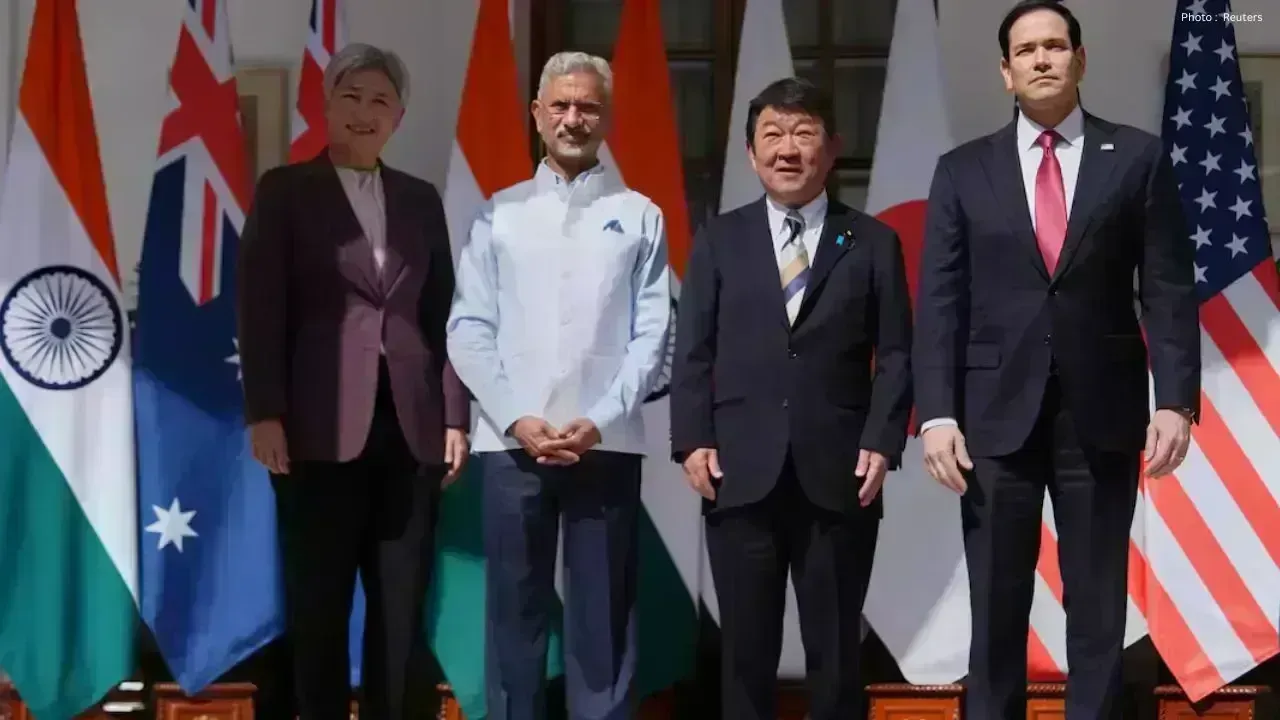
In a significant gathering, foreign ministers from India, the United States, Japan, and Australia convened in New Delhi, focusing on enhancing regional security and economic collaboration within the Indo-Pacific. This meeting emphasized the Quad's role amid increasing geopolitical competition and maritime security concerns.
The Quadrilateral Security Dialogue, or Quad, is a partnership among four democratic nations aimed at tackling issues related to trade, technology, infrastructure, and defense cooperation in the region. While the group is not a formal military coalition, its strategic value has grown as tensions escalate in the Indo-Pacific.
During their discussions, the ministers explored various cooperation areas such as maritime security, resilience in supply chains, disaster responses, and technology partnerships, underlining shared economic development goals. The meeting reflected an awareness of China's growing influence in the Indo-Pacific; although officials avoided direct criticism, security concerns were a notable aspect of their deliberations.
China has denounced the Quad, perceiving it as a strategy reminiscent of Cold War-era tactics aimed at curbing its influence. Conversely, Quad nations are adamant that their collaboration is focused on fostering a free, open, and stable Indo-Pacific.
India's involvement in the Quad has become increasingly pivotal owing to its strategic location and diplomatic significance. Hosting this event in New Delhi showcased India's rising stature in regional and global diplomacy.
The United States regards the Indo-Pacific as vital to its foreign policy, intensifying cooperative efforts with regional partners as it competes with China across multiple fronts, including trade and military influence. Likewise, Japan and Australia play key roles in maintaining regional security due to concerns regarding maritime tensions and supply chain issues.
Experts suggest that the Quad seeks to broaden its scope beyond military cooperation, focusing on infrastructure initiatives, emerging technologies, climate partnerships, and economic resilience. This comprehensive strategy may bolster regional partnerships and position the Quad as a facilitator for long-term development, not merely a counterbalance to strategic competition.
The New Delhi meeting occurs at a time of significant geopolitical transformations. Ongoing conflicts in Europe, instability in the Middle East, and evolving global alliances necessitate stronger diplomatic relations among nations.
For India, maintaining a balance in relationships with Western powers and regional entities is a crucial diplomatic task. New Delhi strives for strategic autonomy, all while enhancing collaboration with various global partners.
The Quad also highlights evolving security priorities in Asia, especially as maritime routes in the Indo-Pacific are critical for global commerce and energy transportation. Disruptions in these regions could have far-reaching implications for international markets and supply chains.
Consequently, regional powers are placing greater emphasis on naval cooperation and technology investments to ensure long-term stability. Analysts predict that the Quad's success hinges on the ability of its members to navigate their distinct economic and diplomatic interests while maintaining a united front.
Each member has a unique relationship with China, complicating strategic alignment but also driving greater collaboration in the face of shared security concerns.
This meeting serves as a vital diplomatic statement regarding the importance of multilateral partnerships in contemporary global politics, as countries turn to regional alliances to manage complex challenges.
Smaller nations in the Indo-Pacific are closely observing the Quad's developments, as regional alliances impact trade opportunities and geopolitical dynamics. Nevertheless, experts warn that intensifying rivalries might exacerbate tensions if diplomatic communications falter.
Thus, the New Delhi meeting signifies both a commitment to regional cooperation and an acknowledgment of the broader geopolitical currents influencing today’s world. As the Indo-Pacific evolves into a key strategic area, the Quad will likely remain a focal point of international interest.










PM Modi Pays Tribute to Mahatma Gandhi, Urges People to Support Khadi
PM Modi pays tribute to Mahatma Gandhi on Gandhi Jayanti and urges citizens to support Khadi and the

Amazon Seeks to Offload $8 Billion in Nvidia Chips to Investors
Amazon plans to move $8 billion in Nvidia chips to investors, using a new financing model to strengt

Samsung Raises Galaxy S26 Prices as Memory Chip Costs Rise
Samsung raises Galaxy S26 prices in South Korea as rising memory chip costs put pressure on smartpho

Lewis Hamilton Calls Singapore Grand Prix One of F1's Toughest Races
Lewis Hamilton discusses the demanding Singapore Grand Prix and brings Plus44 and Almave to Singapor

Denmark's Pandora Opens World's Largest Jewellery Factory in Vietnam
Pandora opens its largest jewellery factory in Vietnam, expanding global production, strengthening s

Gautam Gambhir Questions Batting-Friendly Pitches After India's Record ODI Chase
Gautam Gambhir questions batting-friendly ODI pitches after India’s record chase, calling for a bett

