
You have not yet added any article to your bookmarks!
Join 10k+ people to get notified about new posts, news and tips.
Do not worry we don't spam!
Post by : Saif Rahman
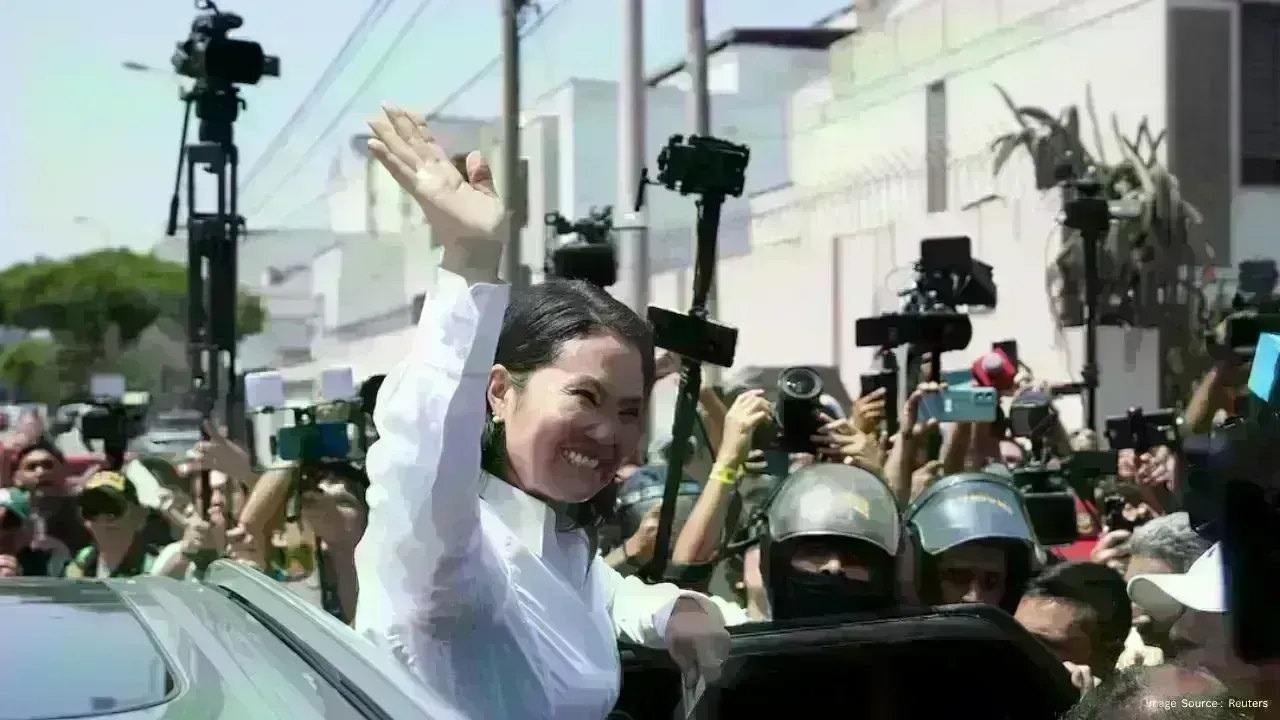
The 2026 election in Peru has reached a pivotal moment, with preliminary results indicating that Keiko Fujimori is ahead. With over half of the votes counted, the competition remains intense, making a runoff increasingly likely.
As per initial tallies, Fujimori leads with approximately 17% of the vote, but this is still short of the 50% required for an outright win. Other candidates like Rafael López Aliaga and Jorge Nieto are hot on her heels, making this race particularly competitive.
This electoral process reflects a deeply divided electorate, as numerous candidates vie for attention, dispersing votes across various political factions. This fragmentation complicates any singular candidate's ability to achieve a clear majority in the initial round.
A runoff is anticipated in June, where the two candidates with the most votes will face off directly. This mechanism is designed to ensure that the eventual winner has substantial backing from the electorate nationwide.
Conducted against a backdrop of significant political turmoil, this election is taking place during a period characterized by frequent leadership changes, leading to heightened concerns and skepticism among the populace.
Voter discontent centers on issues like corruption, escalating crime rates, and economic strife, which have emerged as major topics in the campaign discourse. Citizens are seeking leaders capable of restoring stability and advancing effective governance.
Keiko Fujimori stands out as a prominent political figure, being the daughter of former President Alberto Fujimori and a veteran candidate for the presidency. Her campaign emphasizes strong leadership, economic durability, and crime reduction.
However, her family’s controversial past also stirs mixed feelings among voters; while her experience garners support, it raises apprehensions tied to her political legacy.
Nevertheless, the election process has faced its fair share of hurdles, including reports of polling station delays that compelled authorities to extend voting hours. These complications have affected thousands of voters, complicating the electoral process.
Despite such challenges, voter turnout has been notably robust, signaling a strong desire among the public to influence their country’s trajectory through democratic engagement.
The 2026 Peru election transcends mere leadership selection; it represents a quest for a resolution to a prolonged period of political instability. The next leader will need to confront significant challenges, including rebuilding public trust and ensuring law enforcement efficacy.
Analysts contend that the runoff election will be pivotal, offering voters a clearer choice between the leading candidates, potentially paving the way for a more stable governance.
The international community is closely observing these developments, recognizing Peru's significance in Latin America and its political stability's implications for regional collaboration.
To encapsulate, the current electoral dynamics in Peru reflect a nation at a critical juncture. While voters are yearning for transformation, the road ahead remains fraught with ambiguity.
As the vote counting continues and the initial round’s outcomes crystallize, all eyes are shifting toward the impending runoff election, which will be crucial in determining Peru’s future leadership.
For now, Keiko Fujimori retains her edge, but the final verdict is still pending. The upcoming phases hold paramount importance for the nation's trajectory.










PM Modi Pays Tribute to Mahatma Gandhi, Urges People to Support Khadi
PM Modi pays tribute to Mahatma Gandhi on Gandhi Jayanti and urges citizens to support Khadi and the

Amazon Seeks to Offload $8 Billion in Nvidia Chips to Investors
Amazon plans to move $8 billion in Nvidia chips to investors, using a new financing model to strengt

Samsung Raises Galaxy S26 Prices as Memory Chip Costs Rise
Samsung raises Galaxy S26 prices in South Korea as rising memory chip costs put pressure on smartpho

Lewis Hamilton Calls Singapore Grand Prix One of F1's Toughest Races
Lewis Hamilton discusses the demanding Singapore Grand Prix and brings Plus44 and Almave to Singapor

Denmark's Pandora Opens World's Largest Jewellery Factory in Vietnam
Pandora opens its largest jewellery factory in Vietnam, expanding global production, strengthening s

Gautam Gambhir Questions Batting-Friendly Pitches After India's Record ODI Chase
Gautam Gambhir questions batting-friendly ODI pitches after India’s record chase, calling for a bett

