
You have not yet added any article to your bookmarks!
Join 10k+ people to get notified about new posts, news and tips.
Do not worry we don't spam!
Post by : Rohit Dhiman
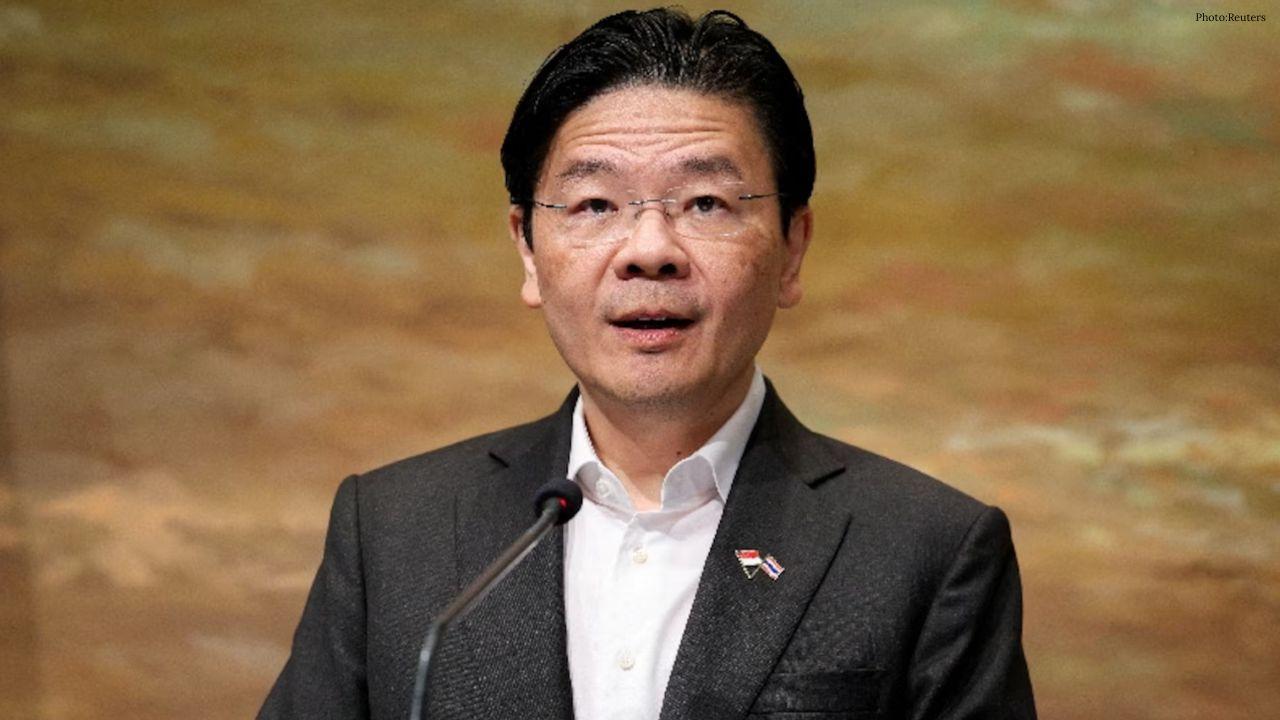
SINGAPORE: Prime Minister Lawrence Wong has said that people should not enter public life because of the money attached to political office, as Singapore's Parliament debated changes to the way political leaders are paid. Speaking during the closing session of the parliamentary debate on Thursday, Mr Wong said financial compensation should not be the primary reason for someone to consider a career in politics. He stressed that a willingness to serve the country must come before questions about remuneration. At the same time, he argued that compensation should not create an unnecessarily large financial barrier for people who are already motivated to serve. Potential candidates may have spent many years building careers, supporting families, paying mortgages and taking on other long-term financial commitments.
Mr Wong was responding to concerns surrounding the government's decision to revise political remuneration for the first time since 2011. He said there was a mistaken assumption that the purpose of the Singapore political salaries framework was to entice people into politics through financial rewards. In his view, that interpretation misses the larger purpose of the system. The prime minister said competitive remuneration does not create the motivation to serve. Instead, it can make it possible for someone who already has that motivation to take the next step.
The parliamentary debate comes after the government accepted recommendations from an independent committee that reviewed the country's political remuneration framework. Under the changes announced earlier this week, political office holders will receive an adjustment of up to 9 per cent from Oct 15, 2026. The change would bring the annual remuneration for a minister at the lowest MR4 grade to about S$1.2 million if the full adjustment applies. The government has decided not to immediately adopt the much higher benchmark proposed by the review committee. Instead, it will introduce a one-off adjustment and allow remuneration to move progressively based on individual performance and responsibilities.
The government's argument is that competitive compensation can reduce one of the financial obstacles faced by experienced professionals considering a move into politics. Mr Wong said Singapore cannot rely entirely on the public service to develop future political leaders. He wants people with experience in business and other professional fields to also have a pathway into Cabinet and senior political positions. Before the last General Election, Mr Wong said he personally approached several senior permanent secretaries, CEOs and business leaders whom he believed could contribute to political leadership. According to him, those individuals declined to make the move. Some were earning several times more than a minister and had spent years developing successful careers.
The prime minister also highlighted that money is only one part of the decision. Someone moving from a senior professional position into politics could face a significant reduction in income. At the same time, that person may have children to support, a home loan to repay and parents or other family members depending on their existing income. Entering an election also carries uncertainty because there is no guarantee of winning. Even after entering politics, public office brings intense scrutiny. Politicians and their families may face attention that they would not encounter in ordinary professional careers. Mr Wong said these sacrifices are real and should not be ignored when the government considers how remuneration is structured.
The revised framework will not automatically move every office holder to the same percentage increase. The government has said the adjustment will depend on individual circumstances, including performance and when the person's salary was last revised. The new approach is intended to gradually bring political remuneration closer to the updated framework without immediately implementing the full benchmark recommended by the independent committee.
Mr Wong also said he would donate the full increase in his own salary for the next five years. He clarified that the donation would include any tax benefit arising from those donations, meaning he would not personally gain financially from the increase. PM Wong Says Political Pay Should Not Become a Popularity Contest Mr Wong also addressed calls for greater transparency about how ministers are assessed and how their performance bonuses are determined. He said he was prepared to consider whether additional information about ministerial salaries and performance bonuses could be disclosed. However, he cautioned against turning the assessment of ministers into a public popularity contest in which political leaders are ranked against one another every year.
The salary review also covers allowances for Members of Parliament. Monthly MP allowances are set to increase from S$13,750 to S$18,500 from Oct 15. The government has described the payment as a substantial allowance intended to support MPs in carrying out their responsibilities both in Parliament and in their constituencies. Mr Wong also defended the role of mayors and Community Development Councils after Workers' Party chief Pritam Singh questioned the need for the mayoral position to remain connected to the political salary framework.
Read Also: Thailand to increase tax on EV imports, official says
The debate over political remuneration is closely linked to the future of Singapore politics and the country's ability to renew its political leadership. The government believes Singapore needs to remain capable of attracting people with strong experience from different sectors. That includes senior civil servants, business executives and professionals who may otherwise continue earning significantly more outside government. However, opposition parties have challenged the idea that higher political pay is necessary to attract people into public service.
During his speech, Mr Wong also reflected on his own decision to leave the civil service and enter politics in 2011. He said he had not been promised a particular position or remuneration package before making the move. Instead, he described the decision as a leap of faith. He recalled that he had spent almost 15 years in the civil service when he resigned. Because he was just short of the required period for retaining his pension, he lost that benefit when he left.










PM Modi Pays Tribute to Mahatma Gandhi, Urges People to Support Khadi
PM Modi pays tribute to Mahatma Gandhi on Gandhi Jayanti and urges citizens to support Khadi and the

Amazon Seeks to Offload $8 Billion in Nvidia Chips to Investors
Amazon plans to move $8 billion in Nvidia chips to investors, using a new financing model to strengt

Samsung Raises Galaxy S26 Prices as Memory Chip Costs Rise
Samsung raises Galaxy S26 prices in South Korea as rising memory chip costs put pressure on smartpho

Lewis Hamilton Calls Singapore Grand Prix One of F1's Toughest Races
Lewis Hamilton discusses the demanding Singapore Grand Prix and brings Plus44 and Almave to Singapor

Denmark's Pandora Opens World's Largest Jewellery Factory in Vietnam
Pandora opens its largest jewellery factory in Vietnam, expanding global production, strengthening s

Gautam Gambhir Questions Batting-Friendly Pitches After India's Record ODI Chase
Gautam Gambhir questions batting-friendly ODI pitches after India’s record chase, calling for a bett

