
You have not yet added any article to your bookmarks!
Join 10k+ people to get notified about new posts, news and tips.
Do not worry we don't spam!
Post by : Shweta
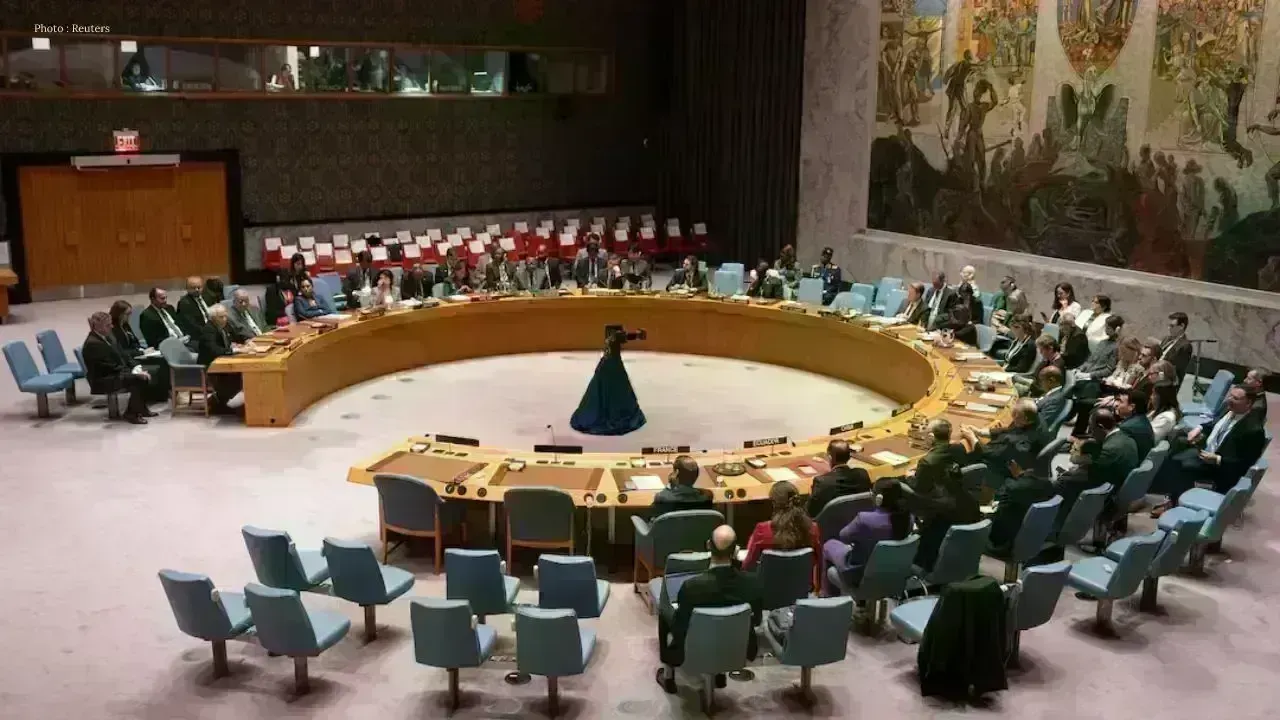
After extensive US-led diplomatic discussions, Israel and Lebanon have reached a new ceasefire framework aimed at calming border tensions. This agreement marks a notable effort to curb violence following months of military skirmishes that have increased instability in the area.
The United States has formally announced this framework, which emerged from talks between representatives from both countries. The initiative aims to enhance security along the border while fostering conditions conducive to long-term stability. Officials involved termed this framework as a crucial move to mitigate the risks of further escalations.
A pivotal aspect of the agreement is the planned augmentation of the Lebanese Armed Forces' control in southern Lebanon. The framework proposes that the Lebanese army will assume greater security responsibilities in specified regions to reduce the activities of armed groups not governed by state authority.
Furthermore, the ceasefire initiative demands an end to Hezbollah's attacks on Israel. The recent cross-border confrontations involving Hezbollah and Israeli forces have exacerbated tensions, resulting in casualties and fears of a larger regional conflict. By decreasing military actions, negotiators aim to craft a peaceful environment for future diplomatic negotiations.
This agreement follows various discussions facilitated by international negotiators and regional stakeholders. The role of the United States has been central in fostering dialogue, considering a secure Israel-Lebanon border critical for broader regional security.
Nonetheless, questions linger over the ceasefire's effective implementation. A significant hurdle is Hezbollah's stance, as the group did not directly engage in the discussions nor has it shown formal approval for the framework.
This situation raises concerns about the enforcement of the ceasefire. Although Israel and Lebanon have seemingly reached a consensus on the general components of the arrangement, its success will largely hinge on whether all militia groups in the area commit to honoring it. Analysts indicate that maintaining agreements can be challenging when key factions are not involved in negotiations.
The Israel-Lebanon border remains one of the most contentious zones in the Middle East, where periodic clashes, rocket firings, drone strikes, and military retorts frequently edge toward broader conflict. Continuous instability here could trigger repercussions that extend beyond immediate borders, according to international observers.
Proponents of the new framework argue that enhancing the role of the Lebanese army could fortify state institutions and strengthen security collaborations. This stronger state military presence might minimize chances for future confrontations and foster further diplomatic discussions between the two nations.
However, officials concede that this framework represents only a preliminary step. More negotiations and trust-building measures are likely necessary for a more holistic and enduring agreement. Future conversations are anticipated to center on security protocols, border management, and strategies to avert renewed hostilities.
The global community is observantly tracking these developments, with numerous governments expressing their backing for initiatives to uphold tranquility. A successful ceasefire could alleviate tensions within a region that has frequently faced cycles of unrest.
Currently, this agreement presents a possible avenue toward de-escalation; however, its enduring success will rely on cooperation from all parties involved. The uncertainty surrounding Hezbollah’s position and challenges in practical implementation raise questions about the framework's potential for fostering lasting peace.
Stay tuned for updates as this story develops further.







APEC Members Emphasise Safe and Responsible Use of Artificial Intelligence
APEC members discuss responsible AI use, digital innovation and data governance as China and the US

Union of European Clubs Challenge UEFA and EFC Over EU Competition Rules
UEC files an EU competition complaint against UEFA and EFC, challenging club representation, governa

Mohammed Shami Retires From Test Cricket, Eyes White-Ball Career
Mohammed Shami retires from Test cricket after 13 years, with 229 wickets. He will continue playing

Singapore Warns Users About Privacy and Security Risks of AI Agents
Singapore warns users about AI agent security risks, data privacy, online scams and unauthorised acc

Chris Lynn Completes One-Month Ban After Positive Cocaine Test
Australian cricketer Chris Lynn completes a one-month ban after a positive cocaine test during the T

Djokovic Eyes Strong Season Finish as Health Improves Ahead of Paris Masters
Novak Djokovic reports improved health and performance as he targets a strong Paris Masters finish a