
You have not yet added any article to your bookmarks!
Join 10k+ people to get notified about new posts, news and tips.
Do not worry we don't spam!
Post by : Rameen Ariff
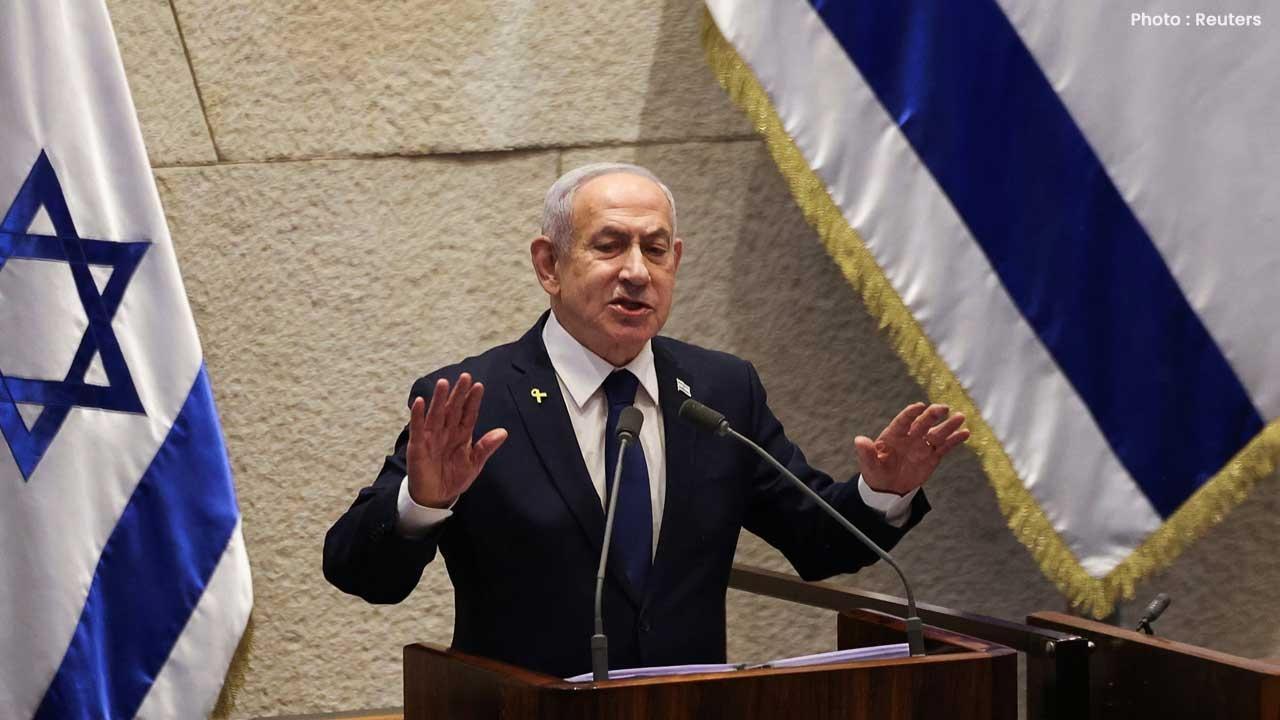
Israeli Prime Minister Benjamin Netanyahu on Tuesday reiterated his call for the ousting of Hamas from Gaza, marking a significant departure from the UN-backed peace initiative aimed at resolving the ongoing strife. His statement follows the UN Security Council's endorsement of President Donald Trump's 20-point peace framework, which entailed amnesty for Hamas members committing to peaceful coexistence.
During a recent visit to the White House, Netanyahu had initially supported the Trump plan; however, he now seems to adopt a more stringent stance. In a series of posts on X, he praised Trump’s diplomatic efforts but emphasized that Hamas and its supporters must be expelled from the region. “Israel extends its hand in peace and prosperity to all of our neighbors and calls for cooperation in removing Hamas and its backers,” Netanyahu remarked.
A spokesperson clarified that such expulsion means preventing Hamas from exercising any governing authority in Gaza, thereby neutralizing their political and military control. This position sharply contrasts the Trump proposal, which allows for amnesty to Hamas members conditioned on the disarmament and a commitment to peaceful coexistence. It also provides an opportunity for members wishing to leave Gaza safely, without mandating their expulsion.
Regional analysts and diplomats assert that Netanyahu’s hardline stance highlights the deep-rooted divisions between Israel and Hamas, complicating international efforts to enact the peace framework. The Trump plan seeks to pave the way for Palestinian self-determination and statehood, reforming governance under the Palestinian Authority in the West Bank. Yet, Netanyahu's firm opposition to Palestinian statehood reflects the influence of domestic far-right coalition allies.
Hamas has expressed opposition to several elements of the peace initiative, especially concerning disarmament and governance. As both parties maintain firm positions, the international community faces mounting challenges in converting the plan into actionable steps.
Netanyahu's directives arise during an intense focus on Gaza's security and governance, as global leaders deliberate strategies to promote lasting peace while averting further conflicts. Analysts caution that different interpretations of the peace framework by Israel, Hamas, and international stakeholders could hinder progress and exacerbate instability in the region.
The Prime Minister's statement underscores the precarious balancing act Israel is engaged in: pursuing security objectives while addressing global expectations for peace and stability. As the UN-supported resolution advances, Netanyahu's hardline approach indicates a potential clash between diplomatic aspirations and Palestinian political realities.










PM Modi Pays Tribute to Mahatma Gandhi, Urges People to Support Khadi
PM Modi pays tribute to Mahatma Gandhi on Gandhi Jayanti and urges citizens to support Khadi and the

Amazon Seeks to Offload $8 Billion in Nvidia Chips to Investors
Amazon plans to move $8 billion in Nvidia chips to investors, using a new financing model to strengt

Samsung Raises Galaxy S26 Prices as Memory Chip Costs Rise
Samsung raises Galaxy S26 prices in South Korea as rising memory chip costs put pressure on smartpho

Lewis Hamilton Calls Singapore Grand Prix One of F1's Toughest Races
Lewis Hamilton discusses the demanding Singapore Grand Prix and brings Plus44 and Almave to Singapor

Denmark's Pandora Opens World's Largest Jewellery Factory in Vietnam
Pandora opens its largest jewellery factory in Vietnam, expanding global production, strengthening s

Gautam Gambhir Questions Batting-Friendly Pitches After India's Record ODI Chase
Gautam Gambhir questions batting-friendly ODI pitches after India’s record chase, calling for a bett

