
You have not yet added any article to your bookmarks!
Join 10k+ people to get notified about new posts, news and tips.
Do not worry we don't spam!
Post by : Rohit Dhiman
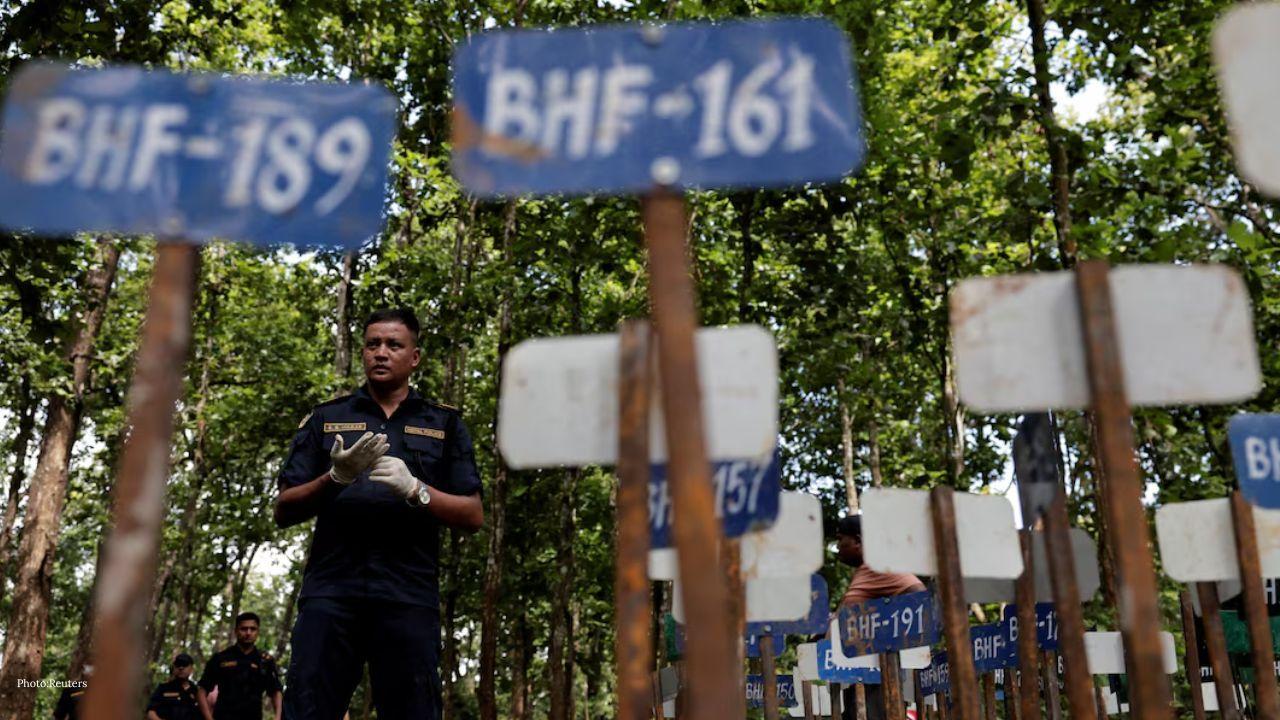
NUWAKOT, Nepal — A week after a devastating natural disaster swept through parts of Nepal, grief-stricken families have begun holding symbolic funeral ceremonies for relatives who remain missing. For many families, the rituals are not a declaration that their loved ones are certainly dead. Instead, they are a painful attempt to bring some sense of closure after days of uncertainty, unanswered phone calls and desperate searches through damaged villages, shelters and medical facilities. The disaster struck on August 26 after a massive release of water, ice, rocks and mud surged through communities near the China-Nepal border. Homes were destroyed, roads disappeared under debris and entire settlements were left struggling to recover. Relatives spent days waiting for news from emergency teams. Some searched hospitals and temporary shelters, while others continued hoping that missing family members might still be found alive. As the days passed without contact, however, some families decided to perform traditional last rites.
The scale of the disaster has overwhelmed rescue and recovery teams. More than 1,000 bodies have been recovered, while thousands of people are still reported missing across Nepal, China and surrounding areas affected by the disaster. Nepalese authorities have continued rescue operations in some of the hardest-hit locations. Search teams are working through thick layers of mud, broken structures and other debris. Several hydropower tunnels have become particularly important in the search for survivors. These underground structures were heavily damaged or blocked by sludge and debris following the sudden surge of water and material. Rescuers have recovered bodies from some tunnels, but teams have continued digging, drilling and clearing blocked passages because they believe there could still be survivors trapped inside. The operation is extremely difficult, with unstable ground and huge amounts of debris slowing down the search.
The human cost of the disaster has been reflected in the stories of families who are still waiting for answers. One woman, Dolma Newar Tamang, took part in a funeral ceremony for her husband after failing to make contact with him following the disaster. Her husband had been travelling toward China when the disaster struck. She said she repeatedly tried to reach him after learning about the catastrophe, but her calls went unanswered. The family eventually decided to perform the traditional ceremony, hoping that the ritual would provide spiritual peace even though his body had not been found. Such stories have become increasingly common as families face the difficult decision of whether to continue waiting or begin mourning.
Despite the growing number of funerals, officials have stressed that search operations are continuing. Nepal's Foreign Minister Shisir Khanal has said there is still hope that some of those missing could be alive. Rescue teams are concentrating their efforts on locations where people could have survived, particularly underground tunnels and other protected areas. The possibility of survivors has kept families and emergency workers waiting for breakthroughs. For rescuers, every cleared section of debris represents a potential opportunity to locate someone alive. But the difficult terrain, damaged infrastructure and enormous volume of mud and rocks have made the operation one of the most challenging emergency responses in the region.
The disaster has also renewed concerns about the growing environmental risks facing the Himalayan region. Nepal's Prime Minister Balendra Shah described the catastrophe as a warning about the increasing dangers faced by communities living in the mountains. The Himalayas are warming rapidly as global temperatures increase. Scientists have warned that rising temperatures can accelerate the melting of glaciers and alter the stability of high-altitude landscapes. The latest catastrophe has therefore intensified discussions around Nepal Floods, Climate Change, glacier-related hazards and disaster preparedness. Although Nepal has contributed relatively little to the greenhouse gas emissions responsible for global warming, the country is highly vulnerable to its consequences. Mountain communities are particularly exposed because settlements, roads, bridges and hydropower facilities are often located near rivers and steep valleys.
The Himalayan region contains some of the world's largest glaciers and is an essential source of water for hundreds of millions of people. Glacial changes can have consequences far beyond the immediate mountain areas. The wider Himalayan and Hindu Kush region supplies water to hundreds of millions of people living in mountainous areas, while river systems flowing southward support much larger populations across South and Southeast Asia. Changes in glaciers, snow patterns and rainfall can therefore affect agriculture, drinking water, electricity generation and livelihoods across multiple countries. Experts have increasingly warned that climate-related changes could make extreme events more difficult to predict and manage.
Emergency workers are continuing to search through areas where the disaster caused the greatest destruction. In several locations, thick mud has filled tunnels and underground structures. Heavy equipment is being used to remove debris, while teams are also relying on manual digging in areas where machinery cannot safely operate. The search is complicated by the possibility of additional landslides and unstable structures. Rescue teams must therefore balance the need to move quickly with the safety of workers. Families, meanwhile, continue gathering outside hospitals and other official facilities, looking for information about missing relatives. Photographs of missing people have been displayed in public areas as relatives attempt to identify survivors and locate loved ones. Hospitals and Mortuaries Struggle With the Number of Victims The large number of recovered bodies has placed enormous pressure on Nepal's medical and mortuary facilities. Authorities have been forced to identify unidentified victims through DNA sampling and other procedures. In some places, the number of bodies has become so high that authorities have had to arrange mass burials for unidentified victims.
Read Also: Markets Slide as Middle East Tensions Push Oil and Yields Higher
The catastrophe has not been limited to Nepal. Areas on the Chinese side of the border have also reported deaths and missing people. Chinese state media reported casualties and significant disruption in Tibet following the disaster. Road connections to the badly affected Gyirong Port were disrupted and required extensive repair work before access could be restored. Meanwhile, bodies have also been recovered from rivers downstream in India, highlighting how debris and floodwaters travelled across national borders. The cross-border impact has made the disaster a major regional humanitarian challenge.
Communication problems, damaged roads and difficult mountain terrain have made it challenging for authorities to obtain complete information from remote communities. The situation is further complicated by the large geographic area affected by the floods and mudslides. In some areas, entire sections of roads and settlements have been buried or washed away, making physical access extremely difficult. Authorities are expected to continue updating casualty and missing-person figures as rescue teams reach isolated areas.
The immediate priority remains rescuing survivors and recovering victims, but Nepal is also preparing for a long reconstruction process. Roads, bridges, homes, electricity infrastructure and other public facilities have suffered severe damage. The financial cost of rebuilding could reach billions of dollars, placing a significant burden on a country that already faces economic challenges. The disaster has also highlighted the importance of strengthening early-warning systems, improving emergency communications and preparing communities for increasingly severe weather and geological events.
The scale of the destruction means Nepal may require substantial international assistance during the recovery phase. Support could be needed for emergency shelters, food supplies, medical care, reconstruction and infrastructure restoration. International cooperation may also become important for improving disaster monitoring across the Himalayan region. Because rivers, glaciers and mountain systems cross national boundaries, risks in one country can affect communities in neighbouring countries. This has strengthened calls for greater regional coordination on disaster preparedness and climate adaptation.
The disaster carries implications beyond Nepal's borders.
Nepal: Thousands of families are dealing with deaths, missing relatives, destroyed homes and disrupted livelihoods.
China: Border areas and parts of Tibet have also experienced fatalities, missing people and infrastructure damage.
India: Bodies have been recovered downstream, showing the wider impact of the floodwaters and debris.
South Asia: The event has renewed concerns about climate-related risks in one of the world's most environmentally sensitive regions.
Himalayan Region: Rapid warming, glacier changes and extreme weather events could increase pressure on mountain communities and infrastructure.
A major disaster involving flash floods, mudslides and a huge surge of water, rocks and debris struck parts of Nepal near the China-Nepal border on August 26.
Some families have been unable to locate their relatives after days of searching. They are holding symbolic funeral ceremonies as a way to perform traditional last rites and seek spiritual peace for their missing loved ones.
Thousands of people remain unaccounted for, while more than 1,000 bodies have been recovered across the affected region. The figures may change as rescue and identification operations continue.
Yes. Rescue teams continue to search through damaged areas, including blocked hydropower tunnels where survivors could potentially be trapped.
Scientists have warned that the Himalayas are warming rapidly. Rising temperatures can accelerate glacier melt and contribute to changing risks in high-altitude areas.
The immediate focus remains on rescue, recovery and identification of victims. Nepal will then face a major reconstruction effort involving damaged homes, roads, bridges and other infrastructure.
For Nepal's affected families, the disaster has entered a deeply painful phase. Some are still waiting for news and refusing to abandon hope. Others have begun performing funeral rituals despite never receiving the chance to say a final goodbye. The rescue operation continues, particularly in areas where workers believe survivors may still be found. At the same time, the disaster has opened a much wider conversation about Natural Disasters, Glacier Melting, Climate Change, Flash Floods, Nepal Floods and the growing vulnerability of Himalayan communities.










PM Modi Pays Tribute to Mahatma Gandhi, Urges People to Support Khadi
PM Modi pays tribute to Mahatma Gandhi on Gandhi Jayanti and urges citizens to support Khadi and the

Amazon Seeks to Offload $8 Billion in Nvidia Chips to Investors
Amazon plans to move $8 billion in Nvidia chips to investors, using a new financing model to strengt

Samsung Raises Galaxy S26 Prices as Memory Chip Costs Rise
Samsung raises Galaxy S26 prices in South Korea as rising memory chip costs put pressure on smartpho

Lewis Hamilton Calls Singapore Grand Prix One of F1's Toughest Races
Lewis Hamilton discusses the demanding Singapore Grand Prix and brings Plus44 and Almave to Singapor

Denmark's Pandora Opens World's Largest Jewellery Factory in Vietnam
Pandora opens its largest jewellery factory in Vietnam, expanding global production, strengthening s

Gautam Gambhir Questions Batting-Friendly Pitches After India's Record ODI Chase
Gautam Gambhir questions batting-friendly ODI pitches after India’s record chase, calling for a bett

