You have not yet added any article to your bookmarks!
Join 10k+ people to get notified about new posts, news and tips.
Do not worry we don't spam!
Post by : Rohit Dhiman
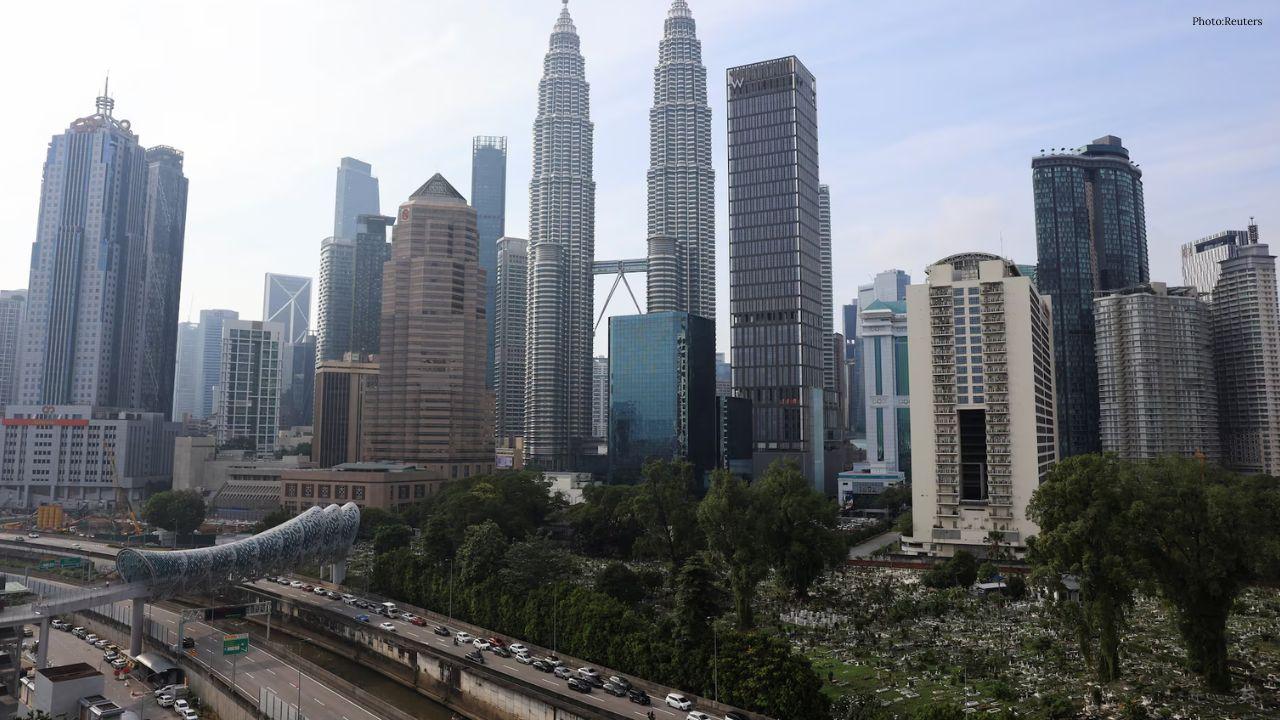
Malaysia has recorded its highest-ever score in economic freedom since the global index began in 1970, marking a significant milestone in the country’s long-term economic development. However, the latest improvement has not translated into a better position in the international rankings, as several other countries have made faster progress. According to the Economic Freedom of the World 2026 annual report, Malaysia received a score of 7.57 out of a possible 10. The figure is higher than its previous score of 7.55 and represents the strongest result recorded by the country since the index was introduced. The Center for Market Education (CME), which commented on the findings, said Malaysia has become considerably more economically free compared with the beginning of the 21st century. Despite this progress, the country slipped two positions to 35th among 165 countries and territories because other economies improved at a faster pace. The latest findings present a mixed picture for the Malaysia economy. The record score reflects progress over several years, while the lower ranking highlights the growing competition among countries seeking to improve their economic environment.
Malaysia’s current performance follows a challenging period during the late 1990s and early 2000s. The CME said the country’s economic freedom score declined from 6.99 in 1995 to 6.12 in 2002 following the Asian financial crisis. During that period, capital controls and major policy changes affected the country’s economic environment. The decline illustrates how financial instability and government policy decisions can influence the conditions under which businesses, investors and individuals operate. Malaysia’s position subsequently improved over time. In 2009, the country ranked 97th out of 165 countries. Its position has climbed steadily since then, eventually reaching 35th in the latest report. This longer-term movement suggests that Malaysia has made substantial progress compared with its earlier position. However, its latest ranking also indicates that maintaining momentum will require continued improvements rather than relying on past achievements.
A higher score does not automatically guarantee a higher international ranking. The index compares countries against one another, meaning a nation can improve its own performance and still fall behind if other economies progress more quickly. Malaysia’s score increased from 7.55 to 7.57, but its ranking dropped from 33rd to 35th. This difference between the score and the ranking is central to understanding the latest findings. Carmelo Ferlito, chief executive officer of the Center for Market Education, described the record result as positive but cautioned against complacency. He said other countries were implementing reforms more quickly, putting pressure on Malaysia’s relative position. For policymakers, the challenge is therefore not simply to preserve the current score. Malaysia must also address structural issues that could limit further progress and reduce its ability to compete with higher-ranked economies.
Malaysia remains the second-freest economy in the Association of Southeast Asian Nations (ASEAN), behind Singapore, which ranks third globally. According to the report figures cited by CME, Thailand stands at 57th, while Brunei and the Philippines share 61st place. Indonesia is ranked 72nd. Malaysia’s score is also above the regional average of 6.99 cited by the think tank. This gives the country a relatively strong position within Southeast Asia, although the comparison also highlights the importance of continuing reforms as regional economies compete for investment and business opportunities. The ASEAN economic ranking offers a broader perspective on Malaysia’s performance. Its second-place regional position indicates that the country remains comparatively well placed, but its global ranking shows that progress elsewhere is moving at a faster pace.
Read Also: Ravi Shastri Urges India to Manage Jasprit Bumrah Ahead of 2027 World Cup
Ferlito identified monetary stability and a relatively flexible labour market as important advantages for Malaysia. These factors can support business activity by helping companies operate in a more predictable economic environment. However, he also raised concerns about the scale of government involvement in the economy, particularly through government-linked companies and state-owned banks. According to the CME chief, the state’s economic footprint remains among the heaviest in the world. He argued that Malaysia would need to reduce state ownership, maintain impartial and rules-based civil service practices, simplify its tariff structure and open markets to greater competition if it aims to enter the global top 20. These recommendations point to several areas where further economic reforms in Malaysia could influence the country’s future performance. Changes in government ownership, market access and regulatory practices could affect the competitive environment for private businesses.
Malaysia’s record score provides evidence of long-term improvement in its economic freedom indicators. Its recovery from the lower scores recorded after the Asian financial crisis also demonstrates how its position has changed over time. Nevertheless, the fall in the global ranking is a reminder that economic progress is relative. Countries must continue improving their policies and business environments to keep pace with competitors. The next challenge for Malaysia will be to build on its existing strengths while addressing concerns over state ownership, regulatory impartiality, tariffs and market competition. Whether these changes can help the country enter the top 20 will depend on future reforms and how its performance compares with other economies.




APEC Members Emphasise Safe and Responsible Use of Artificial Intelligence
APEC members discuss responsible AI use, digital innovation and data governance as China and the US

Union of European Clubs Challenge UEFA and EFC Over EU Competition Rules
UEC files an EU competition complaint against UEFA and EFC, challenging club representation, governa

Mohammed Shami Retires From Test Cricket, Eyes White-Ball Career
Mohammed Shami retires from Test cricket after 13 years, with 229 wickets. He will continue playing

Singapore Warns Users About Privacy and Security Risks of AI Agents
Singapore warns users about AI agent security risks, data privacy, online scams and unauthorised acc

Chris Lynn Completes One-Month Ban After Positive Cocaine Test
Australian cricketer Chris Lynn completes a one-month ban after a positive cocaine test during the T

Djokovic Eyes Strong Season Finish as Health Improves Ahead of Paris Masters
Novak Djokovic reports improved health and performance as he targets a strong Paris Masters finish a