
You have not yet added any article to your bookmarks!
Join 10k+ people to get notified about new posts, news and tips.
Do not worry we don't spam!
Post by : Shweta
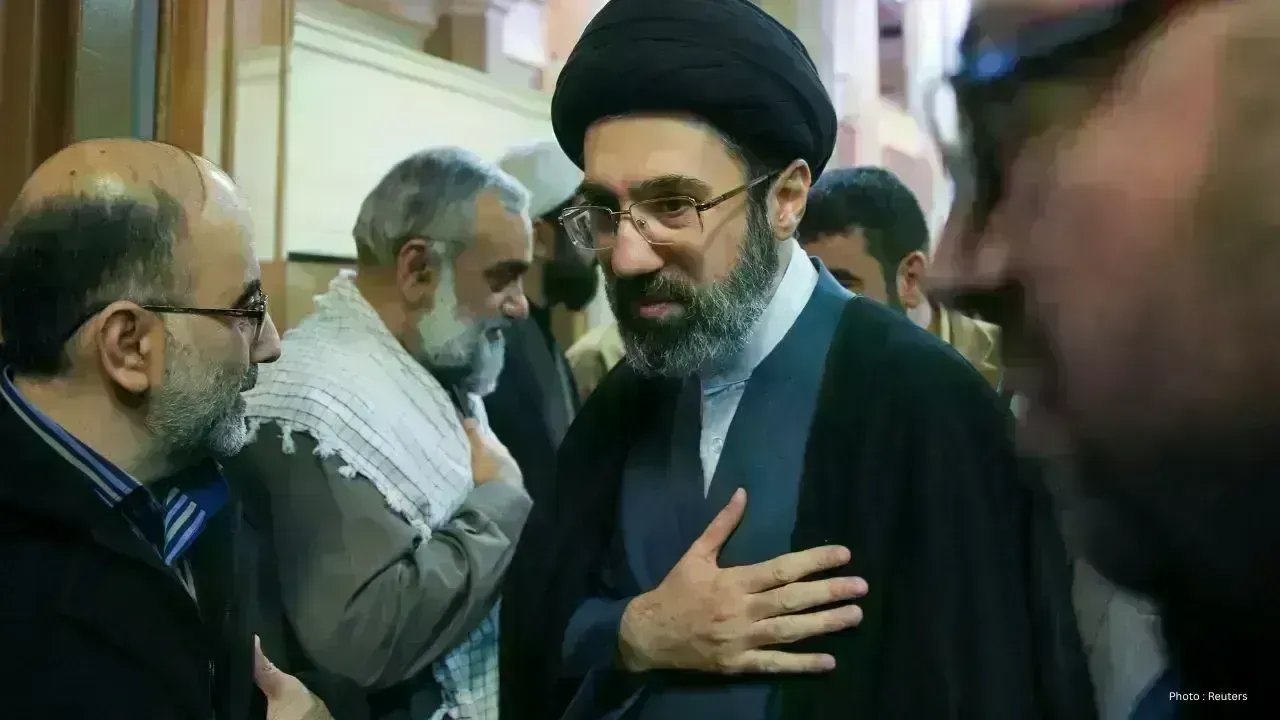
Iran’s Supreme Leader Mojtaba Khamenei is reportedly in hiding, operating from a secure facility due to escalating security threats. This has led to significant disruptions in the ongoing negotiations with the United States. Multiple sources indicate that Iranian officials are struggling with communication, as messages are now relayed through trusted couriers rather than standard official channels.
According to these reports, Khamenei has decreased direct interactions with senior officials amidst increasing fears of potential assassination attempts and heightened regional tensions. This precautionary measure has resulted in negotiators needing extra time to obtain Khamenei’s responses and approvals, thus complicating sensitive discussions with the U.S. under President Donald Trump.
Iran and the United States have been engaged in indirect talks for several months, focusing on regional security, sanctions relief, and Iran’s nuclear program. The discussions are also linked to ongoing tensions in the Strait of Hormuz and wider military operations across the region. However, officials involved note that decision-making has slowed considerably, with final approvals hinging on Khamenei’s secure communication methods.
Reports from intelligence sources suggest that Khamenei has retreated to an undisclosed location that is either underground or heavily fortified. Only a select group of trusted aides seems to be aware of his exact position, and there are indications that electronic communication is being limited to mitigate the risk of surveillance or attacks.
This veil of secrecy comes amidst significant political and military instability in the region, amplified by increasing U.S. and Israeli pressure following months of conflict. Although diplomatic dialogues are ongoing, analysts warn that the communication bottlenecks within Iran are complicating negotiations far more than anticipated.
While Iranian officials assert that progress has been made in certain areas, they continue to deny the proximity of a final agreement with the United States. Spokespersons highlight that key disagreements on sanctions, uranium enrichment, regional conflicts, and security guarantees remain the principal hurdles.
Experts caution that the current state of affairs illustrates how security issues can profoundly impact international negotiations. The unusual secrecy surrounding Khamenei’s activities has sown uncertainty in Iran’s political landscape, raising concerns about the speed of decision-making during pivotal negotiations. Observers assert that unless communication improves, delays in talks between Washington and Tehran are likely to persist in the forthcoming weeks.










PM Modi Pays Tribute to Mahatma Gandhi, Urges People to Support Khadi
PM Modi pays tribute to Mahatma Gandhi on Gandhi Jayanti and urges citizens to support Khadi and the

Amazon Seeks to Offload $8 Billion in Nvidia Chips to Investors
Amazon plans to move $8 billion in Nvidia chips to investors, using a new financing model to strengt

Samsung Raises Galaxy S26 Prices as Memory Chip Costs Rise
Samsung raises Galaxy S26 prices in South Korea as rising memory chip costs put pressure on smartpho

Lewis Hamilton Calls Singapore Grand Prix One of F1's Toughest Races
Lewis Hamilton discusses the demanding Singapore Grand Prix and brings Plus44 and Almave to Singapor

Denmark's Pandora Opens World's Largest Jewellery Factory in Vietnam
Pandora opens its largest jewellery factory in Vietnam, expanding global production, strengthening s

Gautam Gambhir Questions Batting-Friendly Pitches After India's Record ODI Chase
Gautam Gambhir questions batting-friendly ODI pitches after India’s record chase, calling for a bett

