
You have not yet added any article to your bookmarks!
Join 10k+ people to get notified about new posts, news and tips.
Do not worry we don't spam!
Post by : Badri Ariffin
Nvidia’s groundbreaking Blackwell chip is triggering a significant shift in the AI landscape, with Taiwan Semiconductor Manufacturing Co. (TSMC) at the forefront.
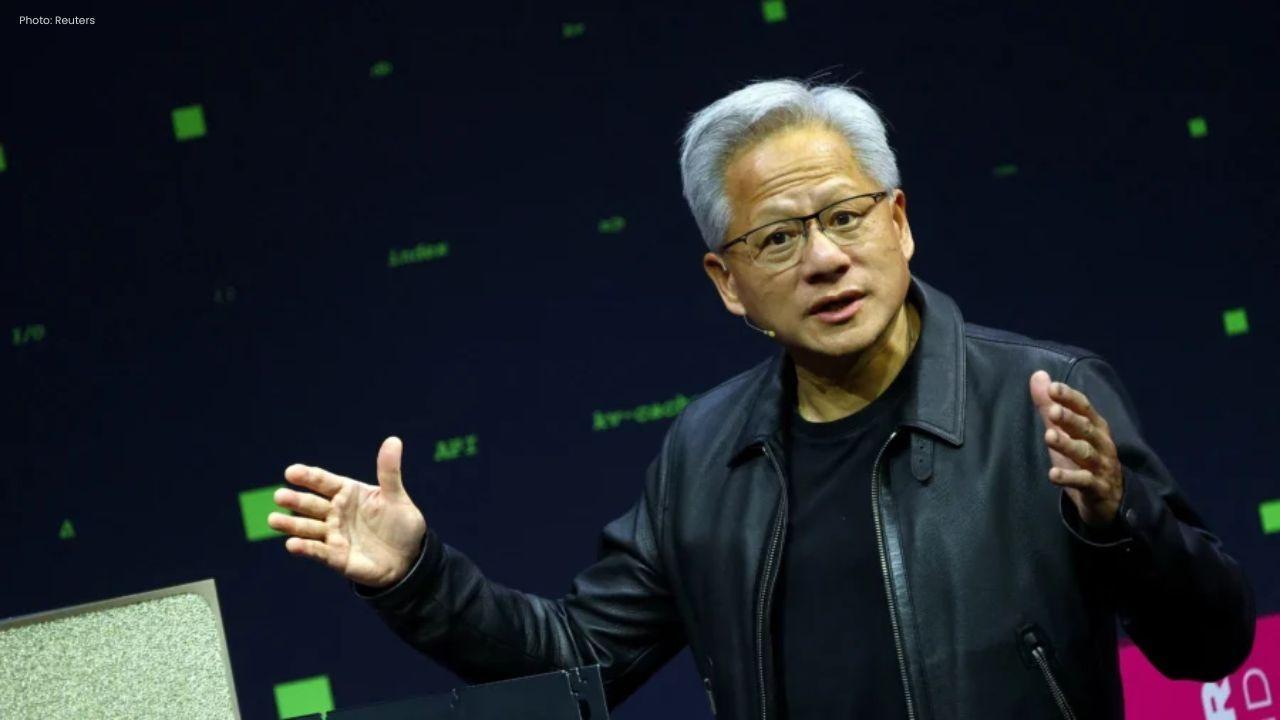
During a recent event in Hsinchu, Nvidia’s CEO Jensen Huang announced strong demand for their latest chips, which are essential to the ongoing AI revolution. He emphasized that this rising demand is translating into a robust need for wafers—the fundamental silicon disks crucial for semiconductors—from their established partner, TSMC.
“TSMC is doing a tremendous job meeting our wafer needs,” Huang remarked, acknowledging the Taiwanese manufacturer’s vital contribution to Nvidia's achievements.
This marked Huang’s fourth visit to Taiwan this year, a period defined by the tech titans delicately maneuvering through complexities surrounding U.S.-China trade relations. Nvidia’s activities in China face restrictions due to the U.S. limitations on advanced chip exports, while TSMC encounters difficulties maintaining a balance between Western clients and Asian markets.
Huang highlighted that the demand for the Blackwell series extends beyond just GPUs. “We produce GPUs along with CPUs, networking devices, and switches—numerous chips are linked to Blackwell,” he stated. TSMC CEO C.C. Wei confirmed an increase in wafer requests from Nvidia, although the specific figures remain undisclosed.
The collaboration between the two firms has led to significant growth, with Nvidia recently making history as the first company to reach a $5 trillion market capitalization, prompting TSMC’s Wei to refer to Huang as a “five-trillion-dollar man.”
Regarding supply chain challenges, Huang acknowledged potential shortages in certain areas as demand surges; however, he remains optimistic due to strong support from memory chip leaders SK Hynix, Samsung, and Micron, all of whom have ramped up production to keep pace with the AI-driven chip “super cycle.”
South Korea’s SK Hynix has already sold out its anticipated chip production for next year, while Samsung is actively pursuing partnerships with Nvidia to provide next-generation HBM4 memory chips.
Despite the rising global demand, Nvidia is currently prevented from selling its premium Blackwell chips in China due to ongoing U.S. restrictions. Huang confirmed there are “no active discussions” for the resumption of those sales.
As the AI boom accelerates, Nvidia and TSMC—the giants of the semiconductor industry—are poised together to drive advancements in high-performance computing.










PM Modi Pays Tribute to Mahatma Gandhi, Urges People to Support Khadi
PM Modi pays tribute to Mahatma Gandhi on Gandhi Jayanti and urges citizens to support Khadi and the

Amazon Seeks to Offload $8 Billion in Nvidia Chips to Investors
Amazon plans to move $8 billion in Nvidia chips to investors, using a new financing model to strengt

Samsung Raises Galaxy S26 Prices as Memory Chip Costs Rise
Samsung raises Galaxy S26 prices in South Korea as rising memory chip costs put pressure on smartpho

Lewis Hamilton Calls Singapore Grand Prix One of F1's Toughest Races
Lewis Hamilton discusses the demanding Singapore Grand Prix and brings Plus44 and Almave to Singapor

Denmark's Pandora Opens World's Largest Jewellery Factory in Vietnam
Pandora opens its largest jewellery factory in Vietnam, expanding global production, strengthening s

Gautam Gambhir Questions Batting-Friendly Pitches After India's Record ODI Chase
Gautam Gambhir questions batting-friendly ODI pitches after India’s record chase, calling for a bett

