
You have not yet added any article to your bookmarks!
Join 10k+ people to get notified about new posts, news and tips.
Do not worry we don't spam!
Post by : Rameen Ariff
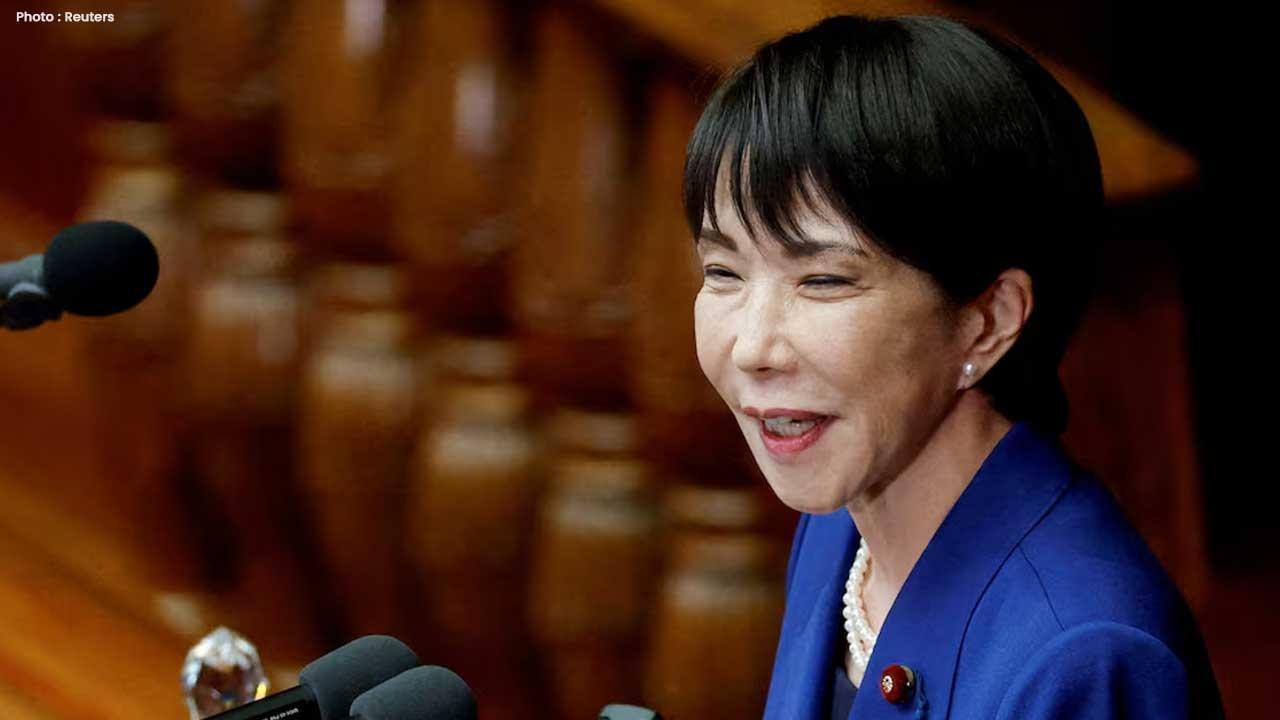
As tensions rise between Tokyo and Beijing, Japan's Prime Minister, Sanae Takaichi, recently indicated that Japan might contemplate military intervention should China attempt an invasion of Taiwan. This statement, made during Takaichi's inaugural parliamentary address since taking office in October, has sparked a strong backlash from China, intensifying an already precarious situation in the region.
Takaichi emphasized the need for Japan to “prepare for a worst-case scenario” with regard to Taiwan, pointing out the island's close proximity—only 110 kilometers—from Japan. Despite Japan's postwar constitution limiting military actions, a law enacted in 2015 permits collective self-defense in particular situations. The Prime Minister hinted that Japan's Self-Defense Forces could be deployed if a scenario in Taiwan poses a significant threat.
A member of the ruling Liberal Democratic Party's right wing, Takaichi is influenced by former Prime Minister Shinzo Abe's assertive stance toward China. She has prioritized strengthening Japan’s defense strategy and announced plans to elevate defense spending to 2% of GDP by March 2026, ahead of schedule, while focusing on securing islands in the East China Sea, including the disputed Senkaku Islands.
China responded promptly and vehemently, denouncing Takaichi's comments as a “military threat” to its sovereignty. A now-retracted social media post from the Chinese consul general in Osaka hinted at possible retaliation, while state media called her remarks “dangerously provocative.” In response, China positioned a coast guard vessel near the Senkaku Islands and dispatched drones near Yonaguni, Japan’s westernmost island. Additionally, it issued travel warnings for its citizens visiting Japan, citing unspecified risks to public safety.
The historical backdrop complicates these developments, as Taiwan suffered under Japanese colonial rule for about half a century until World War II, when it transferred back to China under the Republic of China (ROC). Presently, the People's Republic of China (PRC) regards Taiwan as part of its territory, whereas Taiwan operates with de facto independence, supported by international allies such as the United States. Analysts caution that a conflict over Taiwan could unexpectedly draw regional stakeholders like Japan and the US into a larger geopolitical crisis.
Though a direct military confrontation seems improbable, experts warn that heightened activities in contested areas like the Taiwan Air Defense Identification Zone (ADIZ) and around the Senkaku Islands could lead to mishaps that escalate into wider conflicts. Already, the economic implications of this dispute have been felt, with Chinese travel warnings causing significant declines in Japanese retail and tourism stocks, threatening billions in economic activity. According to the Nomura Research Institute, potential losses could reach ¥2.2 trillion ($14 billion).
Despite the mounting pressure from Beijing, Takaichi remains resolute, with Japanese media reporting that a high-level envoy is en route to Beijing to navigate the complications of this evolving situation. This underscores the fragile balance between asserting national security priorities and striving to maintain stability in the region.
The growing discord between Tokyo and Beijing highlights Taiwan's pivotal role within East Asian geopolitics and the intricate connections between security, diplomacy, and economics in this region. As both nations hold firm to their positions, global eyes are now on how tensions may develop and the potential impact on international trade and security alliances.










PM Modi Pays Tribute to Mahatma Gandhi, Urges People to Support Khadi
PM Modi pays tribute to Mahatma Gandhi on Gandhi Jayanti and urges citizens to support Khadi and the

Amazon Seeks to Offload $8 Billion in Nvidia Chips to Investors
Amazon plans to move $8 billion in Nvidia chips to investors, using a new financing model to strengt

Samsung Raises Galaxy S26 Prices as Memory Chip Costs Rise
Samsung raises Galaxy S26 prices in South Korea as rising memory chip costs put pressure on smartpho

Lewis Hamilton Calls Singapore Grand Prix One of F1's Toughest Races
Lewis Hamilton discusses the demanding Singapore Grand Prix and brings Plus44 and Almave to Singapor

Denmark's Pandora Opens World's Largest Jewellery Factory in Vietnam
Pandora opens its largest jewellery factory in Vietnam, expanding global production, strengthening s

Gautam Gambhir Questions Batting-Friendly Pitches After India's Record ODI Chase
Gautam Gambhir questions batting-friendly ODI pitches after India’s record chase, calling for a bett

