
You have not yet added any article to your bookmarks!
Join 10k+ people to get notified about new posts, news and tips.
Do not worry we don't spam!

Post by : Badri Ariffin
Japan’s economy expanded at a slower pace in the second quarter of 2026, with weak consumer spending and declining capital investment weighing on growth.
Gross domestic product (GDP) increased 0.3% in the April-June period from the previous quarter, according to data released by Japan’s Cabinet Office on Monday, August 17. The expansion marked the third consecutive quarterly increase, but it was slower than the 0.5% growth recorded in the January-March period.
The latest figure also fell short of expectations. A survey of 37 economists conducted by the Japan Center for Economic Research had projected annualised growth of 1.67%.
On an annualised basis, Japan’s economy grew 1.1% during the second quarter.
The figures indicate that economic activity continued to expand, but at a weaker pace than expected. Domestic spending remained under pressure, while exports provided an important boost to overall growth.
Private consumption, a major part of Japan’s economy, was unchanged in real terms during the quarter.
Capital spending also weakened. Business investment declined 1.2% from the previous quarter, equivalent to a 4.6% annualised decline.
The fall in capital expenditure and stagnant household consumption offset some of the gains generated by exports.
Net exports contributed 0.5 percentage points to Japan’s quarterly GDP growth, according to the Cabinet Office data.
By contrast, domestic demand had a negative contribution of 0.2 percentage points.
The figures highlight the importance of external demand in supporting Japan’s economic expansion during the April-June period.
Norihiro Yamaguchi, lead economist for Japan at Oxford Economics, expects economic growth to remain sluggish during the second half of 2026 as higher energy costs put additional pressure on businesses and consumers.
Yamaguchi said AI-related goods exports were likely to remain strong in the near term, but weaker activity in non-AI-related parts of the global economy could limit overall export growth.
Japan imports almost all of its crude oil, leaving its economy exposed to higher energy costs linked to the fallout from the United States-Israel war on Iran.
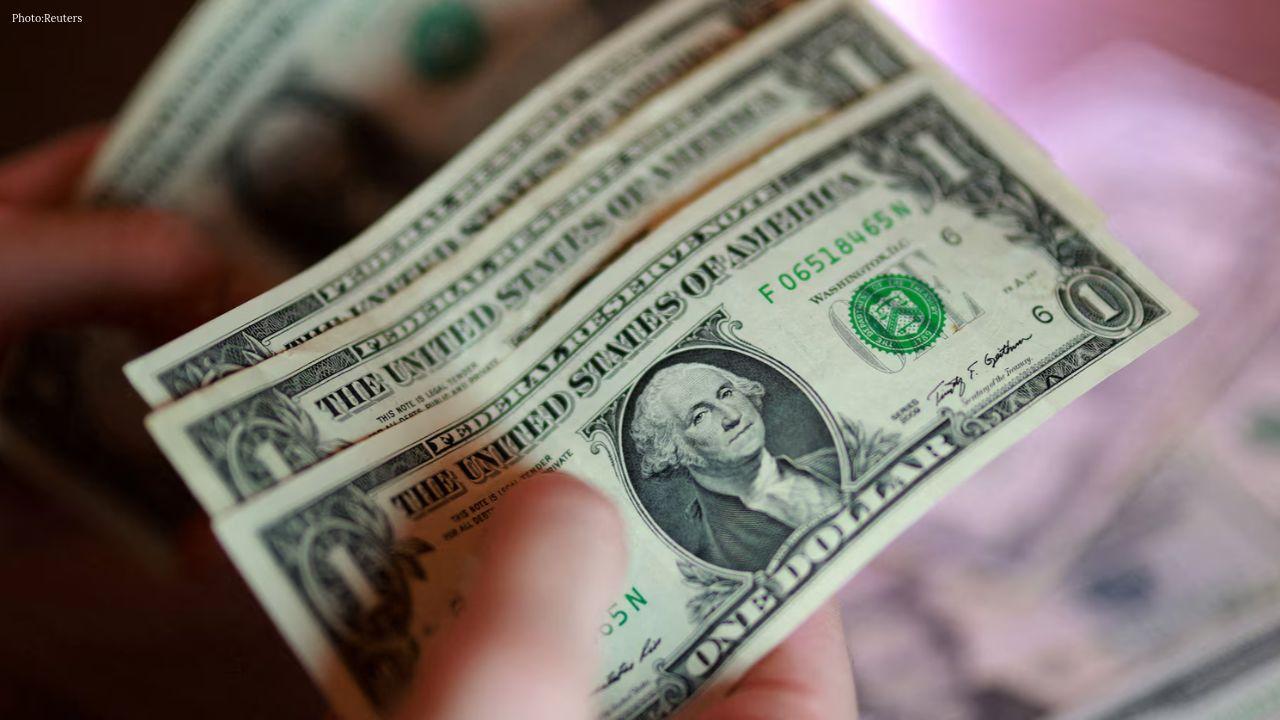
Higher costs for consumers have also been intensified by the weakness of the Japanese yen.
The yen reached a 40-year low against the US dollar last month, increasing pressure on the cost of imported goods and energy.
The weaker-than-expected GDP figures could also add complexity to the Bank of Japan’s (BOJ) upcoming interest-rate decision as the central bank continues its efforts to normalise monetary policy following decades of ultra-low and negative borrowing costs.
The BOJ is scheduled to hold its next policy meeting on September 17 and 18.
In June, the central bank raised its benchmark interest rate to 1%, its highest level in more than three decades.
A further rate increase in September could help address the yen’s prolonged weakness by narrowing the difference between borrowing costs in Japan and those in other major economies, particularly the United States.
The BOJ began moving away from its ultra-loose monetary policy in 2024, when it announced its first interest-rate increase since the 2008 global financial crisis.
Japan’s stock market advanced on Monday as part of a broader rally across Asian markets.
The Nikkei 225 ended the session more than 0.7% higher.
Other major Asian markets also recorded gains. South Korea’s KOSPI rose 2.4%, while Hong Kong’s Hang Seng Index gained about 1.6% and Shanghai’s SSE Composite Index increased around 1.4%.
Taiwan’s TAIEX finished 0.1% higher.
#Global News #Asia News #Japan News #World Update #Global Updates








APEC Members Emphasise Safe and Responsible Use of Artificial Intelligence
APEC members discuss responsible AI use, digital innovation and data governance as China and the US

Union of European Clubs Challenge UEFA and EFC Over EU Competition Rules
UEC files an EU competition complaint against UEFA and EFC, challenging club representation, governa

Mohammed Shami Retires From Test Cricket, Eyes White-Ball Career
Mohammed Shami retires from Test cricket after 13 years, with 229 wickets. He will continue playing

Singapore Warns Users About Privacy and Security Risks of AI Agents
Singapore warns users about AI agent security risks, data privacy, online scams and unauthorised acc

Chris Lynn Completes One-Month Ban After Positive Cocaine Test
Australian cricketer Chris Lynn completes a one-month ban after a positive cocaine test during the T

Djokovic Eyes Strong Season Finish as Health Improves Ahead of Paris Masters
Novak Djokovic reports improved health and performance as he targets a strong Paris Masters finish a