
You have not yet added any article to your bookmarks!
Join 10k+ people to get notified about new posts, news and tips.
Do not worry we don't spam!
Post by : Shweta
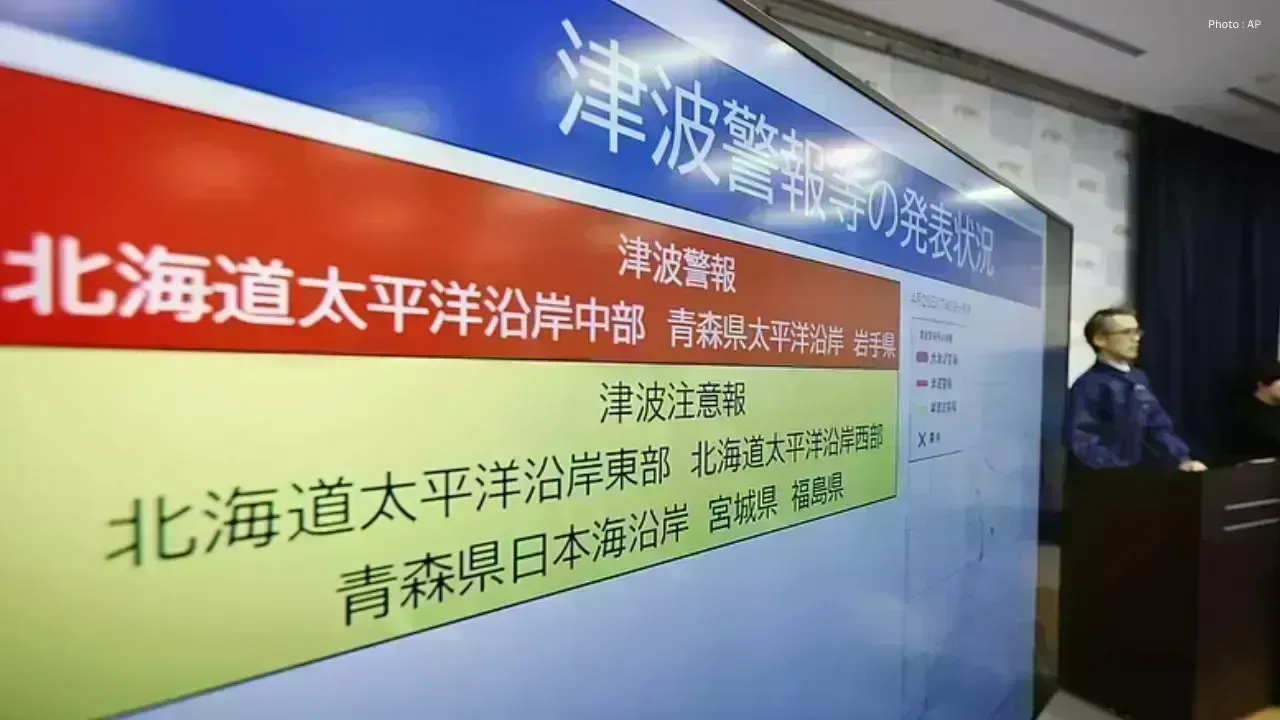
On April 20, 2026, a significant earthquake measuring 7.5 on the Richter scale rocked Japan, stirring memories of the catastrophic 2011 Tōhoku earthquake. The quake resonated throughout the northeastern coastal regions, affecting Aomori, Iwate, and Hokkaido.
The tremor, which occurred in the late afternoon, led to swift emergency protocols, with tsunami sirens echoing in several coastal towns. Residents quickly evacuated to higher ground, a testament to a deeply rooted culture of disaster preparedness shaped by previous calamities. While no formal tsunami warning was issued, anxieties over possible tidal waves heightened tensions in evacuation zones.
Eyewitness accounts depicted scenes of urgency, with family members assisting the elderly and children swiftly heading toward designated shelters. Schools, community centers, and elevated areas served as temporary refuge, where anxious locals awaited updates from authorities.
Prime Minister Sanae Takaichi urged residents in impacted areas to stay in safe locations until an official “all-clear” was declared. Officials warned that even minor waves could pose significant dangers, particularly in regions still haunted by memories of past tragedies.
To many, the earthquake was more than just a geological occurrence; it served as a stark reminder of the enduring trauma from the 2011 disaster, which resulted in immense loss and destruction. The mention of potential wave heights revived comparisons to earlier experiences, illustrating how profoundly these events resonate in collective memory.
Despite the fear and anxiety, instances of community solidarity emerged in affected areas. Residents banded together in evacuation shelters, shared supplies, and checked on those in need, reflecting the resilience that characterizes Japanese society during challenging times.
Authorities are vigilantly monitoring the situation, evaluating damage, and ensuring the safety of the public. While significant destruction has not yet been reported, this incident underscores Japan's ongoing struggle with natural disasters and the enduring psychological effects they entail.








APEC Members Emphasise Safe and Responsible Use of Artificial Intelligence
APEC members discuss responsible AI use, digital innovation and data governance as China and the US

Union of European Clubs Challenge UEFA and EFC Over EU Competition Rules
UEC files an EU competition complaint against UEFA and EFC, challenging club representation, governa

Mohammed Shami Retires From Test Cricket, Eyes White-Ball Career
Mohammed Shami retires from Test cricket after 13 years, with 229 wickets. He will continue playing

Singapore Warns Users About Privacy and Security Risks of AI Agents
Singapore warns users about AI agent security risks, data privacy, online scams and unauthorised acc

Chris Lynn Completes One-Month Ban After Positive Cocaine Test
Australian cricketer Chris Lynn completes a one-month ban after a positive cocaine test during the T

Djokovic Eyes Strong Season Finish as Health Improves Ahead of Paris Masters
Novak Djokovic reports improved health and performance as he targets a strong Paris Masters finish a