
You have not yet added any article to your bookmarks!
Join 10k+ people to get notified about new posts, news and tips.
Do not worry we don't spam!
Post by : Samjeet Ariff
Evaluating the Impact of Overnight Charging on Your Battery
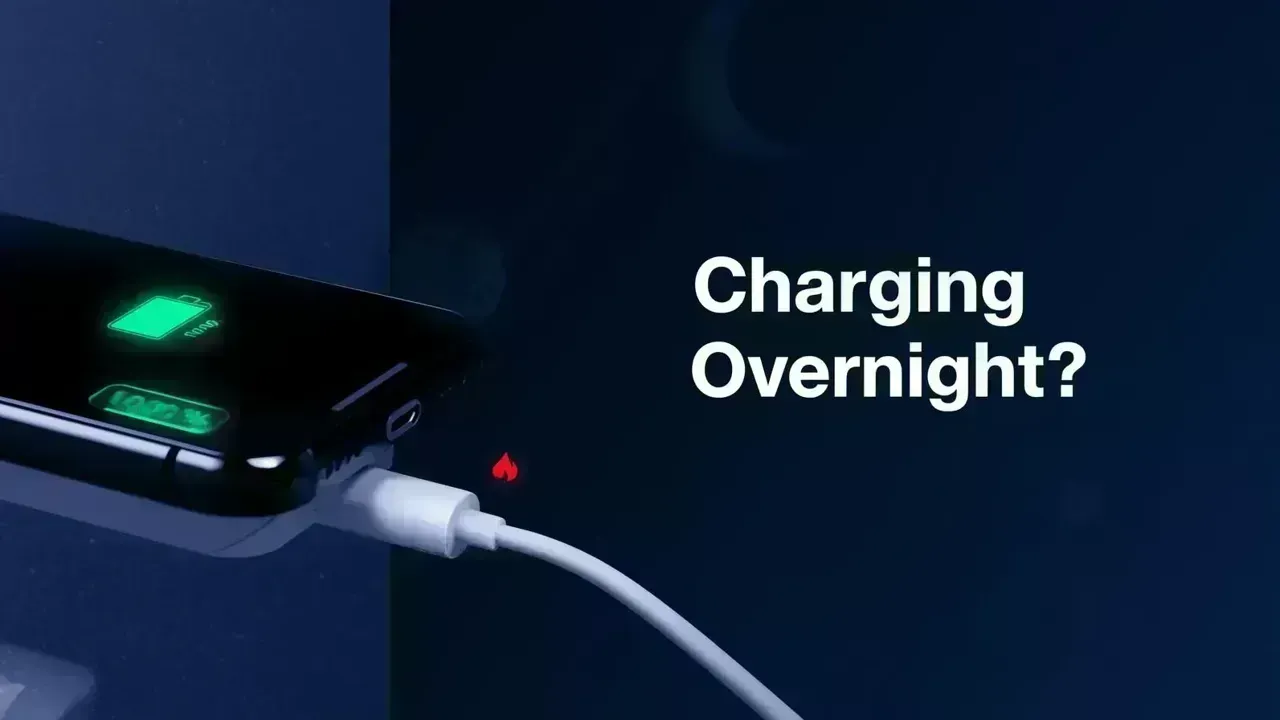
In today’s fast-paced environment, charging smartphones overnight is a widespread practice. Many users plug in their devices at night, anticipating full power come morning. The pressing question is—does this charging method harm battery health or is it generally safe?
The answer lies in a grey area. While contemporary smartphones feature sophisticated battery protection systems, frequently charging overnight may still influence your battery lifespan in the long run. To grasp this issue fully, you should understand how lithium-ion batteries, charging cycles, and battery optimization tools function.
Modern devices predominantly use lithium-ion batteries, which offer rapid charging and longevity. These batteries are equipped to manage regular charge cycles without immediate damage.
However, lithium-ion technology is less effective if frequently kept at 0% or 100% charge.
Upon reaching full capacity, your phone doesn’t continually draw power. It charges intermittently, effectively preventing overcharging but simultaneously maintaining a high state of charge, leading to potential stress over time.
Leaving your phone plugged in all night involves several processes that often go unnoticed.
Your device charges up to 100% initially, followed by a mode called trickle charging, where the battery discharges slightly before recharging.
This pattern may seem harmless, but it can lead to:
While the effects are subtle, nightly charging routines can dull your battery lifespan over time.
Surprisingly, the most significant threat to battery health isn’t overcharging—it’s heat.
generate heat, which is a primary contributor to battery degradation.
High temperatures can:
Even with built-in protection, excess heat can cause lasting harm.
In reality, charging overnight is fairly safe but may not be the most optimal for your long-term battery health.
Modern devices are adept at:
Nonetheless, keeping your phone at a full charge for hours daily can gradually affect battery performance.
If poor charging habits are harming your battery, you might observe:
These symptoms indicate a decrease in battery effectiveness.
Avoid Charging to Full Capacity Regularly
Maintaining your battery level between 20% and 80% is ideal for longevity.
Utilize Optimized Charging Features
Many smartphones offer optimized battery charging, delaying full charges until morning.
Keep Your Device Cool While Its Charging
Charge your device in a cool, ventilated area to avoid trapping heat.
Avoid Intensive Tasks While Charging
Tasks like gaming or streaming while charging can increase heat and diminish battery efficiency.
Use Quality Chargers
Uncertified chargers can lead to unstable power flow, overheating, and long-term battery harm.
Myth 1: Overnight Charging Causes Overcharging
Fact: Smartphone technology halts charging upon reaching full capacity.
Myth 2: Draining to 0% Benefits the Battery
Fact: Deep discharges can damage lithium-ion batteries and shorten their lifespan.
Myth 3: Overnight Charging Causes Immediate Damage
Fact: The adverse effects accumulate gradually over time.
In many scenarios, charging overnight proves to be the most sensible choice:
In such instances, smart charging techniques can minimize negative effects on battery health.
While charging overnight isn't inherently harmful, it also isn't ideal. Striking a balance between convenience and proper care is key.
By grasping how smartphone batteries function, managing heat, and adopting improved charging habits, you can prolong your battery lifespan and optimize performance.
Small modifications in your charging routine can significantly influence battery health moving forward.
This article serves informational purposes and is based on general smartphone battery charging practices. Battery performance may vary with device brand, model, and usage habits. Users should consult manufacturer guidelines for optimal battery maintenance.
#Tech News #AI future technology #Global Technology Trends #Smartphones #AI Technology










APEC Members Emphasise Safe and Responsible Use of Artificial Intelligence
APEC members discuss responsible AI use, digital innovation and data governance as China and the US

Union of European Clubs Challenge UEFA and EFC Over EU Competition Rules
UEC files an EU competition complaint against UEFA and EFC, challenging club representation, governa

Mohammed Shami Retires From Test Cricket, Eyes White-Ball Career
Mohammed Shami retires from Test cricket after 13 years, with 229 wickets. He will continue playing

Singapore Warns Users About Privacy and Security Risks of AI Agents
Singapore warns users about AI agent security risks, data privacy, online scams and unauthorised acc

Chris Lynn Completes One-Month Ban After Positive Cocaine Test
Australian cricketer Chris Lynn completes a one-month ban after a positive cocaine test during the T

Djokovic Eyes Strong Season Finish as Health Improves Ahead of Paris Masters
Novak Djokovic reports improved health and performance as he targets a strong Paris Masters finish a