
You have not yet added any article to your bookmarks!
Join 10k+ people to get notified about new posts, news and tips.
Do not worry we don't spam!
Post by : Saif Rahman
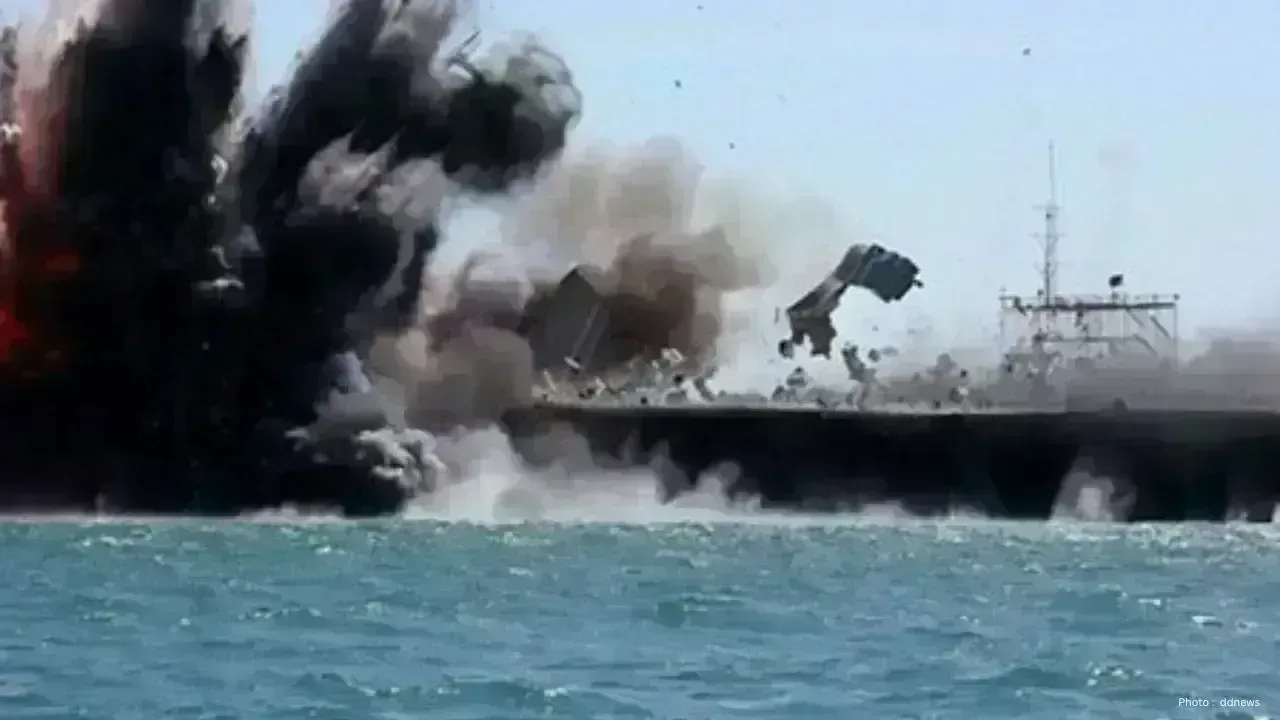
In a resolute reaction to the alleged military strikes linked to the United States, Iran has issued a stern warning that any aggression will provoke a robust response. Iranian officials' recent comments have raised alarms about potential instability and the risk of broader conflict in an already tense region.
Tehran's top leaders have emphasized their commitment to safeguarding the nation’s sovereignty and interests against external threats. They characterized the reported attacks as reckless actions that threaten to further deteriorate diplomatic interactions and regional security.
This development occurs amidst ongoing tensions between Iran and the US, with years of political divisions revolving around sanctions, military engagements, and nuclear discussions contributing to the strained relations.
Iranian authorities reaffirmed that matters of security and territorial integrity are non-negotiable. They indicated that pressure from external parties would not undermine the nation's strategies and positions.
International analysts are concerned that the escalating mutual warnings may hinder any prospects for diplomatic advancement. Commentators on security have noted that severe political rhetoric often fuels uncertainty and escalates fears of military confrontation.
The global market is closely attentive to these developments, with political disruptions involving significant powers having the potential to sway oil prices, trade dynamics, and overall investor confidence on an international scale.
Several nations and global entities have called for restraint, urging all parties to refrain from actions that could escalate tensions. Experts in diplomacy continue to advocate for dialogue as a crucial avenue to mitigate confrontation.
The US and Iran's historical patterns of conflict and political discord have been marked by issues ranging from military endeavors to nuclear proliferation and regional alliances.
Current observations indicate that the delicate balance of regional security is under significant stress. Even minor incidents can swiftly alter the geopolitical landscape and economic conditions.
Economic analysts caution that ongoing instability could drive up transportation costs, impact energy supplies, and disrupt commercial activities. Businesses worldwide tend to exercise caution in the face of heightened geopolitical risks.
Iranian leaders maintain a steadfast stance against foreign exertion as a core tenet of national policy. Their responses following the reported attacks sent a clear signal of resilience and readiness to react when required.
Moreover, many international observers argue that communication channels between governments are crucial for dispelling misunderstandings and averting larger conflicts. Diplomatic engagement is viewed as vital, especially during times of escalating hostility.
Public sentiment varies across nations regarding this tense scenario, with some factions advocating for robust national defense, while others are pushing for peaceful negotiations and restraint.
Military experts suggest that any significant escalation could have dire humanitarian and economic repercussions for the region. Civilians often bear the brunt during prolonged conflicts and instability.
The recent alerts issued by Iran have reignited discussions on long-term regional stability and international security protocols. Global governments continue to keep a vigilant eye on developments, aware that shifts involving major powers can affect international relations.
Political analysts predict that forthcoming events will largely hinge on diplomatic choices made in the impending days. Thoughtful negotiating and responsible discourse may help mitigate the potential for deeper confrontations.
International organizations continue to advocate for peaceful resolutions, promoting efforts aimed at sustaining stability. Numerous experts posit that diplomacy is the most effective route to avert further violence and uncertainty.
This latest turn of events starkly illustrates how swiftly geopolitical tensions can influence global security discussions, economic confidence, and diplomatic ties. With ongoing concerns drawing global attention, governments and international bodies are expected to remain proactive in monitoring the situation.










PM Modi Pays Tribute to Mahatma Gandhi, Urges People to Support Khadi
PM Modi pays tribute to Mahatma Gandhi on Gandhi Jayanti and urges citizens to support Khadi and the

Amazon Seeks to Offload $8 Billion in Nvidia Chips to Investors
Amazon plans to move $8 billion in Nvidia chips to investors, using a new financing model to strengt

Samsung Raises Galaxy S26 Prices as Memory Chip Costs Rise
Samsung raises Galaxy S26 prices in South Korea as rising memory chip costs put pressure on smartpho

Lewis Hamilton Calls Singapore Grand Prix One of F1's Toughest Races
Lewis Hamilton discusses the demanding Singapore Grand Prix and brings Plus44 and Almave to Singapor

Denmark's Pandora Opens World's Largest Jewellery Factory in Vietnam
Pandora opens its largest jewellery factory in Vietnam, expanding global production, strengthening s

Gautam Gambhir Questions Batting-Friendly Pitches After India's Record ODI Chase
Gautam Gambhir questions batting-friendly ODI pitches after India’s record chase, calling for a bett

