
You have not yet added any article to your bookmarks!
Join 10k+ people to get notified about new posts, news and tips.
Do not worry we don't spam!
Post by : Saif Rahman
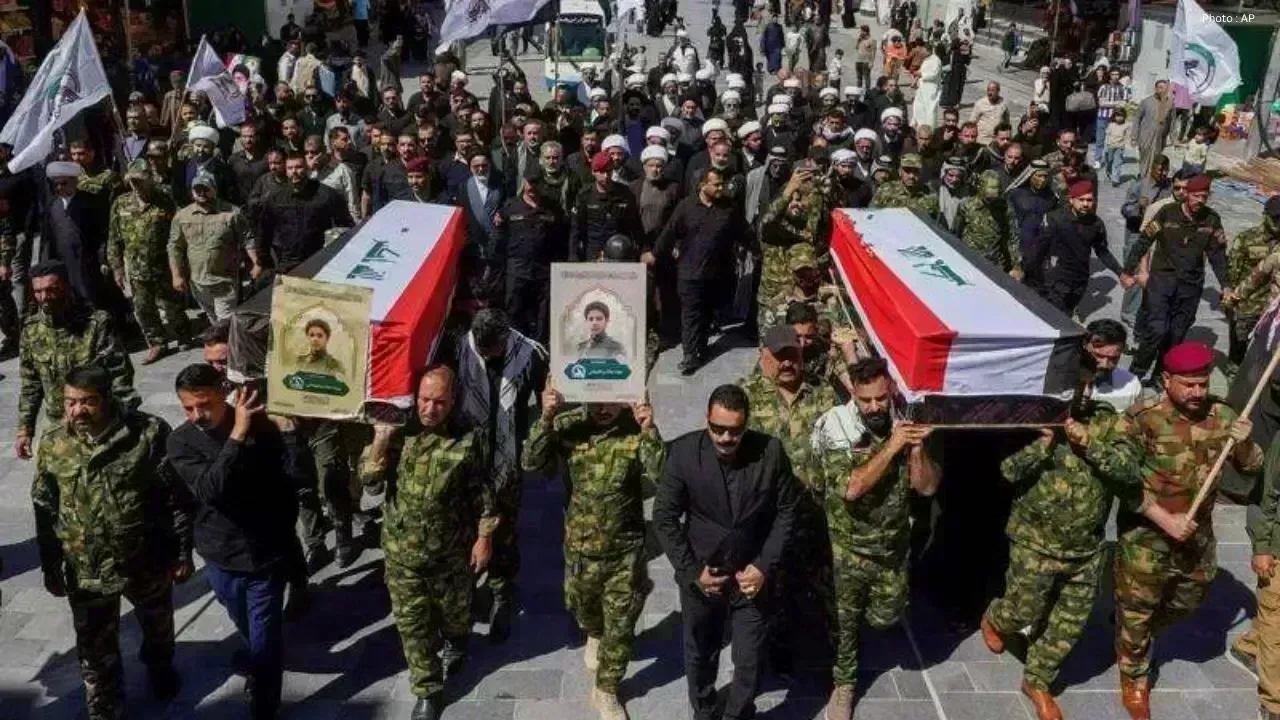
The relentless conflict involving Iran presents significant challenges for Iraq, where militia groups connected to Iran are gaining increasing power. As tensions escalate, these factions are assuming a more prominent role, generating concerns regarding stability and security throughout the region.
Recent reports indicate that Iran has granted its commanders in Iraq greater operational autonomy. This development allows various militia groups to operate more independently, without waiting for explicit orders. Experts suggest this change arises from the broader conflict's pressure and the necessity for rapid responses on the ground.
These militias belong to a network that has evolved over time. Some are associated with the Popular Mobilization Forces, originally established to combat extremist threats. Over the years, certain factions within these forces have forged close ties with Iran, actively participating in regional conflicts.
As the situation escalates, conflicts initiated by these groups have surged. They have targeted foreign military installations and key strategic sites, resulting in continuous confrontations. This dynamic has positioned Iraq as a pivotal arena for larger geopolitical struggles.
Iraq's government finds itself in a precarious position, needing to balance various power dynamics while maintaining internal stability. The political influence of several militias complicates the authorities' ability to respond decisively against them.
The increasing power of these groups raises significant questions regarding national sovereignty. When military factions receive external backing, it risks undermining the country's autonomy. Analysts caution that Iraq may become a battleground for proxy conflicts, with larger powers vying for influence through local entities.
This situation's effects extend beyond politics and security concerns. Ordinary citizens are experiencing the fallout from heightened tensions. Regular incidents of violence disrupt daily life, hinder business operations, and stall development efforts. Many communities are left grappling with anxiety and instability.
The United States has reacted by applying pressure on these militias through military tactics and sanctions, urging Iraq to assert greater control over these armed groups. However, such measures come with their risks, potentially leading to further escalation.
Countries throughout the Middle East are carefully monitoring the evolving situation. Increased violence in Iraq may swiftly impact the broader region, fueling fears that ongoing tensions could spiral into a wider conflict involving multiple nations.
The ascent of militias in Iraq highlights the intricate fabric of contemporary conflicts, where local dynamics intertwine with global issues. The ongoing struggle to balance security, political leverage, and regional authority continues to influence the situation on the ground, complicating resolution efforts.










PM Modi Pays Tribute to Mahatma Gandhi, Urges People to Support Khadi
PM Modi pays tribute to Mahatma Gandhi on Gandhi Jayanti and urges citizens to support Khadi and the

Amazon Seeks to Offload $8 Billion in Nvidia Chips to Investors
Amazon plans to move $8 billion in Nvidia chips to investors, using a new financing model to strengt

Samsung Raises Galaxy S26 Prices as Memory Chip Costs Rise
Samsung raises Galaxy S26 prices in South Korea as rising memory chip costs put pressure on smartpho

Lewis Hamilton Calls Singapore Grand Prix One of F1's Toughest Races
Lewis Hamilton discusses the demanding Singapore Grand Prix and brings Plus44 and Almave to Singapor

Denmark's Pandora Opens World's Largest Jewellery Factory in Vietnam
Pandora opens its largest jewellery factory in Vietnam, expanding global production, strengthening s

Gautam Gambhir Questions Batting-Friendly Pitches After India's Record ODI Chase
Gautam Gambhir questions batting-friendly ODI pitches after India’s record chase, calling for a bett

