
You have not yet added any article to your bookmarks!
Join 10k+ people to get notified about new posts, news and tips.
Do not worry we don't spam!
Post by : Saif Rahman
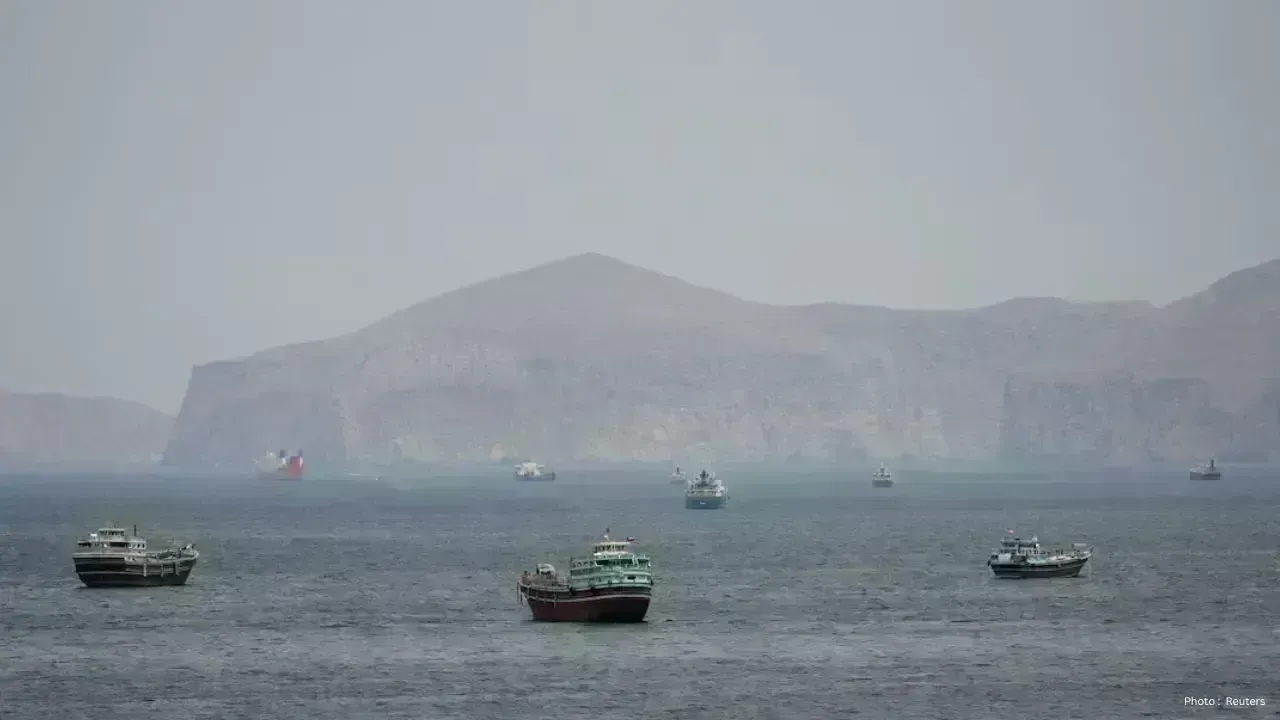
In light of the United States' recent decision to halt military attacks, Iran has significantly bolstered its authority over the Strait of Hormuz, as reported on Thursday. This shift has heightened regional tensions and sparked worries regarding the security of global oil supplies and maritime operations.
The Strait of Hormuz is vital for global trade, with a significant portion of the world's oil traversing this narrow passage. Any confrontations or limitations in this region can rapidly influence oil prices and international commerce.
Following the US's announcement to pause its military actions, Iranian forces have increased their presence in the area, reportedly seizing two vessels. Iran asserted that these ships violated maritime regulations, though details surrounding the vessels remained unclear.
While the US extended its pause in military operations, officials have not verified any formal agreement with Iran. This ambiguity has fueled confusion over the actual status of a ceasefire.
Iran has not fully embraced the US stance, with officials indicating that any long-term resolution hinges on lifting the US-imposed restrictions and pressures. This divergence has intensified unpredictability in the region.
In light of escalating risks, shipping companies are exercising increased caution. Some vessels are rerouting away from the Strait of Hormuz, while others are enhancing security protocols. The costs for insuring ships operating in this area have also surged.
A decline in shipping activity could adversely impact global markets. A diminished flow of vessels through such a crucial route can constrain oil supply, driving prices higher. This trend could influence fuel expenses and various industries worldwide.
The tension between Iran and the United States has reached a boiling point, compounded by recent military actions. Although the US has paused its strikes, the ground situation continues to be fraught with tension.
Global leaders are attentively monitoring these ongoing developments. A number of nations rely on oil transported through the Strait of Hormuz, making any disruptions potentially devastating for economies. There are increasing calls for restraint and cooperation to prevent further escalation.
Currently, the path to a lasting resolution remains unclear. The region remains volatile, and a minor incident could quickly escalate tensions once more. The upcoming days may prove crucial in determining if the situation will improve or deteriorate further.










PM Modi Pays Tribute to Mahatma Gandhi, Urges People to Support Khadi
PM Modi pays tribute to Mahatma Gandhi on Gandhi Jayanti and urges citizens to support Khadi and the

Amazon Seeks to Offload $8 Billion in Nvidia Chips to Investors
Amazon plans to move $8 billion in Nvidia chips to investors, using a new financing model to strengt

Samsung Raises Galaxy S26 Prices as Memory Chip Costs Rise
Samsung raises Galaxy S26 prices in South Korea as rising memory chip costs put pressure on smartpho

Lewis Hamilton Calls Singapore Grand Prix One of F1's Toughest Races
Lewis Hamilton discusses the demanding Singapore Grand Prix and brings Plus44 and Almave to Singapor

Denmark's Pandora Opens World's Largest Jewellery Factory in Vietnam
Pandora opens its largest jewellery factory in Vietnam, expanding global production, strengthening s

Gautam Gambhir Questions Batting-Friendly Pitches After India's Record ODI Chase
Gautam Gambhir questions batting-friendly ODI pitches after India’s record chase, calling for a bett

