
You have not yet added any article to your bookmarks!
Join 10k+ people to get notified about new posts, news and tips.
Do not worry we don't spam!
Post by : Saif Rahman
The Israel-Lebanon border is witnessing a surge in violence, marked by a fatal drone strike and the capture of a key stronghold in southern Lebanon. These events highlight growing instability and the potential for a larger conflict impacting both nations and the wider Middle East.
In a recent incident, a Hezbollah drone attack resulted in the death of an Israeli soldier in southern Lebanon. This marks a significant shift in modern warfare dynamics, showcasing the capability of non-state actors to deploy advanced aerial technology against military forces. The incident exemplifies the rapidly evolving nature of conflicts in the region.
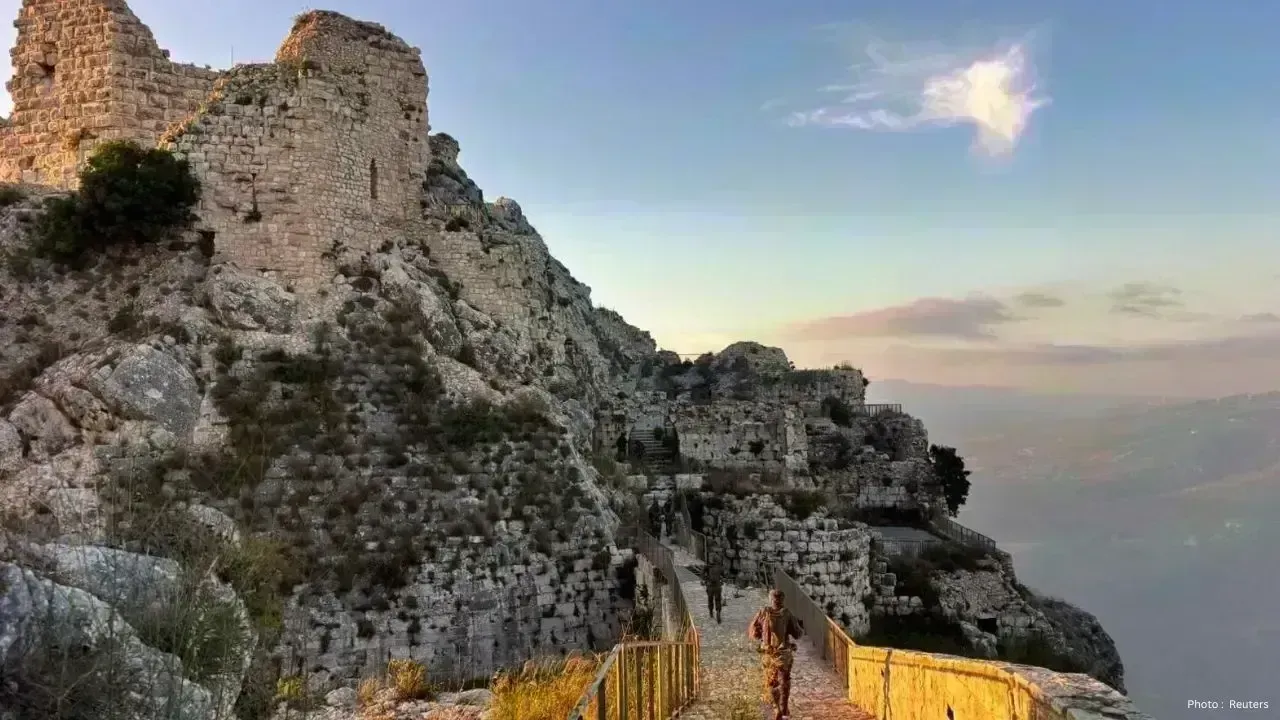
Concurrently, Israeli troops announced the takeover of Beaufort Castle, a historically significant fortress that not only holds symbolic weight but also offers strategic advantage due to its vantage point. This location has long been considered critical in military operations, providing enhanced observation and planning capabilities.
The combination of a lethal drone strike coupled with the capture of a pivotal location underscores the escalating confrontations. Exchange of fire and military maneuvers have become more complex as tensions rise, indicating a shift from minor border skirmishes to broader security challenges.
Drone technology has significantly altered modern military strategies, with both state and non-state actors investing heavily in such systems for various operations. While these developments enhance operational capabilities, they impose new hurdles for defense forces trying to safeguard both military and civilian structures.
The recent loss of a soldier serves as a stark reminder of the human cost associated with this ongoing conflict, affecting families, communities, and military entities alike. Each casualty raises the stakes, intensifying pressure for responsive actions and complicating diplomatic avenues.
Beaufort Castle's capture signifies more than just military importance; its historical context means it could become emblematic of the overarching strategic goals of the involved parties in the future.
Experts are increasingly worried that without intervention, these skirmishes could spiral into a wider conflict, given the sustained exchanges of military fire and operations observed over an extended timeline. The risk of miscalculations contributing to a larger crisis is palpable.
Local communities, often the most affected by continuous instability, face displacement and interruptions to everyday life, with economic activities frequently stalling under such dire circumstances. The ramifications of prolonged insecurity extend beyond military concerns, posing significant challenges to the social fabric.
Global focus persists on preventing further skirmishes, as diplomatic efforts aim to inspire restraint and dialogue to alleviate rising tensions. Despite the military undertones clouding headlines, many believe addressing the political landscape is pivotal for achieving lasting peace.
The regional security environment adds complexity, as multiple challenges in the Middle East can influence interconnected situations. Policymakers closely observe these border confrontations for their potential ripple effects.
Analysts point out that the dynamics of controlling strategic areas and integrating new technologies are increasingly shaping modern warfare. These developments impact strategic planning, operational decisions, and the overall power balance in the region, as evidenced by the recent events in southern Lebanon.
The developments raise pressing questions regarding future security frameworks in this volatile area. Achieving sustainable peace will hinge on more than military responses; it necessitates political solutions, constructive dialogue, and addressing deep-rooted tensions that perpetuate the cycle of conflict.
As the situation evolves, uncertainty prevails. The blend of military losses and territorial gains coupled with advancements in weaponry amplifies the need for careful navigation among all parties involved. Upcoming choices may have lasting implications for both immediate security and the future direction of the conflict.
The recent drone assault and Beaufort Castle's capture serve as a potent reminder of how swiftly security conditions can shift. While achieving military aims remains crucial, protecting civilian lives and minimizing violence is essential for any hopes of lasting stability, requiring vigilance, diplomacy, and efforts to avert further escalation in a historically conflict-ridden region.
#Global News #World Update #Global Updates #Middle East #World News










PM Modi Pays Tribute to Mahatma Gandhi, Urges People to Support Khadi
PM Modi pays tribute to Mahatma Gandhi on Gandhi Jayanti and urges citizens to support Khadi and the

Amazon Seeks to Offload $8 Billion in Nvidia Chips to Investors
Amazon plans to move $8 billion in Nvidia chips to investors, using a new financing model to strengt

Samsung Raises Galaxy S26 Prices as Memory Chip Costs Rise
Samsung raises Galaxy S26 prices in South Korea as rising memory chip costs put pressure on smartpho

Lewis Hamilton Calls Singapore Grand Prix One of F1's Toughest Races
Lewis Hamilton discusses the demanding Singapore Grand Prix and brings Plus44 and Almave to Singapor

Denmark's Pandora Opens World's Largest Jewellery Factory in Vietnam
Pandora opens its largest jewellery factory in Vietnam, expanding global production, strengthening s

Gautam Gambhir Questions Batting-Friendly Pitches After India's Record ODI Chase
Gautam Gambhir questions batting-friendly ODI pitches after India’s record chase, calling for a bett

