
You have not yet added any article to your bookmarks!
Join 10k+ people to get notified about new posts, news and tips.
Do not worry we don't spam!
Post by : Rohit Dhiman
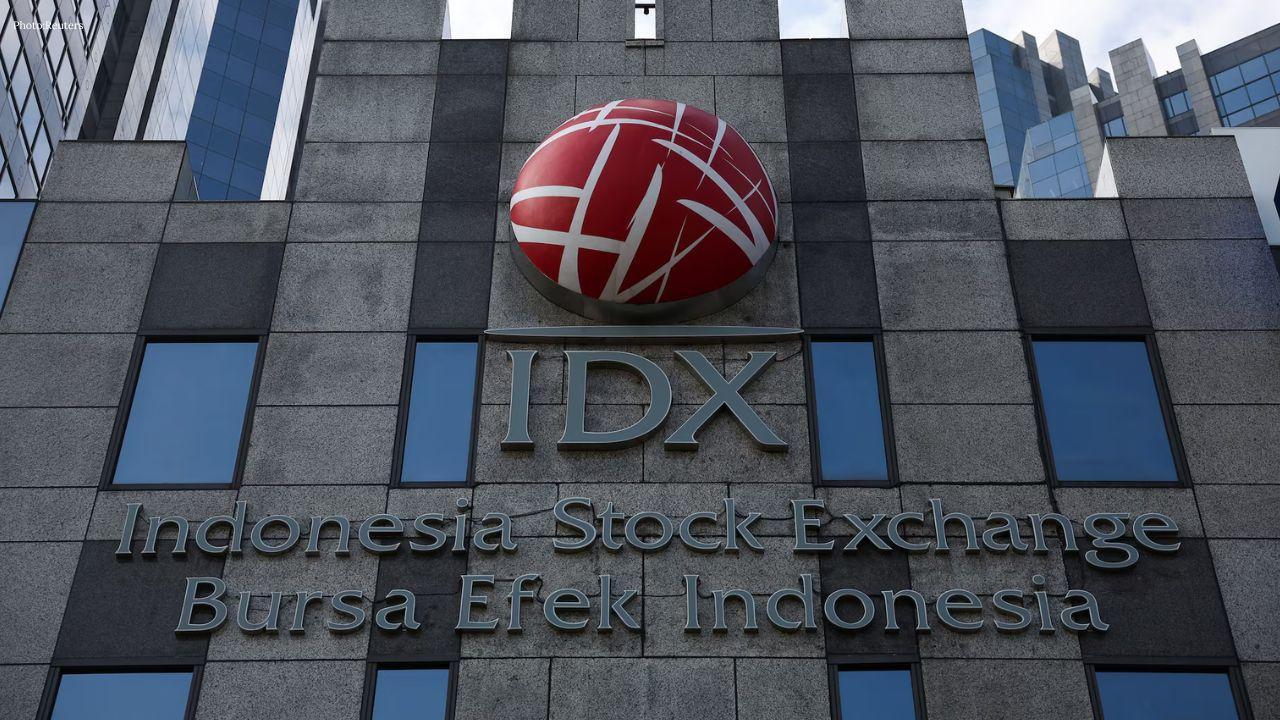
Indonesia's stock market suffered a sharp decline on Monday, October 19, as investors reacted to a warning from global index provider MSCI about the country's future classification in international investment indexes. The latest sell-off pushed the market to its lowest level in six years, adding to concerns about investor confidence, market transparency and the country's ability to attract international capital. The decline came after a steep fall on Friday, when the benchmark market index dropped 11.6 per cent. Selling pressure continued into Monday's trading session, with Indonesian stocks falling more than 5 per cent in early trade. The back-to-back losses reflected growing uncertainty about whether Indonesia can address MSCI's concerns before the next stage of its review. At the centre of the turmoil is the possibility that Indonesia could lose its current emerging-market classification and be moved to standalone-market status. MSCI has not announced a final removal, but its warning has raised questions about the future flow of international investment into Southeast Asia's largest economy.
The MSCI warning has become a major concern because global investment managers use MSCI indexes to measure market performance and guide investment decisions. Many funds track these indexes directly, while others use them as benchmarks when deciding how to allocate money across countries and regions. Indonesia currently holds an emerging-market position in the global investment landscape. A move to standalone status could make the country's equities less accessible to some international investors and reduce their visibility within widely followed investment strategies.Such a change would not automatically mean that every foreign investor must sell Indonesian shares. However, funds that follow particular indexes may need to adjust their portfolios if Indonesia is removed from those benchmarks. Other investment managers could independently reduce their exposure because of concerns about liquidity, transparency or the risks associated with the market. This uncertainty has placed additional pressure on the Indonesia Stock Exchange, where investors are already responding to questions about trading practices and share ownership information.
In response to the sharp market movements, the Indonesia Stock Exchange announced that it had reduced its lower auto-rejection limit from 15 per cent to 7 per cent on Monday. The mechanism limits how far a share price can fall during a trading session before the exchange's rules prevent further declines under the applicable conditions. By lowering the threshold, the exchange said it wanted to give investors an opportunity to assess available information and make decisions based on Indonesia's economic fundamentals. The decision followed a weekend meeting involving the financial regulator and capital-market participants, including analysts and economists. The move came as investors tried to understand the implications of MSCI's warning and assess whether the government and regulators could restore confidence through credible reforms. Although trading safeguards can help manage market movements, they do not automatically resolve the underlying concerns that triggered the sell-off. Investors are likely to watch for clearer information about ownership disclosures, market oversight, trading practices and the enforcement of existing rules.
Read Also: Davidovich Fokina Wins Shanghai Masters for Third 2026 Title
Another significant development came on Friday, when Indonesia's financial regulator announced sanctions against parties linked to alleged trading manipulation involving shares of three companies. The total fines announced amounted to 2.1 trillion rupiah, equivalent to approximately US$116.4 million. The announcement was viewed by some market observers as a potentially positive step towards improving oversight. However, analysts have stressed that enforcement must be consistent and must address concerns about market abuse beyond a single announcement. Angus Mackintosh, an ASEAN specialist at Aletheia Capital in Singapore, said the timing of the fines suggested that the Financial Services Authority, known as OJK, had been working on the issue for some time. He welcomed the penalties as a positive move but argued that more concerted action was necessary to strengthen the regulator's authority and take direct action against individuals associated with market abuse. The broader issue is whether investors will see sustained improvements in how Indonesia's capital markets operate. Penalties can send a signal that misconduct will be addressed, but confidence also depends on transparent investigations, credible supervision and consistent implementation of regulations.
The market decline is unfolding against a challenging backdrop for foreign investors, who have been reducing their exposure to Indonesian equities. According to the figures reported on Monday, overseas investors had net sold US$4.88 billion worth of Indonesian stocks so far in 2026. If that pace continues, the country could record its largest annual foreign equity outflow in at least 16 years. Sustained selling can affect stock prices, reduce market liquidity and make it harder for companies to attract new investment. It can also influence how international investors assess the risks of holding assets in the country. Goldman Sachs estimated that a full removal from MSCI indexes could lead to US$5.6 billion in passive investment outflows. Active funds benchmarked against the indexes hold more than US$8 billion in Indonesian equities, although any selling by those funds would depend on individual investment decisions rather than being automatically required. These figures represent potential exposure and possible market effects, not a guarantee that all the money will leave Indonesia.
The possibility of losing its emerging markets classification is significant because international index categories influence how investors compare and allocate money between countries. Emerging markets generally attract investors seeking growth opportunities in economies that are developing their financial systems and expanding their role in global trade. Frontier and standalone classifications can have different investor bases, index exposure and levels of international participation. If Indonesia were moved to standalone status, some funds that invest according to emerging-market benchmarks could be required by their own investment rules to reconsider their holdings. Other funds might retain their investments, increase exposure at lower prices or wait for further clarity. The impact would depend on the final classification decision, the rules governing individual funds and how investors interpret the country's reform efforts. MSCI's concerns have focused on transparency around ownership and trading behaviour. Addressing these issues could therefore be central to Indonesia's efforts to maintain its current standing.
The pressure has extended beyond shares to Indonesia's currency. The rupiah exchange rate weakened to around 18,040 rupiah per US dollar, approaching the record low of 18,190 recorded in June, according to the report. Currency movements matter because they can influence import costs, inflation expectations, foreign investment returns and the financial position of companies with foreign-currency obligations. When a currency weakens against the US dollar, overseas investors may receive lower dollar-denominated returns when converting their investments back into their home currency, even if local asset prices remain unchanged. A weaker rupiah can also increase the cost of imported goods and materials, depending on how businesses and consumers are affected. The actual impact varies across sectors, as some exporters may benefit from currency movements while import-dependent businesses may face higher costs. Gary Tan, a portfolio manager at Allspring Global Investments in Singapore, said the bigger concern was not index-related selling alone but the possibility that pressure could spread into the rupiah and domestic bond yields.
Indonesia's stock market is valued at more than US$500 billion, but the consequences of the current turmoil could extend beyond equity investors. Domestic bond yields are another area of concern. If investors demand higher returns to compensate for increased risk, government and corporate borrowing costs could rise. The extent of any change would depend on market conditions, monetary policy, investor demand and expectations for Indonesia's economic outlook. Higher financing costs can affect businesses planning new projects, companies refinancing existing debt and the government's borrowing requirements. If those pressures persist, investment decisions may become more cautious. Currency weakness can also complicate the policy environment. Authorities may need to balance market confidence, economic growth, price stability and the need to maintain attractive conditions for capital inflows. However, a fall in stocks does not automatically mean that Indonesia is entering a recession or that every part of its economy is weakening. The market reaction reflects a combination of index-related uncertainty, concerns about transparency, investor positioning and wider financial risks.
The warning comes at a difficult time for the government of President Prabowo Subianto, which has faced additional pressure after Moody's and Fitch revised Indonesia's sovereign rating outlooks to negative earlier in 2026. A negative outlook is not the same as an immediate credit-rating downgrade. It signals that the rating agencies see risks that could influence their future assessment of a country's creditworthiness. When concerns about sovereign credit, currency stability and equity-market transparency emerge together, investors may become more cautious about their overall exposure to a country. For the Indonesian government, the immediate task is to demonstrate that financial-market reforms can be translated into practical improvements. These include clearer ownership information, effective action against manipulation and stronger confidence in the rules governing market participation. Investors will also be watching for consistency between official announcements and actual regulatory outcomes. If reforms produce measurable improvements, confidence could stabilise over time. If uncertainty persists, capital raising and international investment could remain more difficult.
Several developments are likely to influence how the Indonesian market performs in the coming weeks and months. First, investors will look for further clarification from MSCI on the country's classification and the standards it must meet. Any final decision could affect funds that use MSCI indexes as investment benchmarks. Second, market participants will assess whether Indonesia's financial regulator follows the recent fines with broader, consistent enforcement. Improved disclosure and greater transparency around share ownership could be particularly important. Third, investors will monitor foreign capital flows, the rupiah and domestic bond yields. A stabilisation in these markets could help ease concerns about a wider financial shock, while continued weakness could add to uncertainty. Finally, investors will look at the performance of individual companies and the broader economy. Market-wide selling can create pressure even on businesses with strong fundamentals, but a recovery in confidence would depend on more than share prices becoming cheaper.







APEC Members Emphasise Safe and Responsible Use of Artificial Intelligence
APEC members discuss responsible AI use, digital innovation and data governance as China and the US

Union of European Clubs Challenge UEFA and EFC Over EU Competition Rules
UEC files an EU competition complaint against UEFA and EFC, challenging club representation, governa

Mohammed Shami Retires From Test Cricket, Eyes White-Ball Career
Mohammed Shami retires from Test cricket after 13 years, with 229 wickets. He will continue playing

Singapore Warns Users About Privacy and Security Risks of AI Agents
Singapore warns users about AI agent security risks, data privacy, online scams and unauthorised acc

Chris Lynn Completes One-Month Ban After Positive Cocaine Test
Australian cricketer Chris Lynn completes a one-month ban after a positive cocaine test during the T

Djokovic Eyes Strong Season Finish as Health Improves Ahead of Paris Masters
Novak Djokovic reports improved health and performance as he targets a strong Paris Masters finish a