
You have not yet added any article to your bookmarks!
Join 10k+ people to get notified about new posts, news and tips.
Do not worry we don't spam!
Post by : Maya Rahman
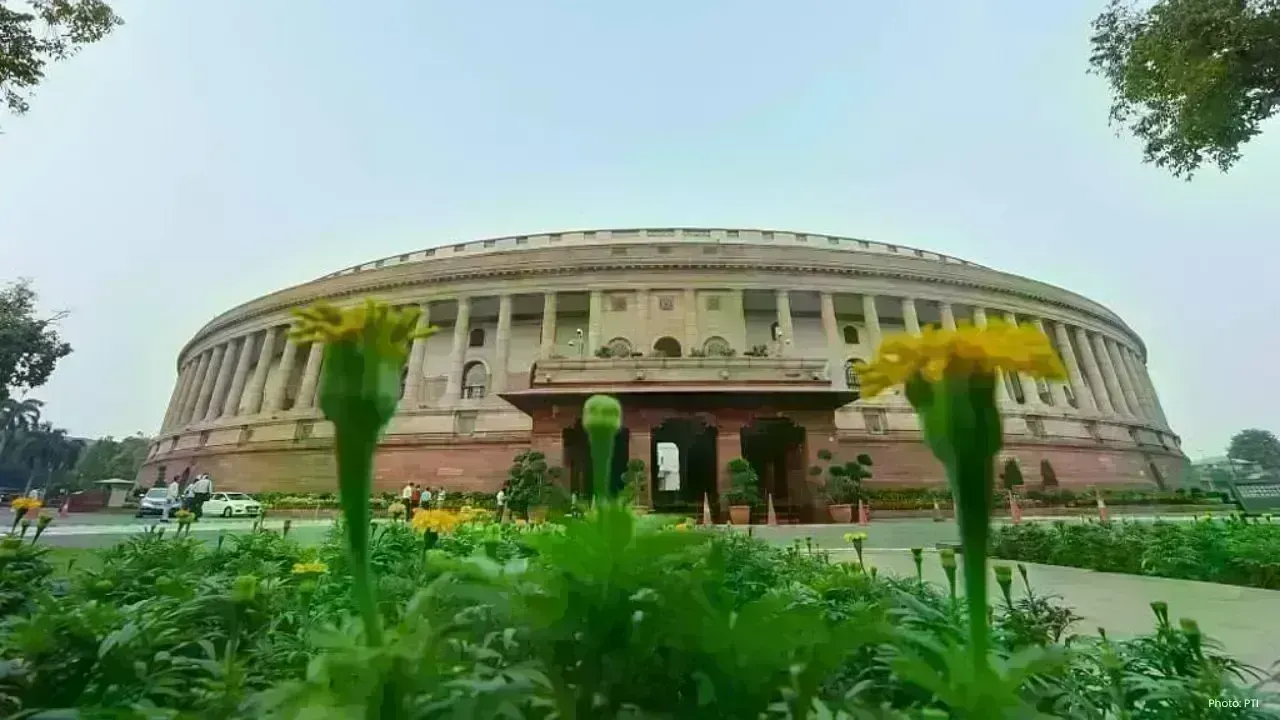
During a notably efficient Winter Session, India’s Parliament endorsed eight key bills. Despite intense debates and exchanges between government and opposition, a consensus emerged to discuss electoral reforms, leading to minimized disruptions compared to the previous Monsoon Session marked by frequent adjournments over electoral roll issues.
Productivity levels soared, with the Lok Sabha hitting 110 percent while the Rajya Sabha achieved a remarkable 121 percent. Major discussions included electoral reforms and marking the 150th anniversary of Vande Mataram, alongside the first session presided over by CP Radhakrishnan as Rajya Sabha Chairman.
Among the most contentious legislations was the Viksit Bharat G RAM G Bill, aimed at replacing the MGNREGA. Opposition fiercely contested the bill, calling for its review by a Standing Committee, resulting in significant protests within Parliament. Minister Kiren Rijiju condemned the minor chaos, criticizing the opposition's behavior as unfit for parliamentary decorum.
The focus of the Winter Session remained extensively on financial legislation, with vital bills approved, including amendments to insurance laws, Appropriation Bills, and tax-related regulations. Notably, the SHANTI Bill, enabling private sector participation in nuclear energy, was passed after robust discussions in both chambers.
A key piece of legislation, the Sabka Bima Sabki Raksha (Amendment of Insurance Laws) Bill, 2025, raised foreign direct investment in insurance firms from 74 percent to 100 percent. The government touted this step as a catalyst for long-term foreign investment, technology advancement, and enhanced insurance coverage across India.
In addition, the Parliament passed the Central Excise (Amendment) Bill, 2025, which adjusts excise duties on tobacco post-GST compensation cess. The Manipur Goods and Services Tax (Second Amendment) Bill, 2025, was also sanctioned, aimed at aligning with GST Council resolutions, including simplification procedures for the state's GST rates.
Throughout the session, 10 bills were introduced in the Lok Sabha, resulting in the passage of eight bills across 15 sittings. The Securities Markets Code Bill, 2025, proposed by Finance Minister Nirmala Sitharaman, has been referred to a Standing Committee to streamline India’s capital market regulations under a cohesive framework.
Parliamentary Affairs Minister Kiren Rijiju expressed disappointment about missed opportunities for comprehensive discussions on air pollution due to opposition disruptions during the G RAM G Bill debates. He marked this as the government's only regret, emphasizing the need for serious discussions on such vital issues.
The Winter Session of Parliament, commencing on December 1, concluded on Friday with adjournment sine die. Despite disagreements and disruptions, the session wrapped up with several pivotal bills enacted, showcasing a dynamic legislative environment and active political discourse.





PSG Coach Luis Enrique Urges Players to Step Outside Comfort Zone
PSG coach Luis Enrique says players must leave their comfort zone and keep improving as the club tar

China’s Tiangong Sets New 400m Record at Robot Olympics
China’s Tiangong robot sets a new 400m record at the Robot Olympics, beating a South African robot i

George Russell Wins Dutch GP Sprint, Boosts Mercedes Morale
George Russell wins the Dutch GP Sprint from pole as Mercedes teammate Kimi Antonelli extends his F1

Australia 50/3 After Bangladesh Bowled Out for 64 in Second Test
Australia reached 50/3 after Bangladesh were bowled out for 64 in the second Test, with Mitchell Sta

Jordan Burroughs Returns to Wrestling with 2028 Olympic Dream
Jordan Burroughs returns to wrestling with Real American Freestyle as the Olympic champion eyes a po

Lamborghini Catches Fire on Singapore's ECP, Causing Heavy Traffic
A Lamborghini caught fire on Singapore's ECP, causing heavy traffic and bus delays. No injuries were

