
You have not yet added any article to your bookmarks!
Join 10k+ people to get notified about new posts, news and tips.
Do not worry we don't spam!
Post by : Saif Rahman
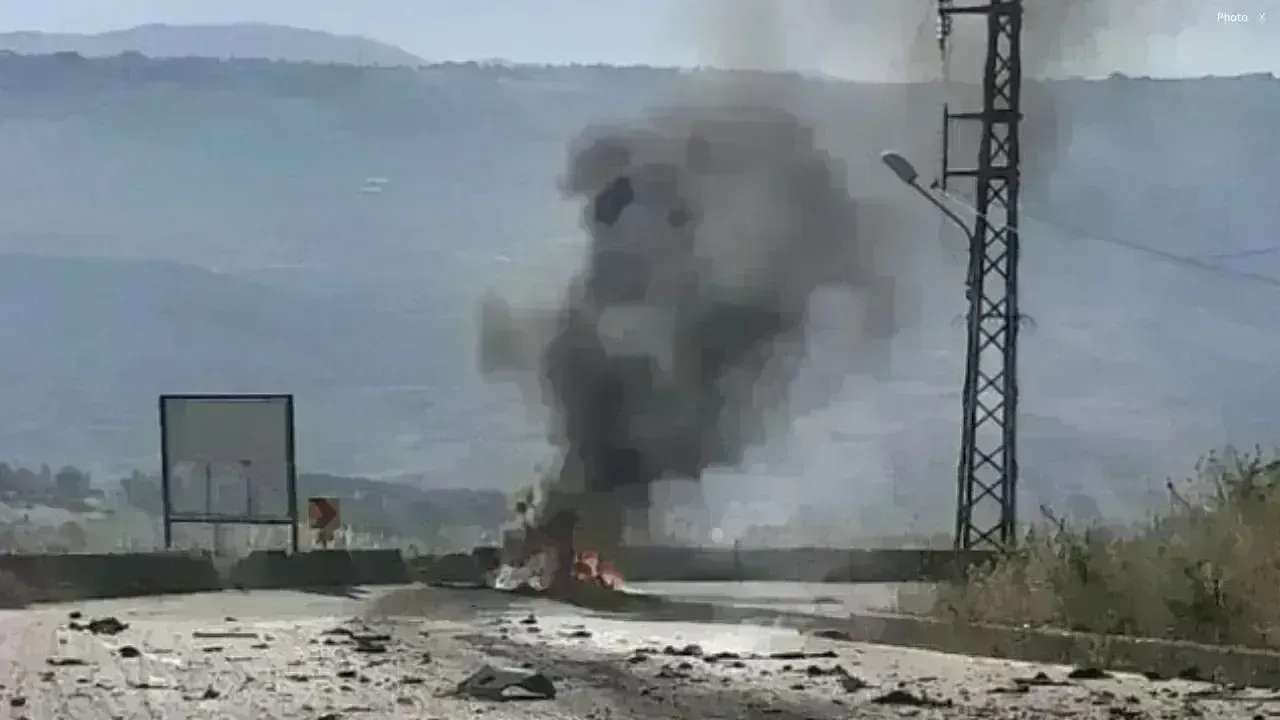
The Israeli Defense Forces have announced a targeted airstrike on a Lebanese army vehicle, stating that it was acting in a “suspicious” manner within a military-stipulated zone near the border. This incident has escalated the already precarious situation along the Israel-Lebanon border, which has seen a surge in military activities in recent months.
Military officials described the vehicle's movements as being monitored closely in an area deemed high-risk due to ongoing conflicts. They confirmed that the strike was conducted after real-time assessments indicated potential threats.
The Lebanese military has yet to issue a comprehensive response to this attack, but the event is likely to stir concerns regarding coordination and engagement protocols in delicate border territories. Such clashes frequently invoke diplomatic reactions, particularly when armed forces from neighboring nations directly interact.
This border region has historically been among the most volatile and scrutinized in the Middle East, with a pattern of skirmishes, cross-border engagements, and security incursions leading to instability. Minor incidents can rapidly transform into larger conflicts, exacerbated by the presence of various militant factions and sustained military operations.
This strike arises amid elevated tensions in the region, where multiple conflict zones are under scrutiny and security personnel are on heightened alert. The milieu often necessitates rapid military decisions based on perceived threats, potentially leading to significant misunderstandings or unintended consequences.
Analysts consistently caution that border combat zones are especially convoluted. Movements deemed irregular may be misinterpreted, particularly when communication among forces is lacking or compromised. This underscores the necessity for precise coordination and accurate identification to mitigate the risk of escalation.
This occurrence also illustrates the overarching challenge of preserving stability in areas populated by several armed entities. In warfare scenarios, differentiating between civilian, military, and suspicious movements can prove challenging, heightening the urgency for forces to react swiftly but also raising the stakes regarding precision and proportionality.
International attention often pivots on such use of force. Governments and global organizations typically urge restraint and thorough investigations in instances involving casualties or military incursions across borders. This aim is to avert escalatory cycles and foster dialogue among involved nations.
The Israel-Lebanon frontier has experienced repeated tumultuous cycles throughout history. Each nation harbors significant security apprehensions towards the other, and intermittent clashes have fostered a fragile and unpredictable security landscape. Smaller incidents persist in breeding instability and distrust, even when broader conflicts are not triggered.
This recent event may also have implications for ongoing diplomatic negotiations in the region. International actors often work to alleviate tension and prevent local skirmishes from blossoming into widespread conflicts. Nonetheless, military actions—especially ones that lead to casualties—can complicate the maintenance of tranquility and mutual trust among stakeholders.
From a humanitarian standpoint, persistent military engagements near border areas heighten risks for soldiers and civilians alike. Communities situated nearby often endure uncertainty and disruption during periods of escalated tension. Prolonged instability can further hinder economic activities and local development initiatives.
This incident serves as a reminder of how swiftly circumstances can change in conflict zones. Even routine operations can have severe consequences when viewed through a lens of threat perception. Thus, effective communication, vigilant monitoring, and stringent protocols are crucial for diminishing misunderstandings.
As investigations unfold and responses are formulated, all eyes will be on how both parties address the aftermath of the airstrike. Whether this incident triggers more aggression or renews efforts for enhanced border security will hinge on diplomatic engagement and military caution in the days ahead.
At present, the situation remains volatile, with military and political analysts vigilantly observing developments along the Israel-Lebanon border.










PM Modi Pays Tribute to Mahatma Gandhi, Urges People to Support Khadi
PM Modi pays tribute to Mahatma Gandhi on Gandhi Jayanti and urges citizens to support Khadi and the

Amazon Seeks to Offload $8 Billion in Nvidia Chips to Investors
Amazon plans to move $8 billion in Nvidia chips to investors, using a new financing model to strengt

Samsung Raises Galaxy S26 Prices as Memory Chip Costs Rise
Samsung raises Galaxy S26 prices in South Korea as rising memory chip costs put pressure on smartpho

Lewis Hamilton Calls Singapore Grand Prix One of F1's Toughest Races
Lewis Hamilton discusses the demanding Singapore Grand Prix and brings Plus44 and Almave to Singapor

Denmark's Pandora Opens World's Largest Jewellery Factory in Vietnam
Pandora opens its largest jewellery factory in Vietnam, expanding global production, strengthening s

Gautam Gambhir Questions Batting-Friendly Pitches After India's Record ODI Chase
Gautam Gambhir questions batting-friendly ODI pitches after India’s record chase, calling for a bett

