You have not yet added any article to your bookmarks!
Join 10k+ people to get notified about new posts, news and tips.
Do not worry we don't spam!
Post by : Samjeet Ariff
Artificial Intelligence (AI) has moved beyond consumer apps and enterprise analytics to reshape how cities function. From
These are practical deployments, not speculative ideas. Cities across the globe are adopting AI-driven solutions that influence how people commute, how power is delivered, and how public services respond. This analysis examines how AI is accelerating the transformation of infrastructure and the implications for urban living.
Smart infrastructure describes physical networks — such as transport, electricity, water and buildings — enhanced with AI, IoT and advanced analytics so they can operate more efficiently and sustainably.
Instead of reacting after breakdowns, these systems anticipate faults, curb waste, and boost public safety through continuous monitoring and automated responses.
Typical benefits include:
AI-driven traffic platforms that alter signal timing to ease congestion.
Smart electricity grids that allocate power dynamically.
Advanced water networks that spot leaks at source and limit losses.
By embedding intelligence in infrastructure, cities can evolve into more responsive, living systems.
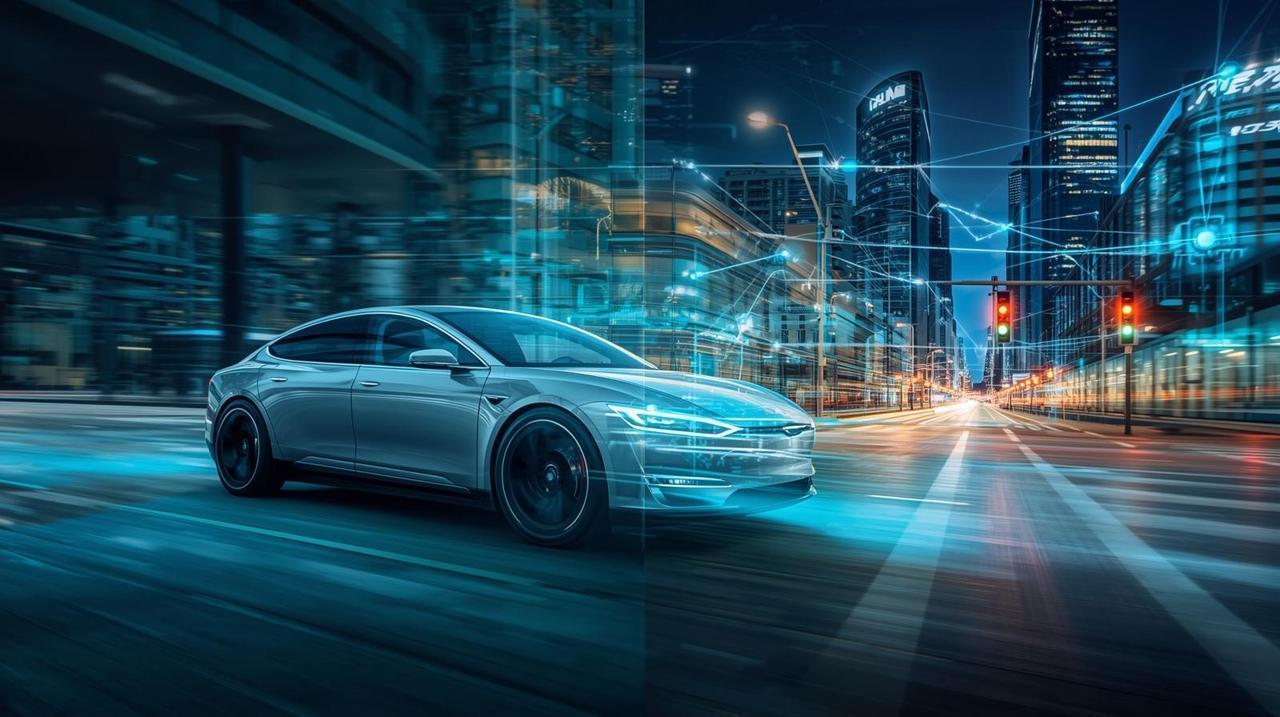
Transportation is a prominent area where AI’s effects are visible. What once seemed futuristic — self-driving cars and coordinated fleets — is now being piloted and rolled out in multiple regions.
Industry leaders such as Tesla, Waymo, and Baidu are advancing autonomous driving. Their systems combine machine learning, camera arrays and LIDAR with real-time sensor feeds to perceive environments and make rapid decisions behind the wheel.
These platforms ingest continuous streams from:
Traffic and road cameras
Satellite and GPS data
Roadside sensors
Vehicle-to-vehicle communications
The aim is to cut mistakes caused by humans — a factor in roughly 90% of collisions — while improving fuel economy and smoothing traffic flow.
Cities such as Dubai, Singapore and Los Angeles are deploying AI-based traffic platforms that analyze live feeds to fine-tune signal cycles and reroute congestion in real time.
Those deployments have reported congestion drops of around 25%, faster emergency vehicle passages and lower emissions — tangible wins for commuters and urban environments.
Sustainable energy systems increasingly rely on AI-enhanced smart grids. These systems forecast demand patterns, spot equipment faults and distribute power more efficiently.
Examples include:
Predictive models that forecast peak consumption.
Connected meters that adjust supply in real time to avert outages.
Integrated renewables such as solar and wind brought into the grid with better balancing.
Cities like Amsterdam and Tokyo are already using AI tools to orchestrate renewable inputs and manage distribution, reducing blackout risks and saving costs.
AI-based simulation and analytics are changing how urban planners design projects. Planners can now model the effects of new infrastructure on congestion, pollution and accessibility before a single brick is laid.
Analytical platforms process data on:
Population change
Travel and commuting trends
Air quality metrics
Resource distribution
These insights help design more sustainable, transit-oriented developments that reduce carbon footprints and improve mobility. Singapore’s Smart Nation programme is a leading example of data-driven land use planning.
Buildings are being equipped with systems that learn occupants’ needs and react accordingly.
AI-enabled building management can:
Control lighting and climate automatically.
Monitor indoor air and energy consumption.
Detect maintenance problems before they escalate.
In offices, AI helps optimise space use and cut operating costs by as much as 30%, while improving comfort for users.
AI tools are increasingly used to strengthen public services and emergency response.
Advanced surveillance spots irregular behaviour in real time.
Automated assistants handle routine public enquiries.
Disaster forecasting models anticipate floods, fires and seismic risks.
For example, Dubai’s Smart Police Stations offer 24/7 automated services including kiosks and facial recognition — a concrete instance of AI-enabled municipal management.
AI is also used to reduce environmental impacts and support conservation goals.
Sensors and predictive models measure pollution, water quality and waste flows, enabling pre-emptive interventions.
Examples include:
AI routing for waste collection that cuts mileage and emissions.
Smart irrigation that conserves water by analysing soil and weather data.
Climate-aware planning driven by AI projections.
Cities such as Copenhagen and Helsinki are leveraging environmental AI to accelerate progress toward net-zero objectives.
Despite strong benefits, AI-enabled infrastructure raises several challenges:
Privacy risks around citizen data management.
Capital requirements that may strain smaller municipalities.
Cyber threats to interlinked city systems.
Workforce shifts as some roles become automated.
Governments should adopt ethical AI policies, transparent data governance and reskilling programmes to ensure the transition is equitable and secure.
Several cities showcase how AI can be applied at scale:
Dubai, UAE: Trials of autonomous taxis and AI-managed intersections.
Singapore: Robust urban analytics and digital government services.
South Korea: AI-supported energy systems and disaster mitigation.
Estonia: Extensive digital governance backed by automation.
These examples demonstrate how careful application of AI can yield safer, more efficient and more sustainable urban systems.
The next phase is deeper integration — where vehicles, utilities, buildings and citizens are linked by secure networks and shared data intelligence.
Envision:
EVs that charge automatically when renewable generation peaks.
Roadways that communicate with vehicles to avert collisions.
Buildings that both produce and circulate clean energy locally.
AI systems coordinating city operations with human oversight.
As 5G and IoT expand, AI will increasingly underpin the services that define urban life.
AI-driven infrastructure is reshaping how cities function — making them more connected, efficient and environmentally aware. From smarter transport to predictive energy management, these technologies promise tangible improvements in daily life.
Resolving concerns about privacy, cost and security will be essential, but the potential gains — in sustainability, safety and service delivery — are substantial.
Ultimately, as AI matures, it will do more than optimise systems: it will help design urban environments that are resilient, inclusive and responsive.
The path to smarter cities runs through intelligent infrastructure.









George Russell Wins Dutch GP Sprint, Boosts Mercedes Morale
George Russell wins the Dutch GP Sprint from pole as Mercedes teammate Kimi Antonelli extends his F1

Australia 50/3 After Bangladesh Bowled Out for 64 in Second Test
Australia reached 50/3 after Bangladesh were bowled out for 64 in the second Test, with Mitchell Sta

Jordan Burroughs Returns to Wrestling with 2028 Olympic Dream
Jordan Burroughs returns to wrestling with Real American Freestyle as the Olympic champion eyes a po

Lamborghini Catches Fire on Singapore's ECP, Causing Heavy Traffic
A Lamborghini caught fire on Singapore's ECP, causing heavy traffic and bus delays. No injuries were

Bangkok Airport Duty-Free Area Flooded by Pipe Burst
A burst water pipe flooded the duty-free shopping area at Bangkok's Suvarnabhumi Airport on July 16,

Nine Monks Killed in Thailand Pickup Truck Tragedy
An 11-year-old boy driving a pickup truck crashed into monks during a pilgrimage in northeastern Tha