You have not yet added any article to your bookmarks!
Join 10k+ people to get notified about new posts, news and tips.
Do not worry we don't spam!
Post by : Anis Farhan
Gold futures — contracts that allow traders and investors to speculate on the future price of gold — have become a focal point in financial markets in early 2026. Traditionally viewed as a safe-haven asset, gold is now confronting a unique convergence of economic and political forces that could determine its price direction in the near term. These forces include rising inflation concerns, geopolitical instability, policy uncertainty surrounding the U.S. Federal Reserve, and broader macroeconomic dynamics that collectively contribute to directional risk in the gold market.
As markets digest mixed signals — ranging from stronger U.S. economic data that supports the dollar to political developments that undermine confidence in central bank autonomy — traders are left balancing competing influences that could push gold prices higher or trigger profit-taking and correction. This article provides a detailed examination of the interplay between inflation expectations, politics, market structure, and gold futures risk in 2026.
One of the primary drivers of gold price expectations is inflation — the rate at which the general level of prices for goods and services rises, eroding purchasing power. When inflation fears rise, real yields (nominal yields adjusted for inflation) typically fall, making gold more attractive as a store of value because it does not pay interest but retains intrinsic value. Macroeconomic commentators have noted that inflation expectations have surged globally, placing the yellow metal back into the spotlight as a potential hedge against currency debasement and rising living costs.
However, inflation expectations do not move in isolation. They are influenced by central bank policy, currency strength, energy prices, and broader global economic conditions. For example, if inflation continues to climb while central banks maintain accommodative monetary policy, gold could benefit. Conversely, if inflation pressures abate and central banks tighten policy, real yields could rise, potentially dampening gold’s appeal.
Gold’s safe-haven status tends to become prominent during periods of uncertainty — whether economic, financial, or political. Recent reports highlight that geopolitical tensions and political events have contributed to a surge in gold and precious metals prices as investors seek assets perceived as stable stores of value in turbulent times. Gold’s unique legacy as a monetary asset supports its role in preserving purchasing power when traditional financial systems or markets are stressed.
For example, concerns about international instability — ranging from U.S. political developments to geopolitical tensions in the Middle East — have reinforced gold’s traditional safe-haven appeal. These dynamics increase investor demand for gold during periods of volatility, adding upward pressure on futures prices even if underlying economic data is mixed.
One of the most significant political narratives influencing gold markets in early 2026 relates to debates over the independence of major central banks, particularly the U.S. Federal Reserve. In mid-January 2026, reports surfaced about a criminal investigation into the Federal Reserve Chair, intensifying concerns that political pressure could undermine the Fed’s autonomy. This event triggered notable market reactions: the U.S. dollar weakened and gold surged to fresh record highs as investors reassessed monetary policy risks and sought refuge in safe-haven assets.
Central bank independence is a foundational element that supports confidence in monetary policy decisions. Perceptions of political influence on rate decisions — for example, if policymakers are seen as favoring rate cuts for political reasons rather than economic data — can contribute to uncertainty about real interest rate trajectories and inflation outcomes. This uncertainty, in turn, affects risk assets, currencies and commodities such as gold.
Political developments that are unrelated to central bank independence can also affect gold markets. Geopolitical tensions around the globe — whether in the Middle East, Eastern Europe, or Asia — frequently act as catalysts for safe-haven inflows. Heightened military risk, sanctions, diplomatic crises or trade conflicts can prompt investors to seek the perceived security of gold, pushing futures prices upward.
Moreover, trade policy and tariff decisions — especially involving major economies like the United States and China — have been shown in previous market analysis to influence gold’s direction by altering expectations for inflation, trade balances and currency strength. Even their anticipation can inject volatility into precious metals trading.
In recent trading sessions, gold futures have exhibited a rangebound pattern, indicating that markets are struggling to break decisively in either direction. Analysts note that while prices have tested recent highs, they remain confined within technical bands that reflect a delicate balance between bullish and bearish pressures. This price compression suggests that traders are seeking clearer data or signals before committing to large directional positions.
Directional risk in this context refers to the uncertainty around whether the next significant price movement for gold will be upward or downward. With gold trading near key technical levels — including resistance and support zones — breakouts or breakdowns are possible depending on incoming data or market catalysts.
Market structure insights also emphasize volatility dynamics. When volatility bands tighten, it can indicate a consolidation phase, which often precedes a substantial directional move once volatility expands. Momentum indicators derived from price charts help traders assess whether gold futures are poised for continuation or reversal. Analysts suggest that gold’s controlled momentum — when evaluated against volatility bands — shows that risk parameters are well defined even if directional conviction remains low.
The relationship between the U.S. dollar and gold is inverse in most historical contexts: a stronger dollar typically places downward pressure on gold prices, while a weaker dollar tends to support them. Recent evidence — such as stronger U.S. economic data boosting the dollar and tempering rate-cut expectations — has contributed to price corrections in gold despite underlying safe-haven demand. Traders monitor the dollar index closely as it influences gold’s international pricing dynamics.
Interest rate expectations set by the Federal Reserve and other central banks are equally important. Anticipated rate cuts tend to benefit gold, as lower rates reduce the opportunity cost of holding non-yielding assets. Conversely, robust economic data that delays rate cuts can strengthen real yields and potentially cap or reverse gold’s gains.
Equity markets and gold often exhibit contrasting movements: when equities rally on growth optimism, gold may underperform; when equities decline on risk aversion, gold typically rallies as traders seek safer assets. Events that weigh on equities — such as political turmoil or earnings disappointments — can indirectly bolster gold’s appeal. Analysts stress that future movements in major stock indices could influence gold futures by altering broader risk sentiment.
For investors considering exposure to gold futures, understanding the drivers of directional risk is crucial. With inflation dynamics, geopolitical tensions and central bank policy all influencing prices, adopting strategies that factor in multiple scenarios can help manage risk. Traders often use a mix of technical analysis, macroeconomic indicators and geopolitical news to guide their entry and exit decisions.
Diversification remains an important risk management tool. While gold is often part of a diversified portfolio because of its low correlation with many asset classes, investors should remain aware that during periods of intense hedging activity, correlations can shift temporarily as markets seek liquidity and safety.
Investors with a long-term horizon may view gold as a hedge against inflation, currency devaluation and systemic risk. Over longer cycles, gold has historically preserved purchasing power, although this role can be accompanied by periods of volatility. Short-term traders, on the other hand, focus more on immediate catalysts — such as central bank communications or political developments — and often utilize futures or options to capitalize on expected volatility.
Gold futures in 2026 are positioned at a critical juncture where inflation expectations, geopolitical tensions, and political developments intersect to create directional risk. While traditional safe-haven demand remains supportive, stronger economic data and evolving central bank policy expectations introduce countervailing influences that could temper price gains. Traders and investors must balance these forces to determine the most probable outcomes in an increasingly complex environment.
With market indicators showing consolidation and rangebound behavior, the next significant move for gold futures is likely to be driven by clear macroeconomic data, monetary policy announcements or shifts in geopolitical landscapes. Understanding how these variables interact remains key to assessing gold’s path forward in 2026.
Disclaimer:
This analysis is for informational purposes only and does not constitute investment advice. Future market movements are uncertain; readers should conduct their own research or consult a qualified financial advisor before making investment decisions.








Jordan Burroughs Returns to Wrestling with 2028 Olympic Dream
Jordan Burroughs returns to wrestling with Real American Freestyle as the Olympic champion eyes a po

Lamborghini Catches Fire on Singapore's ECP, Causing Heavy Traffic
A Lamborghini caught fire on Singapore's ECP, causing heavy traffic and bus delays. No injuries were

Bangkok Airport Duty-Free Area Flooded by Pipe Burst
A burst water pipe flooded the duty-free shopping area at Bangkok's Suvarnabhumi Airport on July 16,
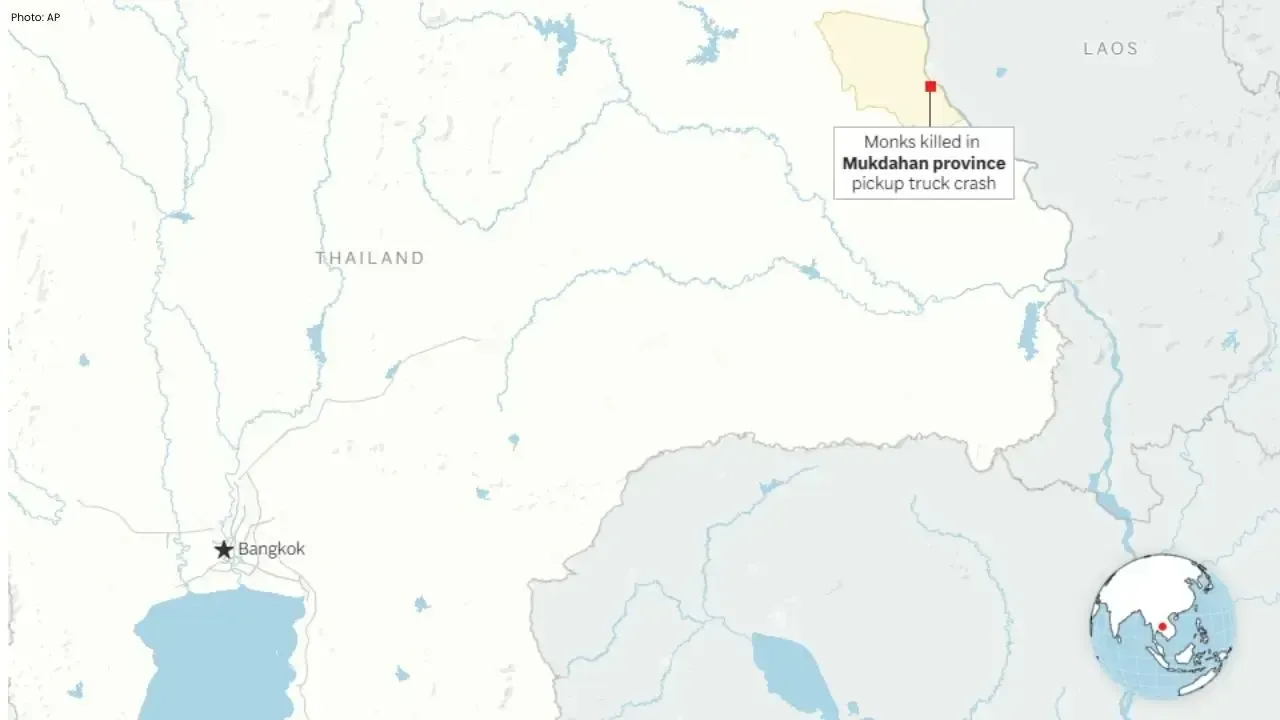
Nine Monks Killed in Thailand Pickup Truck Tragedy
An 11-year-old boy driving a pickup truck crashed into monks during a pilgrimage in northeastern Tha
Anwar Congratulates Xi on CPC's 105th Anniversary
Malaysia reaffirms strong ties with China as PM Anwar Ibrahim sends a congratulatory letter to Presi

Thai Agriculture Team Reviews 2026 Farm Development Plans
Agriculture Ministry officials inspected livestock and organic rice projects in Nakhon Sawan to moni