
You have not yet added any article to your bookmarks!
Join 10k+ people to get notified about new posts, news and tips.
Do not worry we don't spam!
Post by : Saif Rahman
Despite ongoing tensions in the Middle East impacting oil supply and trade, global financial markets are demonstrating remarkable resilience. Recent news, including an extension of the ceasefire involving Iran, has created a landscape marked by both risks and cautious investor confidence.
Stock exchanges in major economies have seen slight upticks as the prospect of reduced conflict has positively influenced sentiment. However, uncertainty lingers due to the absence of clear consensus among all parties regarding the ceasefire, leaving the potential for renewed tensions unresolved.
One of the predominant concerns impacting global markets is the soaring price of oil, with ongoing conflicts and disruptions in critical regions such as the Strait of Hormuz maintaining prices near the $100 per barrel mark. Such elevated prices are likely to exacerbate inflationary pressures worldwide.
The repercussions of rising oil prices are widespread. Increased transportation costs affect industries and elevate consumer prices, placing financial strain on both households and businesses. Policymakers face challenging decisions, often torn between combating inflation and fostering economic growth.
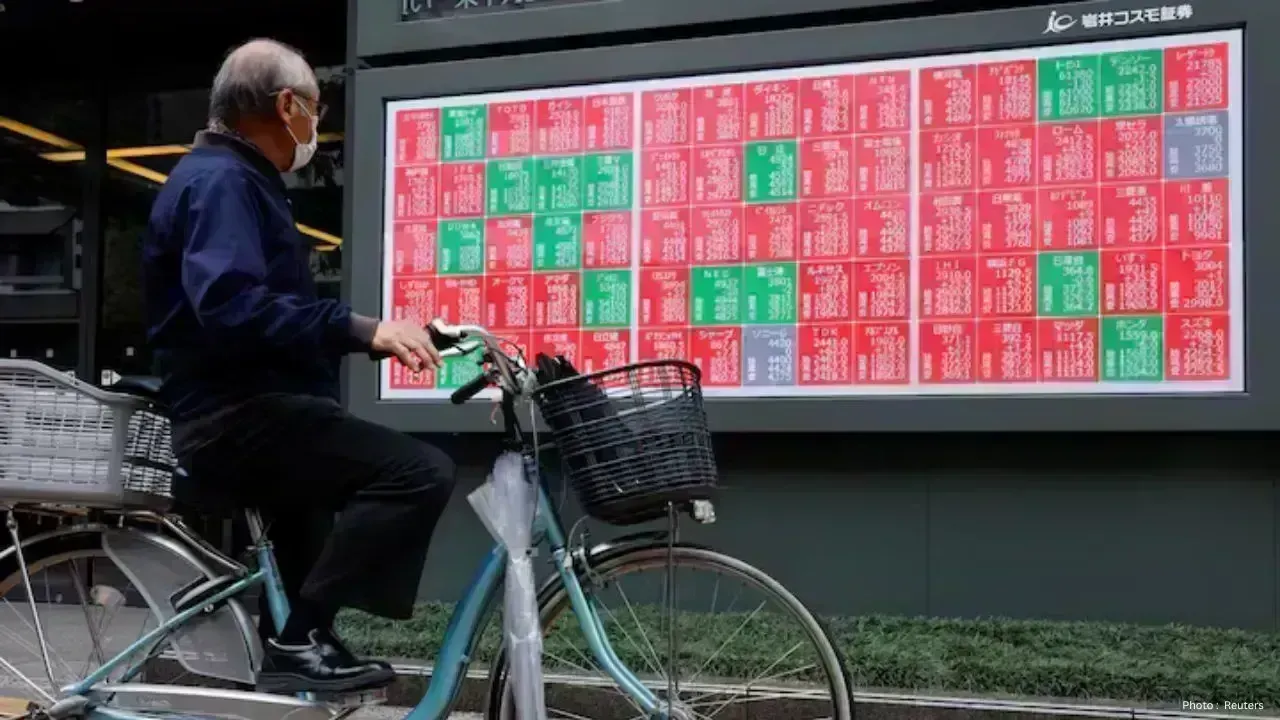
In light of these challenges, global financial markets remain surprisingly steady. Investors seem to believe that much of the crisis's worst impacts have been priced in already, redirecting their focus toward earnings, economic indicators, and potential growth avenues.
Notably, technology stocks, particularly those associated with artificial intelligence, have been crucial in sustaining market morale. In Asia, tech companies have exhibited strong performances, with several achieving record highs, showcasing the capacity for innovation to sustain interest even amidst geopolitical unrest.
Currency markets are likewise experiencing shifts, as the US dollar—typically a safe haven—has slightly weakened. This suggests a reduced sense of urgency among investors, who are looking toward more favorable conditions.
Another trend gaining traction is the investment in safe-haven assets like gold. Amid persisting uncertainty, many opt for stability to safeguard their wealth, leading to rising gold prices that reflect a cautious market outlook.
This scenario illustrates the intricate dynamics of today's global markets. In earlier times, significant conflicts would typically trigger sharp declines in stock prices. Nowadays, markets exhibit greater resilience, thanks in part to improved access to information and risk management tools.
However, this stability should not be misconstrued as a complete assurance against risk. Real challenges, such as the potential disruption of vital trade routes, high energy costs, and political instability, could still lead to abrupt market fluctuations.
The consequences for developing nations are also critical. Elevated oil prices and global inflation could disproportionately affect these countries, which often possess limited resources to navigate economic shocks, widening the divide between more and less affluent economies.
The role of central banks is increasingly pivotal during this time. They must vigilantly monitor inflation trends, deliberating whether to adjust interest rates or keep them steady, as incorrect decisions could either hinder growth or exacerbate inflation.
Looking ahead, much depends on the ongoing developments in the Middle East. Should the ceasefire endure and tensions diminish, markets may sustain their stability or even show improvement. Conversely, a resurgence of conflict could have far-reaching effects.
In summary, global markets reveal significant strength and adaptability in confronting uncertainty. Investors are carefully weighing risks against opportunities, aiming for long-term growth while remaining alert to immediate threats. This measured approach signifies a new paradigm where economic and political events are closely intertwined.
The upcoming weeks will be crucial in determining the trajectory of global markets; stability is achievable, but hinges on peace, collaboration, and judicious economic policy around the globe.










PM Modi Pays Tribute to Mahatma Gandhi, Urges People to Support Khadi
PM Modi pays tribute to Mahatma Gandhi on Gandhi Jayanti and urges citizens to support Khadi and the

Amazon Seeks to Offload $8 Billion in Nvidia Chips to Investors
Amazon plans to move $8 billion in Nvidia chips to investors, using a new financing model to strengt

Samsung Raises Galaxy S26 Prices as Memory Chip Costs Rise
Samsung raises Galaxy S26 prices in South Korea as rising memory chip costs put pressure on smartpho

Lewis Hamilton Calls Singapore Grand Prix One of F1's Toughest Races
Lewis Hamilton discusses the demanding Singapore Grand Prix and brings Plus44 and Almave to Singapor

Denmark's Pandora Opens World's Largest Jewellery Factory in Vietnam
Pandora opens its largest jewellery factory in Vietnam, expanding global production, strengthening s

Gautam Gambhir Questions Batting-Friendly Pitches After India's Record ODI Chase
Gautam Gambhir questions batting-friendly ODI pitches after India’s record chase, calling for a bett

