
You have not yet added any article to your bookmarks!
Join 10k+ people to get notified about new posts, news and tips.
Do not worry we don't spam!
Post by : Anis Farhan
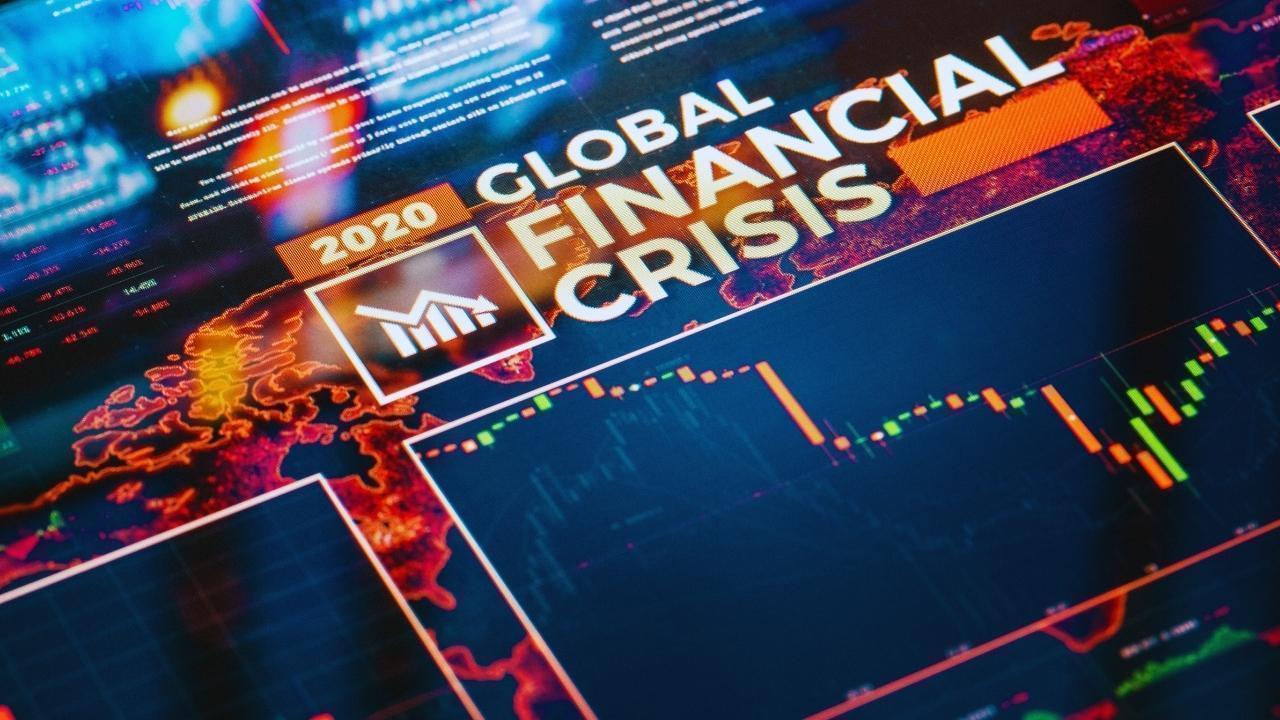
Across continents, the conversation dominating headlines in 2025 revolves around one critical issue — the growing economic divide. Inflation continues to bite, pushing the cost of living to record highs, while inequality widens the gap between the wealthy and the working class. Nations are struggling to strike a balance between economic growth and social equity, leading to political unrest, policy shifts, and public dissatisfaction.
The world’s financial system is undergoing a transformation that is not merely cyclical but structural. The interplay between inflation and inequality is now seen as the defining challenge of the decade — one that tests not only economic resilience but also the collective will to ensure fairness in prosperity.
Inflation, once thought to be a temporary post-pandemic aftershock, has become a stubborn global concern. Energy prices, housing costs, and food inflation have all surged, leaving households stretched thin. Central banks, including the U.S. Federal Reserve, the European Central Bank, and the Reserve Bank of India, have raised interest rates repeatedly to cool demand, yet the results have been mixed.
While corporate profits soar in certain industries, everyday citizens face shrinking purchasing power. Inflation is not just a financial metric anymore — it’s a daily reality affecting the way people live, spend, and plan their futures. The middle class, once the backbone of economic stability, is particularly vulnerable. In developing nations, where wage growth lags far behind price increases, inflation often translates directly into poverty.
Economic inequality is no longer a silent statistic. It’s visible in every part of society — from luxury consumption patterns to housing ownership and access to healthcare. In many economies, the wealthiest one percent continue to accumulate assets, while the bottom half struggles to meet basic needs.
Technological progress, globalization, and financial markets have favored those with capital and education. Meanwhile, labor-intensive industries and informal workers are being left behind. Automation and artificial intelligence, while increasing productivity, have displaced millions of low-wage jobs, creating a new divide between digital and non-digital economies.
This inequality isn’t confined to income alone. It extends into opportunities — where education, healthcare, and digital access have become privileges rather than rights. The divide is growing sharper, shaping a future where social mobility is increasingly limited.
Governments around the world are being forced to confront the uncomfortable question: how do you sustain growth without widening inequality?
Fiscal policies are under the microscope, with debates intensifying over wealth taxes, universal basic income, and social welfare expansion. Some nations are experimenting with redistributive measures — such as raising corporate taxes and increasing social spending — to counterbalance inequality.
However, these policies face strong opposition from corporate lobbies and investors who fear economic slowdown. The dilemma lies in balancing market-driven innovation with social justice. Countries like Sweden and Denmark continue to set examples through progressive taxation and welfare systems, but replicating such models in developing nations remains challenging.
The middle class, long viewed as the stabilizing force of global economies, is feeling the squeeze. In both developed and developing nations, middle-income earners are losing ground as inflation outpaces wage growth. Housing affordability has become a pressing concern, especially in major cities like New York, London, Mumbai, and Singapore.
Education and healthcare costs continue to rise, leaving families burdened with debt and reduced savings. This erosion of financial security is not merely an economic issue but a social one — it affects mental health, family stability, and long-term societal cohesion.
As a result, more people are turning to alternative income streams such as gig work, online freelancing, and investments. However, these sources often lack stability and social protection, further exacerbating uncertainty.
The divide between the Global North and South has widened in the post-pandemic era. Wealthier nations have largely recovered, thanks to strong fiscal stimulus and technological resilience. In contrast, developing countries are grappling with heavy debt, currency devaluation, and sluggish growth.
In Africa, South Asia, and parts of Latin America, rising food and energy costs are eroding household incomes, pushing millions below the poverty line. The World Bank has warned that inequality between nations may soon reverse decades of progress in global poverty reduction.
Meanwhile, advanced economies continue to attract talent and investment, leaving poorer nations vulnerable to brain drain and economic stagnation.
This two-speed recovery has created a world where wealth and opportunity are increasingly concentrated, while large populations struggle to find stability.
Corporate profits have reached record highs in several sectors — technology, finance, and luxury goods — even as inflation continues to hurt consumers. This phenomenon highlights a troubling disconnect: while companies raise prices under the guise of inflationary pressures, profit margins often remain robust.
Investors and corporations are being criticized for prioritizing shareholder gains over consumer welfare. Calls for corporate accountability are growing louder, urging businesses to play a role in creating equitable economies. Some companies are responding through fair wage initiatives and sustainable sourcing, but the scale of impact remains limited.
Financial markets, once considered indicators of economic health, now paint a misleading picture. While stock indices thrive, the lived reality for ordinary citizens remains far more challenging.
Young people are entering a world where traditional financial milestones — owning a home, stable employment, or long-term savings — feel increasingly out of reach. High inflation and stagnant wages have made economic independence a distant dream for many millennials and Gen Z workers.
A growing number are embracing minimalist lifestyles, opting for experiences over possessions, and redefining success in non-material terms. However, the lack of economic security contributes to anxiety, delayed family planning, and a sense of disillusionment toward institutions.
Youth-driven social movements advocating for fair wages, housing rights, and climate-linked economic policies are becoming more vocal, signaling a generational demand for structural reform.
International organizations like the IMF, World Bank, and United Nations are urging governments to adopt coordinated responses to inflation and inequality. Calls for debt restructuring, green investment, and equitable trade policies have intensified.
However, geopolitical rivalries and domestic priorities often hinder collective action. The global economy is increasingly fragmented, with regional alliances emerging in place of multilateral agreements.
Digital currencies, renewable energy transitions, and climate adaptation are expected to shape future economies, but their success depends on equitable access and participation. Without inclusivity, technological progress risks deepening existing divides.
The battle against inflation and inequality is not just about numbers — it’s about values. The question every nation faces today is whether it can achieve growth that is both sustainable and fair.
True progress will depend on political will, global collaboration, and a renewed focus on human-centric economics. Governments, corporations, and citizens must rethink what prosperity means in a world where wealth is increasingly concentrated.
If inflation remains unchecked and inequality continues to widen, the social consequences could be severe — eroding trust, fueling unrest, and destabilizing democracies. But with innovation, empathy, and global solidarity, a more balanced future is still within reach.
This article is intended for informational and analytical purposes only. It reflects current global economic trends and does not constitute financial advice or policy recommendations. Readers should consult economic experts or financial advisors for specific insights related to their circumstances.










PM Modi Pays Tribute to Mahatma Gandhi, Urges People to Support Khadi
PM Modi pays tribute to Mahatma Gandhi on Gandhi Jayanti and urges citizens to support Khadi and the

Amazon Seeks to Offload $8 Billion in Nvidia Chips to Investors
Amazon plans to move $8 billion in Nvidia chips to investors, using a new financing model to strengt

Samsung Raises Galaxy S26 Prices as Memory Chip Costs Rise
Samsung raises Galaxy S26 prices in South Korea as rising memory chip costs put pressure on smartpho

Lewis Hamilton Calls Singapore Grand Prix One of F1's Toughest Races
Lewis Hamilton discusses the demanding Singapore Grand Prix and brings Plus44 and Almave to Singapor

Denmark's Pandora Opens World's Largest Jewellery Factory in Vietnam
Pandora opens its largest jewellery factory in Vietnam, expanding global production, strengthening s

Gautam Gambhir Questions Batting-Friendly Pitches After India's Record ODI Chase
Gautam Gambhir questions batting-friendly ODI pitches after India’s record chase, calling for a bett

