
You have not yet added any article to your bookmarks!
Join 10k+ people to get notified about new posts, news and tips.
Do not worry we don't spam!
Post by : Shweta
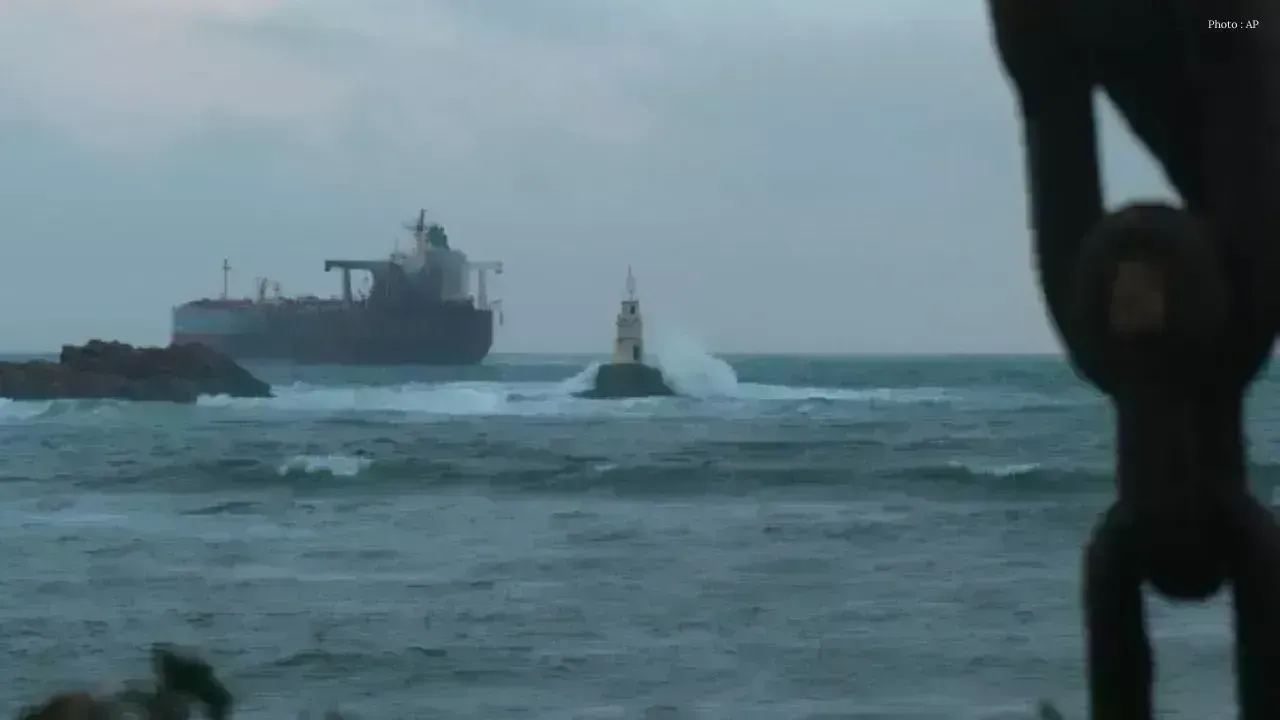
In a significant move reflecting heightened European vigilance, the French Navy—supported by the United Kingdom—has successfully intercepted an oil tanker linked to Russia. This strategic operation underscores the collective effort by Western nations to enforce sanctions and monitor maritime activities related to Russia’s energy exports amid escalating tensions due to the ongoing conflict in Ukraine.
Reports indicate that the interception occurred as the tanker navigated through waters subjected to enhanced surveillance by European authorities. French naval forces executed the operation with logistical and intelligence support from British counterparts. Officials highlighted that this action aligns with broader initiatives aimed at ensuring adherence to international regulations and maritime security protocols.
European governments are increasingly wary of what has been termed Russia's "shadow fleet"—a collection of aging vessels that allegedly facilitate oil transportation while circumventing sanctions and restrictions implemented by Western nations. It appears many of these vessels operate under tangled ownership networks and frequently alter registration details to avoid detection.
French authorities confirmed that the interception adhered to international maritime law. The vessel was subjected to a thorough inspection to verify compliance documents relating to its cargo, ownership, insurance status, and sanction regulations. While detailed findings have not been disclosed, officials stressed that the operation was conducted smoothly and with professionalism.
Since the onset of the Ukraine conflict, the UK has emerged as a leader in initiatives aimed at curtailing Russia's energy revenue. London has implemented numerous sanctions targeting Russian oil exports, associated shipping companies, and intricate financial networks tied to the Kremlin. Additionally, Britain has intensified collaboration with European partners to oversee maritime routes habitually used for oil transport.
This interception further emphasizes the growing pressure on Russia's energy sector, as Western governments continue to impose strict restrictions. Despite being one of the largest oil-producing nations, Russia faces challenges due to sanctions from the European Union, UK, US, and allies, aimed at diminishing its financial capabilities and military resources.
Moscow has consistently condemned these sanctions, describing them as unjustified and politically motivated. Russian officials contend that restrictions disrupt global energy markets, thus driving fuel prices higher worldwide. In response, Russia is pivoting its oil exports toward buyers in Asia, the Middle East, and other regions less affected by Western sanctions.
Security analysts underscore the critical need for maritime enforcement as the efficacy of sanctions hinges on rigorous monitoring of shipping activities. Notably, European nations have augmented naval patrols, intelligence-sharing initiatives, and port inspections to identify vessels violating restrictions. This enhanced focus on maritime trade arises from concerns that sanctioned goods may still reach global markets through alternate shipping routes.
The operation exemplifies the strong defense collaboration between France and the UK, even amidst the political complexities arising from Brexit. Both nations remain essential members of NATO, cooperating on various security challenges, including defense strategies, counterterrorism, maritime surveillance, and support for Ukraine.
Experts predict that incidents involving Russian-affiliated tankers could become more prevalent as the enforcement of sanctions intensifies. European nations plan to persist in monitoring shipping lanes and probing vessels suspected of sanction evasion, marking this strategy as an ongoing priority in Western policy toward Russia.
This interception has already ignited dialogue among international observers regarding the future of maritime sanctions. Advocates insist that enhanced monitoring is vital for effective sanctions enforcement, whereas critics caution that escalating naval involvement risks inflaming tensions between Russia and Western powers.
As investigations related to the tanker proceed, this incident highlights the broader implications of the Ukrainian conflict on global trade, energy dynamics, and international security. With Western nations exerting sustained pressure on Moscow and Russia seeking new avenues for its oil exports, maritime operations are poised to remain a pivotal aspect of the geopolitical landscape.










PM Modi Pays Tribute to Mahatma Gandhi, Urges People to Support Khadi
PM Modi pays tribute to Mahatma Gandhi on Gandhi Jayanti and urges citizens to support Khadi and the

Amazon Seeks to Offload $8 Billion in Nvidia Chips to Investors
Amazon plans to move $8 billion in Nvidia chips to investors, using a new financing model to strengt

Samsung Raises Galaxy S26 Prices as Memory Chip Costs Rise
Samsung raises Galaxy S26 prices in South Korea as rising memory chip costs put pressure on smartpho

Lewis Hamilton Calls Singapore Grand Prix One of F1's Toughest Races
Lewis Hamilton discusses the demanding Singapore Grand Prix and brings Plus44 and Almave to Singapor

Denmark's Pandora Opens World's Largest Jewellery Factory in Vietnam
Pandora opens its largest jewellery factory in Vietnam, expanding global production, strengthening s

Gautam Gambhir Questions Batting-Friendly Pitches After India's Record ODI Chase
Gautam Gambhir questions batting-friendly ODI pitches after India’s record chase, calling for a bett

