You have not yet added any article to your bookmarks!
Join 10k+ people to get notified about new posts, news and tips.
Do not worry we don't spam!
Post by : Badri Ariffin
Blue Origin faced a significant setback when its New Glenn rocket exploded during a ground test at Cape Canaveral, Florida. This incident has led to major damage to the launch facilities and heightened worries over upcoming lunar missions aligned with NASA's exploration goals.
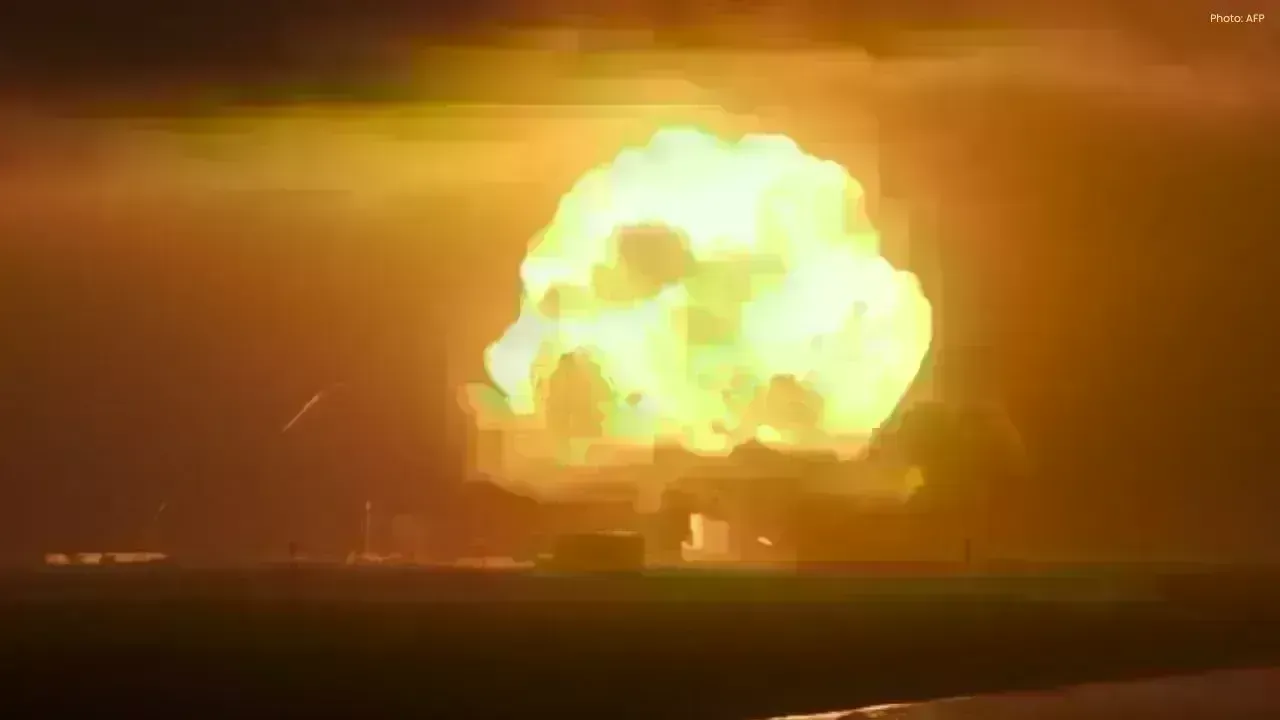
The explosion occurred on Thursday evening as engineers were preparing the 321-foot (98-meter) New Glenn rocket for a satellite launch scheduled for the following week. The rocket had been fueled and was undergoing a standard ignition test when a sudden explosion occurred, resulting in a large fireball visible from a distance.
Initial evaluations suggest that the blast severely impacted Launch Complex 36, Blue Origin's main launch site in Florida. Recent aerial footage shows extensive damage, with twisted metal scattered widely around the site. While much of the launch infrastructure was obliterated, a single tower and a water tank remained intact.
Fortunately, no injuries or fatalities were reported. Emergency officials advised local residents to stay clear of any debris that might float ashore in nearby areas and to inform authorities about any findings.
This explosion presents yet another hurdle for Blue Origin’s New Glenn project. Just weeks prior, operations involving the rocket were halted due to issues with the upper-stage engine that adversely affected a satellite’s orbit. This latest incident may further delay planned launches until a thorough investigation is completed.
Named in honor of astronaut John Glenn, the first American to orbit Earth, the New Glenn rocket plays a crucial role in Blue Origin's vision for commercial spaceflight and lunar exploration. This heavy-lift launch vehicle is intended for carrying a variety of payloads, including satellites and lunar landers. Driven by seven first-stage engines operating on liquid oxygen and liquefied natural gas, New Glenn ranks among the largest rockets currently operational.
Additionally, the rocket is significant to NASA's Artemis program, which aims to establish a human presence near the Moon's south pole. Earlier this week, NASA extended a new multi-million dollar contract to Blue Origin for developing lunar landing systems for future missions.
At the time of the explosion, the rocket was not carrying any payload. The planned mission would have launched a series of satellites for Amazon’s Project Kuiper, aiming to enhance internet coverage globally and compete with SpaceX's initiatives. Thankfully, the 48 satellites were not present, thus averting further loss.
While uncertainty looms over Blue Origin's recovery timeline, operations at nearby launch sites proceeded as scheduled. On Friday, SpaceX successfully launched another cohort of Starlink satellites, and later that evening, United Launch Alliance sent additional Amazon satellites into orbit aboard an Atlas V rocket from the Space Force Station in Cape Canaveral.
Launch Complex 36 holds a rich history in the U.S. space program, having supported numerous NASA missions since its establishment in the 1960s. After leasing the site in 2015, Blue Origin invested upwards of $1 billion to refurbish and prepare it for New Glenn operations.
The company also runs its New Shepard vehicle in Texas, conducting suborbital flights with tourists and scientific research. However, these operations have been paused as resources were redirected towards New Glenn and future lunar objectives.
NASA is currently assessing how the damage at the launch pad could influence the timeline for Artemis-related activities. Before the explosion, Blue Origin was gearing up to launch a prototype lunar lander this year using a New Glenn rocket. Additional testing missions and docking demonstrations were scheduled to support crewed Moon landings in coming years.
NASA’s current plans aim for a lunar landing mission potentially as early as 2028, with astronauts set to reach the Moon via either Blue Origin's Blue Moon lander or SpaceX's Starship, depending on which vehicle completes its development first.
An investigation is underway to determine the cause of Thursday's explosion, assess the damage, and outline the timeline for resuming Blue Origin's launch activities. As it stands, a key component of the company’s ambitious space agenda is now on hold.










APEC Members Emphasise Safe and Responsible Use of Artificial Intelligence
APEC members discuss responsible AI use, digital innovation and data governance as China and the US

Union of European Clubs Challenge UEFA and EFC Over EU Competition Rules
UEC files an EU competition complaint against UEFA and EFC, challenging club representation, governa

Mohammed Shami Retires From Test Cricket, Eyes White-Ball Career
Mohammed Shami retires from Test cricket after 13 years, with 229 wickets. He will continue playing

Singapore Warns Users About Privacy and Security Risks of AI Agents
Singapore warns users about AI agent security risks, data privacy, online scams and unauthorised acc

Chris Lynn Completes One-Month Ban After Positive Cocaine Test
Australian cricketer Chris Lynn completes a one-month ban after a positive cocaine test during the T

Djokovic Eyes Strong Season Finish as Health Improves Ahead of Paris Masters
Novak Djokovic reports improved health and performance as he targets a strong Paris Masters finish a