
You have not yet added any article to your bookmarks!
Join 10k+ people to get notified about new posts, news and tips.
Do not worry we don't spam!
Post by : Shweta
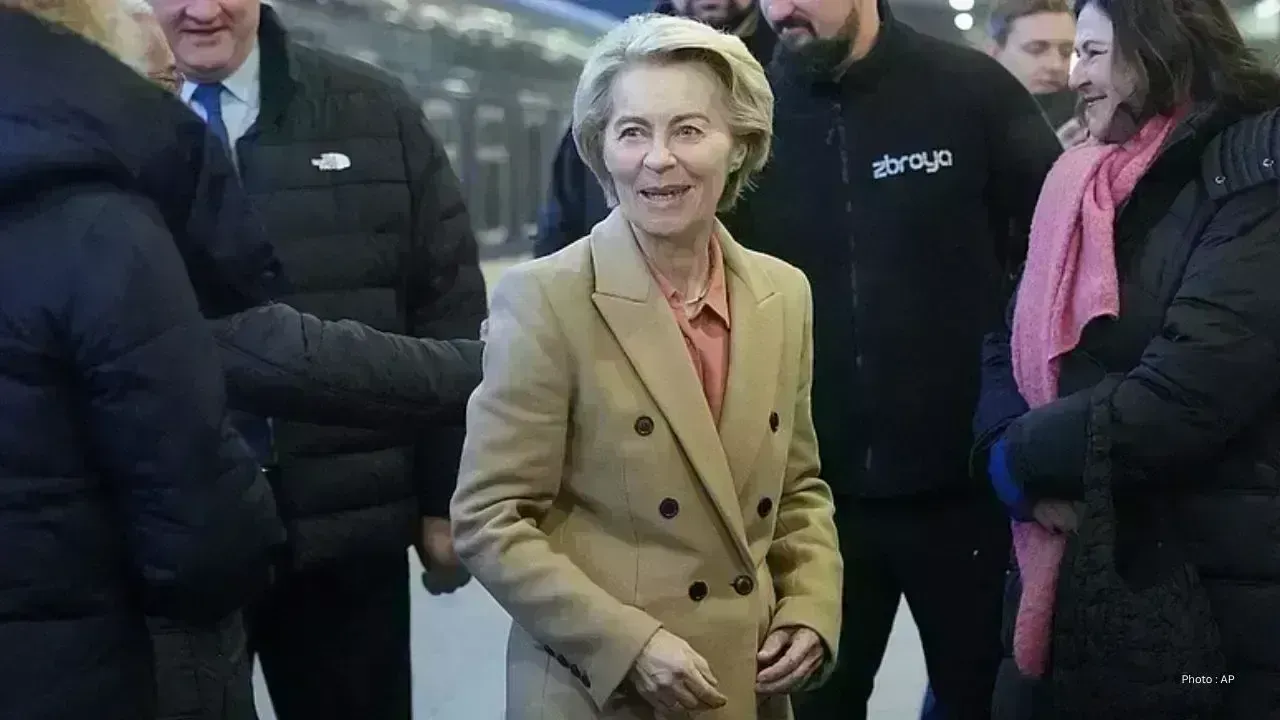
The European Union is grappling with a staggering increase in energy expenses, shelling out an additional $32 billion for oil and gas imports since geopolitical tensions surged involving the United States, Israel, and Iran, as stated by Ursula von der Leyen during a press briefing in Berlin. She flagged this as a potential second major energy crisis within a mere four years for Europe.
Representing the European Commission, von der Leyen drew parallels between the current upheaval and the energy shock of 2022, attributable to Russia's cessation of gas supplies. She articulated concerns about Europe’s ongoing dependence on imported fossil fuels, which leaves the region vulnerable to international political unrest.
A key contributor to the surging costs is the instability surrounding the Strait of Hormuz, a vital channel for a significant portion of the global oil trade. Increasing tensions related to Iran are injecting uncertainty into the energy markets, leading to higher prices and inflated import costs for European nations.
Von der Leyen underscored that the current situation isn’t just a momentary financial blip; it presents a long-term challenge to energy security. She highlighted how supply chain disruptions can swiftly translate to economic strain, impacting industries, businesses, and households throughout Europe.
To tackle these challenges, EU leaders are urging member states to hasten their shift toward cleaner, sustainable energy sources. This strategy includes boosting the production of renewable energies, such as wind and solar, and investing in advanced technologies like nuclear energy and small modular reactors. These initiatives aim to curtail reliance on imported fossil fuels and bolster Europe’s energy self-sufficiency.
Furthermore, von der Leyen clarified that the prospect of easing sanctions on Iran is not on the table for now, emphasizing that any sanctions relief would necessitate substantial and fundamental changes from Iran, reflecting a cautious stance amid ongoing geopolitical tensions.
These developments reflect mounting unease among European leaders that persistent global instability could sustain elevated energy prices over an extended duration. As the continent strives to manage escalating costs, the urgency for energy diversification and self-reliance is increasingly paramount to safeguard economic stability.










PM Modi Pays Tribute to Mahatma Gandhi, Urges People to Support Khadi
PM Modi pays tribute to Mahatma Gandhi on Gandhi Jayanti and urges citizens to support Khadi and the

Amazon Seeks to Offload $8 Billion in Nvidia Chips to Investors
Amazon plans to move $8 billion in Nvidia chips to investors, using a new financing model to strengt

Samsung Raises Galaxy S26 Prices as Memory Chip Costs Rise
Samsung raises Galaxy S26 prices in South Korea as rising memory chip costs put pressure on smartpho

Lewis Hamilton Calls Singapore Grand Prix One of F1's Toughest Races
Lewis Hamilton discusses the demanding Singapore Grand Prix and brings Plus44 and Almave to Singapor

Denmark's Pandora Opens World's Largest Jewellery Factory in Vietnam
Pandora opens its largest jewellery factory in Vietnam, expanding global production, strengthening s

Gautam Gambhir Questions Batting-Friendly Pitches After India's Record ODI Chase
Gautam Gambhir questions batting-friendly ODI pitches after India’s record chase, calling for a bett

