
You have not yet added any article to your bookmarks!
Join 10k+ people to get notified about new posts, news and tips.
Do not worry we don't spam!
Post by : Badri Ariffin
The Dubai Electricity and Water Authority (DEWA) is solidifying its status as a premier global utility in energy and water services. Over the past three decades, DEWA has evolved from a community-focused provider into a model for sustainable development and technological innovation on an international scale.
Founded on January 1, 1992, by a decree from the late Sheikh Maktoum bin Rashid Al Maktoum, DEWA was created through the amalgamation of the Dubai Electricity Company and the Dubai Water Department. Both entities were initiated in 1959 under the leadership of the late Sheikh Rashid bin Saeed Al Maktoum, establishing a comprehensive utility framework that emphasizes long-term strategies, robust governance, and infrastructure readiness for the future.
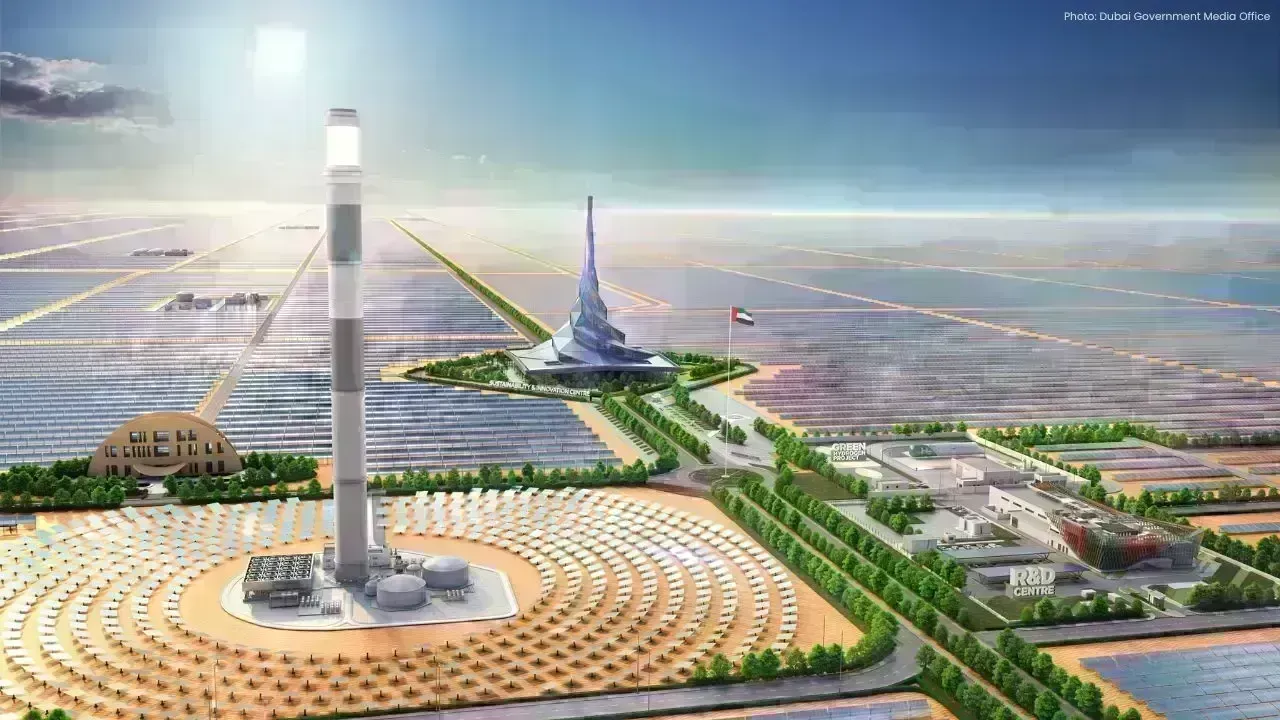
Under the direction of HH Sheikh Mohammed bin Rashid Al Maktoum, DEWA is progressively enhancing its energy and water supply systems to support Dubai's rapid economic and urbanization pace. The authority operates cutting-edge facilities for power generation and desalination, breaking multiple global records such as the tallest concentrated solar power tower at over 263 meters and the largest single-site natural gas power plant located at the Jebel Ali complex.
Currently, DEWA's power generation capacity stands at approximately 18 gigawatts (GW), with ambitions to expand to 23GW by 2030. This growth is tailored to accommodate increasing demand, boost sustainable economic development, and enhance Dubai’s competitiveness on the world stage.
A cornerstone of DEWA's strategy involves investing in renewable energy solutions. The Mohammed bin Rashid Al Maktoum Solar Park is recognized as one of the largest individual solar parks worldwide, currently producing 3,860MW. The initiative employs cutting-edge technologies and AI for operational efficiency, including optimizing PV panel maintenance, energy prediction, and integrating storage systems into the grid.
To address the variability in renewable sources, DEWA implements advanced energy storage options such as battery systems, pumped-storage hydroelectric power, and molten salt thermal storage for concentrated solar power projects, along with exploring green hydrogen solutions. The Hatta Pumped-Storage Hydroelectric Power Plant complements this comprehensive strategy.
These initiatives align with Dubai’s Clean Energy Strategy 2050, which targets a 100% clean energy mix and achieving net-zero emissions by 2050. At present, clean energy contributes 21% to Dubai's energy portfolio, with ambitions to elevate this to over 36% by 2030, surpassing 8,000MW in solar generation.
In summary, DEWA's evolution signifies a transition from basic infrastructure development towards an innovative utility model, emphasizing sustainability, efficiency, and commitment to long-term environmental goals, confirming Dubai’s position as a leader in clean energy and quality of life.










PM Modi Pays Tribute to Mahatma Gandhi, Urges People to Support Khadi
PM Modi pays tribute to Mahatma Gandhi on Gandhi Jayanti and urges citizens to support Khadi and the

Amazon Seeks to Offload $8 Billion in Nvidia Chips to Investors
Amazon plans to move $8 billion in Nvidia chips to investors, using a new financing model to strengt

Samsung Raises Galaxy S26 Prices as Memory Chip Costs Rise
Samsung raises Galaxy S26 prices in South Korea as rising memory chip costs put pressure on smartpho

Lewis Hamilton Calls Singapore Grand Prix One of F1's Toughest Races
Lewis Hamilton discusses the demanding Singapore Grand Prix and brings Plus44 and Almave to Singapor

Denmark's Pandora Opens World's Largest Jewellery Factory in Vietnam
Pandora opens its largest jewellery factory in Vietnam, expanding global production, strengthening s

Gautam Gambhir Questions Batting-Friendly Pitches After India's Record ODI Chase
Gautam Gambhir questions batting-friendly ODI pitches after India’s record chase, calling for a bett

