
You have not yet added any article to your bookmarks!
Join 10k+ people to get notified about new posts, news and tips.
Do not worry we don't spam!
Post by : Shweta
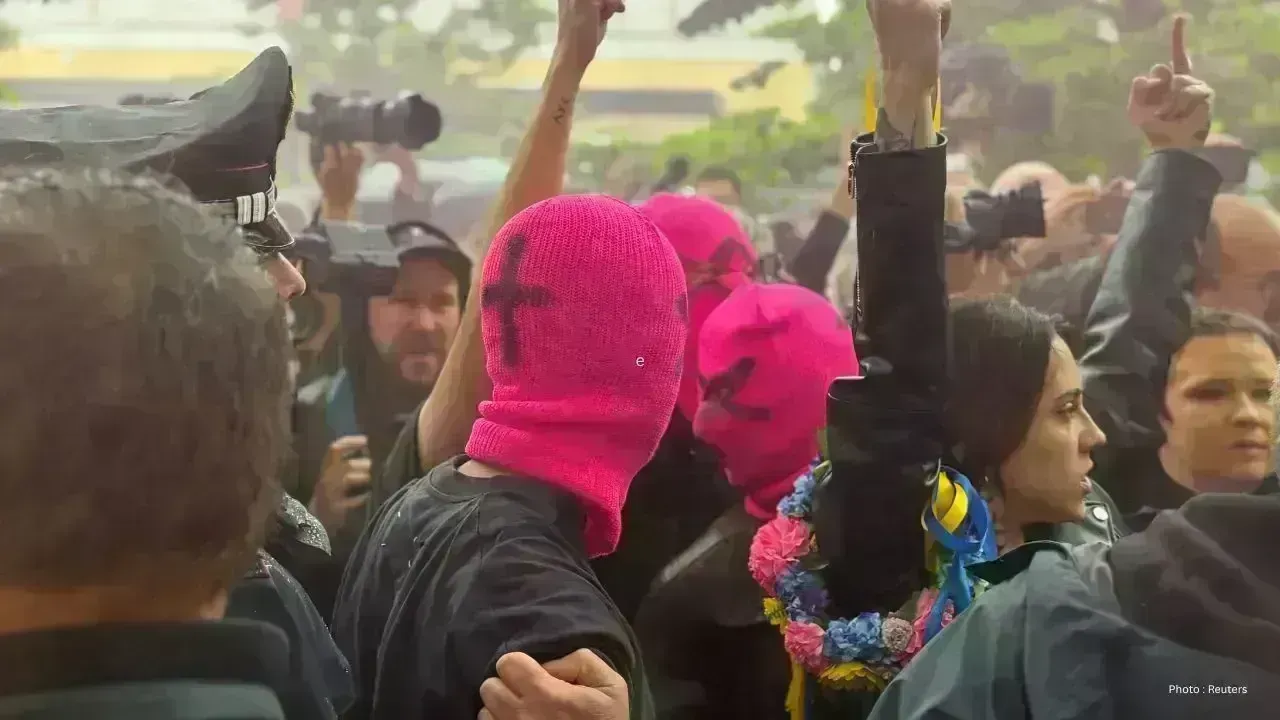
The Venice Biennale, renowned as a key global art showcase, has come under fire for allowing Russia to participate in this year's exhibition, despite the ongoing war in Ukraine. Artists, activists, and cultural leaders are openly challenging this decision, asserting that Russia's involvement conveys a troubling message amid continuous conflict and international unrest.
The controversy intensified as critics accused the organizers of detaching art from political realities while humanitarian issues stemming from the war persist. Demonstrators were seen near the exhibition holding placards that stated, “Enjoy the show. Ignore the war,” condemning what they perceive as a normalization of Russia's presence in international culture.
Historically, the Venice Biennale is a major platform for contemporary art, attracting global artists and audiences. Countries present their art through national pavilions, showcasing diverse cultural narratives. However, this year’s inclusion of Russia has ignited intense debate among attendees.
Opponents of Russia’s participation argue that it risks overshadowing the realities of the war and the associated suffering in Ukraine. Activists have called for international cultural bodies to adopt a more pronounced stance during significant global crises, rather than maintaining a facade of neutrality. Many protesters have vocally supported Ukrainian artists and cultural groups disrupted by the conflict.
Conversely, proponents of Russia’s inclusion argue that cultural venues should be arenas for conversation and artistic expression. Some organizers and artists maintain that individuals should not be ostracized based on their governments' political decisions.
Reports indicate that Russia's participation at the Biennale is limited compared to previous editions, yet it has still incited fervent discussions among attendees and the international art community. Social media reactions have been starkly polarized, with advocates for the protests and others supporting a separation of politics from art.
This backlash reflects broader conversations throughout global cultural events since the onset of the Ukraine war. Russian athletes, artists, and performers have encountered various restrictions in numerous competitions and exhibitions, with some organizations still permitting Russian participation under impartial terms.
Officials and artists from Ukraine have consistently urged global institutions to culturally and politically isolate Russia until peace is restored, arguing that representation can unjustly enhance a nation’s image amid ongoing military aggression.
Despite the uproar, Venice Biennale organizers have yet to announce any significant revisions regarding Russia’s involvement. The event continues to draw thousands of artists, visitors, and media from around the globe, remaining a highlight despite the surrounding controversy.
This ongoing discussion underscores the increasing difficulties faced by international cultural institutions as they navigate the intersection of artistic liberty, political dynamics, and societal expectations during times of global strife.










PM Modi Pays Tribute to Mahatma Gandhi, Urges People to Support Khadi
PM Modi pays tribute to Mahatma Gandhi on Gandhi Jayanti and urges citizens to support Khadi and the

Amazon Seeks to Offload $8 Billion in Nvidia Chips to Investors
Amazon plans to move $8 billion in Nvidia chips to investors, using a new financing model to strengt

Samsung Raises Galaxy S26 Prices as Memory Chip Costs Rise
Samsung raises Galaxy S26 prices in South Korea as rising memory chip costs put pressure on smartpho

Lewis Hamilton Calls Singapore Grand Prix One of F1's Toughest Races
Lewis Hamilton discusses the demanding Singapore Grand Prix and brings Plus44 and Almave to Singapor

Denmark's Pandora Opens World's Largest Jewellery Factory in Vietnam
Pandora opens its largest jewellery factory in Vietnam, expanding global production, strengthening s

Gautam Gambhir Questions Batting-Friendly Pitches After India's Record ODI Chase
Gautam Gambhir questions batting-friendly ODI pitches after India’s record chase, calling for a bett

