
You have not yet added any article to your bookmarks!
Join 10k+ people to get notified about new posts, news and tips.
Do not worry we don't spam!
Post by : Shweta
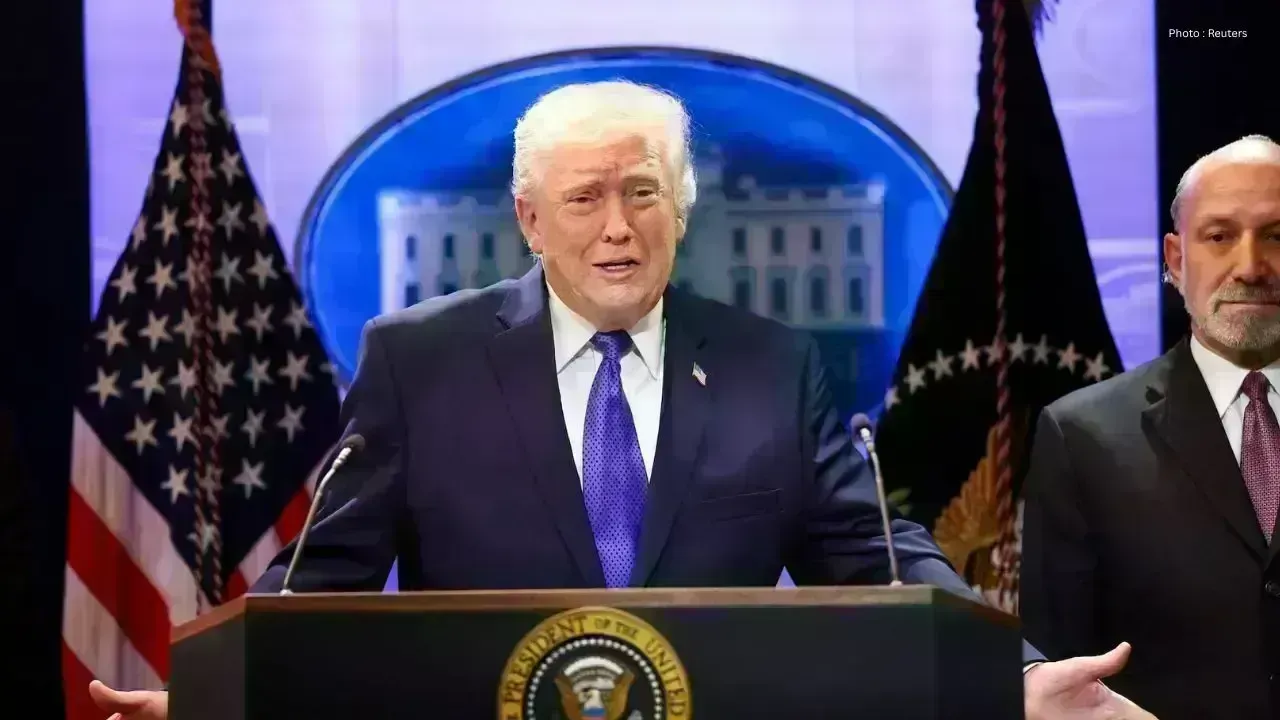
The Trump administration has attracted significant criticism for its reliance on religious language when addressing the ongoing conflict with Iran. Experts caution that merging faith with military justifications could undermine the separation of politics and religion, challenging fundamental democratic norms in the United States.
In recent discussions, high-ranking officials, notably Defense Secretary Pete Hegseth, have infused their public remarks about the war with religious undertones. Hegseth has reportedly cited scripture during briefings and referred to American troops using spiritual language. Meanwhile, Trump has drawn scrutiny for social media portrayals that appear to convey religious symbolism.
Vice President JD Vance has publicly responded to remarks from Pope Leo XIV, who cautioned against justifying violence through religion. This exchange has escalated tensions both domestically and globally as various religious and political entities react to the prevailing discourse.
Experts note that while U.S. presidents have historically invoked faith during wartime, they typically refrain from framing conflicts as religious endeavors. Previous leaders like George W. Bush have later adjusted their rhetoric after recognizing the potential for religious framing to exacerbate tensions, especially in the Middle East.
Critiques of the current administration indicate that employing religious language in military contexts reinforces narratives commonly exploited in global conflicts, where factions claim divine backing. This has been notably evident in Iran, where leadership has used religious reasoning for political and military purposes.
There are domestic implications as well; observers express concern that pronounced religious messaging from officials could disrupt the separation between church and state. In a multicultural nation like the U.S., such rhetoric risks alienating people of diverse faiths or those without religious beliefs.
Proponents argue that references to faith are a time-honored part of American tradition, reflecting the personal convictions of the nation’s leaders. However, detractors insist that the increasingly overt use of religion in political discourse marks a departure from established norms, leading to potentially serious long-term consequences.
This debate arises amidst a backdrop of intricate geopolitical challenges. Analysts warn that intertwining religious elements with wartime communication may hinder diplomatic channels and further complicate global relations.
Ultimately, this controversy opens a wider conversation about the intersection of religion and politics, questioning whether such rhetoric in warfare can foster national unity or exacerbate divisiveness both domestically and internationally.










PM Modi Pays Tribute to Mahatma Gandhi, Urges People to Support Khadi
PM Modi pays tribute to Mahatma Gandhi on Gandhi Jayanti and urges citizens to support Khadi and the

Amazon Seeks to Offload $8 Billion in Nvidia Chips to Investors
Amazon plans to move $8 billion in Nvidia chips to investors, using a new financing model to strengt

Samsung Raises Galaxy S26 Prices as Memory Chip Costs Rise
Samsung raises Galaxy S26 prices in South Korea as rising memory chip costs put pressure on smartpho

Lewis Hamilton Calls Singapore Grand Prix One of F1's Toughest Races
Lewis Hamilton discusses the demanding Singapore Grand Prix and brings Plus44 and Almave to Singapor

Denmark's Pandora Opens World's Largest Jewellery Factory in Vietnam
Pandora opens its largest jewellery factory in Vietnam, expanding global production, strengthening s

Gautam Gambhir Questions Batting-Friendly Pitches After India's Record ODI Chase
Gautam Gambhir questions batting-friendly ODI pitches after India’s record chase, calling for a bett

