
You have not yet added any article to your bookmarks!
Join 10k+ people to get notified about new posts, news and tips.
Do not worry we don't spam!
Post by : Rameen Ariff
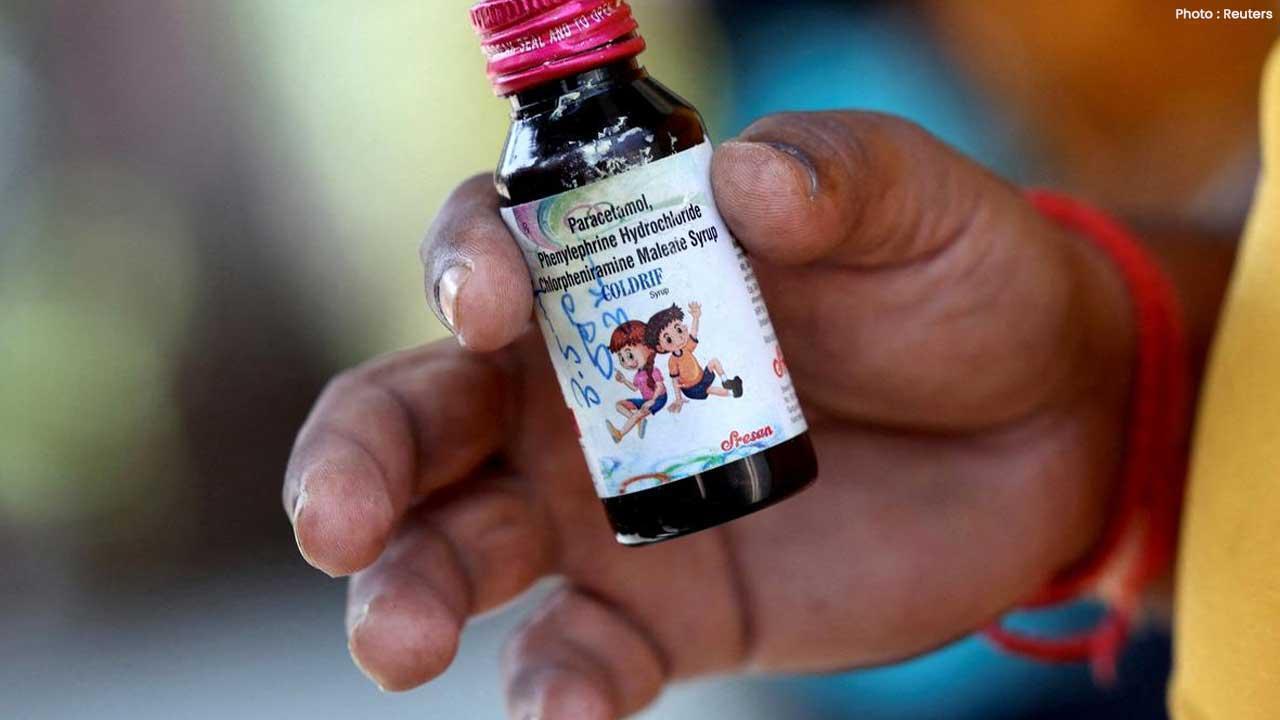
In a major breakthrough, Ranganathan Govindan, the owner of Sresan Pharmaceuticals, has been arrested in Chennai by Madhya Pradesh Police in connection with the Coldrif cough syrup tragedy that led to the deaths of several children across different Indian states. The arrest marks a significant step in uncovering one of India’s most shocking drug adulteration cases.
Authorities revealed that the toxic cough syrup, manufactured by the Tamil Nadu-based pharmaceutical company, contained diethylene glycol (DEG) — a poisonous chemical used in industrial products like glue and ink. Tests conducted earlier this month confirmed that the syrup contained DEG far beyond the safe limit, making it highly dangerous for human consumption, especially for children.
Police officials reported that the deadly syrup caused kidney failure and severe infections in many children in Madhya Pradesh and Rajasthan, with over 20 reported deaths. Following the discovery, the Tamil Nadu Drugs Control Authority suspended the company’s manufacturing license and issued a stop-production order.
After remaining on the run for several days, Govindan was tracked down and arrested during a midnight operation jointly conducted by Madhya Pradesh and Chennai police. The arrest operation began after investigators traced his vehicle movements and raided his factory in Kancheepuram, where they seized key documents and unbilled chemical containers. A transit remand has been requested to move him to Chhindwara, where most of the child deaths occurred.
According to the investigation, Sresan Pharmaceuticals was found to be illegally operating even after being removed from the Ministry of Corporate Affairs register. The company continued its production under a proprietary setup, raising serious concerns about regulatory loopholes in India’s drug manufacturing system.
Health authorities confirmed that Coldrif syrup contained 46–48% diethylene glycol, against the permitted limit of 0.1%. The toxic compound can severely damage the kidneys, liver, and nervous system, particularly in young children.
As the investigation expands, officials are now focusing on identifying all links in the supply chain, including chemical suppliers, distributors, and stockists, to determine how the tainted syrup reached pharmacies and families.
So far, at least nine states have banned Coldrif syrup, while India’s top drug regulator has admitted to lapses in manufacturing inspections, stating that many companies failed to test every batch of raw materials used in medicine production.
The Coldrif cough syrup case has once again highlighted the urgent need for strict quality control and stronger regulatory oversight in India’s pharmaceutical industry to prevent such tragedies in the future.










PM Modi Pays Tribute to Mahatma Gandhi, Urges People to Support Khadi
PM Modi pays tribute to Mahatma Gandhi on Gandhi Jayanti and urges citizens to support Khadi and the

Amazon Seeks to Offload $8 Billion in Nvidia Chips to Investors
Amazon plans to move $8 billion in Nvidia chips to investors, using a new financing model to strengt

Samsung Raises Galaxy S26 Prices as Memory Chip Costs Rise
Samsung raises Galaxy S26 prices in South Korea as rising memory chip costs put pressure on smartpho

Lewis Hamilton Calls Singapore Grand Prix One of F1's Toughest Races
Lewis Hamilton discusses the demanding Singapore Grand Prix and brings Plus44 and Almave to Singapor

Denmark's Pandora Opens World's Largest Jewellery Factory in Vietnam
Pandora opens its largest jewellery factory in Vietnam, expanding global production, strengthening s

Gautam Gambhir Questions Batting-Friendly Pitches After India's Record ODI Chase
Gautam Gambhir questions batting-friendly ODI pitches after India’s record chase, calling for a bett

